Rock Art
A living tradition of rock painting, passed down through six living generations
Making Rock Art Today
The people of Samburu in northern Kenya have a living and ongoing tradition to make rock paintings and rock carvings in caves and rock shelters in the mountains in Samburu and Marsabit county. The rock art is made by the Lmurran, Samburu warriors during their moranhood, lasting 12-14 years.
In the following you can hear the stories from warriors who have painted in caves and shelters from 1948 to today, six different age-sets of warriors, from Lkimaniki to the current Lkiseku. It is an exceptional situation to meet and listen to rock painters telling what they painted,and when and why they did it.
Materials Used
- Red Ochre: From Mount Kulal, mixed with fat
- Charcoal: For black pigments
- Animal Fat: For binding and white
- Blood: Mixed with ochre for deeper reds
Origin
The Beginning of the Tradition
The Samburu Lmurran institution and the practice of young warriors meat feasting in shelters and caves, loikar, developed gradually in the first half of the 1800s.
The Samburu Lmurran institution and the practice of young warriors meat feasting in shelters and caves, loikar, developed gradually in the first half of the 1800s. To make paintings on the walls of the rock shelter is part of the loikar event in the shelters. We know from descendants that some Lmurran painted in the Ltarigrig age-set (1865-1879), perhaps it occurred one or two decades earlier as well. Some of the descendants suggest that Samburu Lmurran were inspired by older (Oromo) paintings in some caves and started to paint themselves.
| Name of Lmurran Age Set Group | Estimated Calendar Years |
|---|---|
| Lkiseku | 2019–(2034) |
| Lkichami/Lmetili | 2002/2005–2019 |
| Lmooli | 1990–2005 |
| Lkuroro | 1976–1990 |
| Lkichili | 1961–1976 |
| Lkimaniki | 1948–1961 |
| Lmekurri | 1936–1948 |
| Lkileku | 1922/1923–1936 |
| Lmericho | 1912–1922/1923 |
| Lterito | 1893–1912 |
| Lmarikon | 1879–1893 |
| Ltarigrig | 1865–1879 |
| Lkiteku | 1851–1865 |
| Lkipiku | 1837–1851 |
| Lkipayang | 1823–1837 |
| Lpetaa | 1809–1823 |
| Lkurukwa | 1795–1809 |
.jpg)
Who?
The Artists Behind the Paintings
The rock art is created by the Samburu Lmurran during their time as warriors, while meat feasting in shelters and caves in the mountains.
The rock art is created by the Samburu Lmurran during their time as warriors, while meat feasting in shelters and caves in the mountains.Some of the Lmurran make illustrations on the rock wall when relaxing after the meal.
.jpg)
When?
A Living Tradition Through Time
There is information that rock art, both paintings and carvings, appeared in all Lmurran age-sets from 1865 and onwards.
There is information that rock art, both paintings and carvings, appeared in all Lmurran age-sets from 1865 and onwards. We have been able to interview painters, next to their paintings in the shelters, from the six latest age-sets, that is paintings made from 1948 to today. The paintings are made at loikar, during leisure time after the Lmurran have eaten a goat or a bull. All the paintings are made in the first half of the 15-year time period of the age-set. And the rock painting tradition is still ongoing in the Lkiseku ageset (2019- ).
Where?
The Locations of the Art
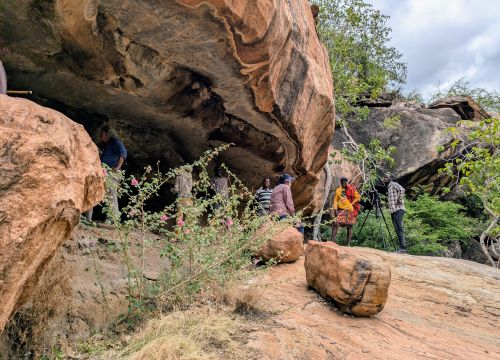
The rock art is made in rock shelters in the mountains in Samburuland in Samburu and Marsabit counties, northern Kenya, on a smooth surface.
The rock art is made in rock shelters in the mountains in Samburuland in Samburu and Marsabit counties, northern Kenya, on a smooth surface. Some paintings are done in protected places inside the shelters and stay for many decades or maybe even hundreds of years. Others are made on exposed parts of the rock and disappear within a few years or a couple of decades. The carvings are shallow, and most of them fade after some years.
What?
The Stories Told on Stone
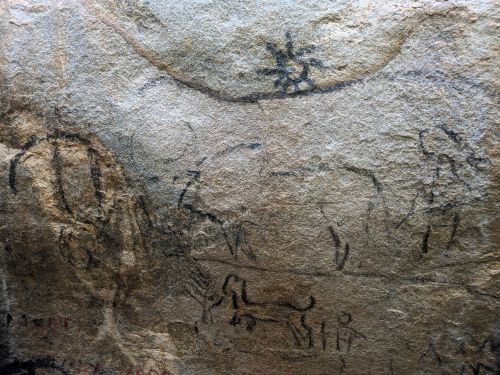
The painter most often depicts the Lmurran in the shelter, the bull, goat, or camel they have slaughtered and eaten, and quite often also the divided meat.
The painter most often depicts the Lmurran in the shelter, the bull, goat, or camel they have slaughtered and eaten, and quite often also the divided meat. From a painting with only a few images the painter can tell a full story: the names of the Lmurran (and the cow), what the images depict, when and why he painted. Only a few images are drawn to tell the story, but in one case, the painter Ljinai Lengewa, made 28 images to tell his story, from bringing the bull to the cave, the bed, stool and stirring stick he used in the shelter, the girl in the village he dreamed of, to the Lmurran leaving the cave four days later. In the small village of Marti Dorop, it is the opposite, they only draw Lmurran. A very special story is the lion hunt, depicted and told by Zaire Leturra, also stories of buffalo hunting by Loingeru Leparsore. However, there are never any paintings about fights or wars or Samburu legends or myths.
Over the last 20 years, women have been depicted, connected to the Lmurran. Also, letters and names have been drawn in the more recent age-sets. Natural red paint is replaced by paint from the shops.
Common to all paintings, is that it is only through the story of the painter we can understand the painting and what the images represent.
.jpg)
Why?
The Purpose of the Paintings
The Lmurran say that the paintings serve as a memory of their stay in the shelter. Each painting tells a story that the painter wants to share.
The Lmurran say that the paintings serve as a memory of their stay in the shelter. Each painting tells a story that the painter wants to share. The paintings highlight certain events that are important for the Lmurran in the shelter, often describing becoming strong and healthy after eating the meat at loikar. Other people passing by will realize that the Lmurran have been here, when they see the paintings.
However, the stories are not shared with the wider community.