Rock Painters
Hear the Samburu Lmurran who painted their life experiences in the shelters on the rocks.
The Rock Painters
Samburu warriors have painted in caves in Samburuland, northern Kenya, for at least 150 years, and are still painting today. Below, you can hear and read their own stories: what they painted and why, stories of paintings from 1948 to 2025.
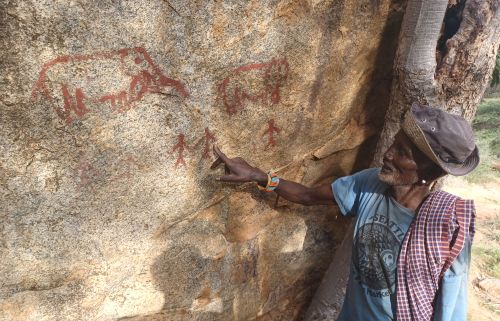
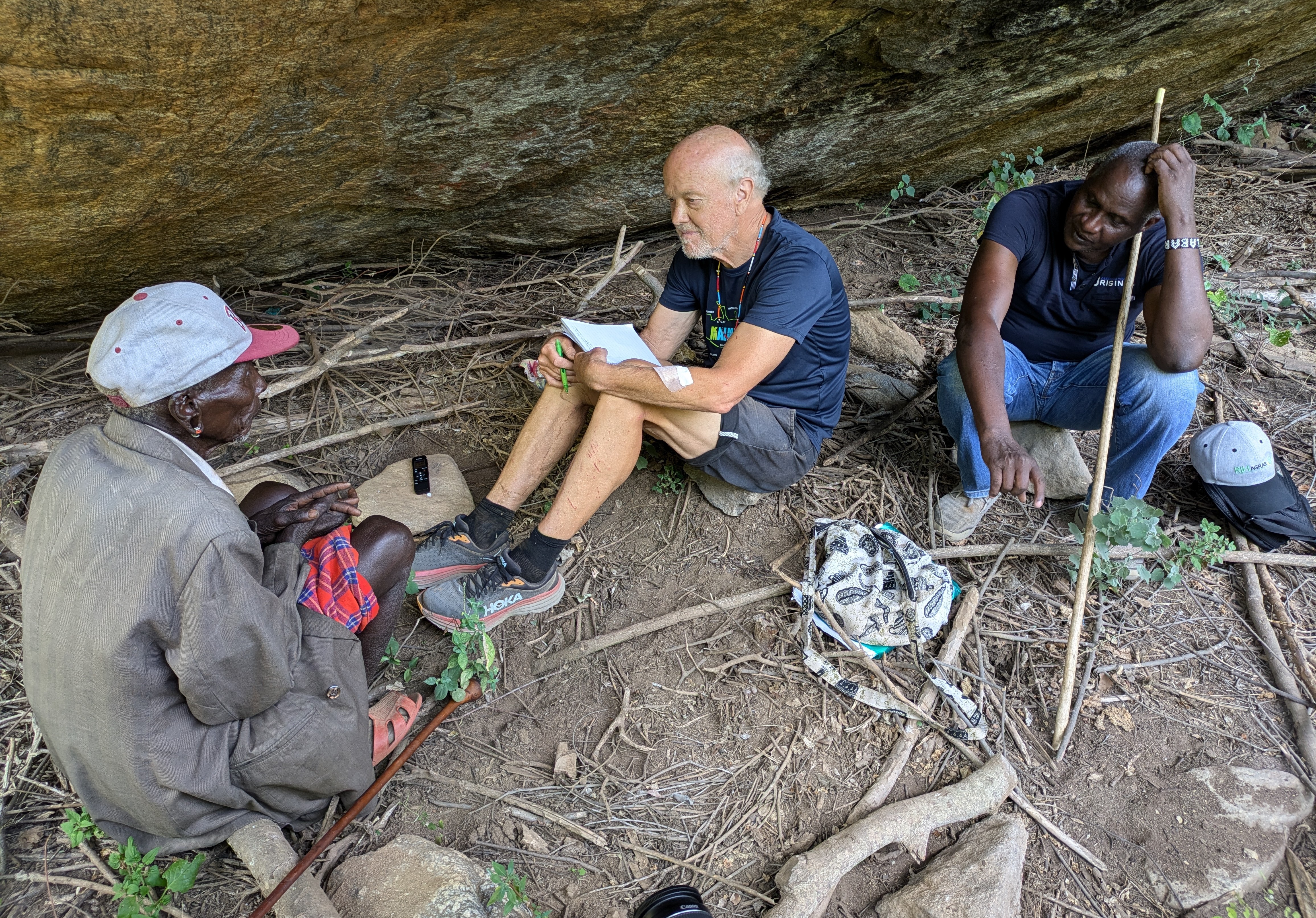
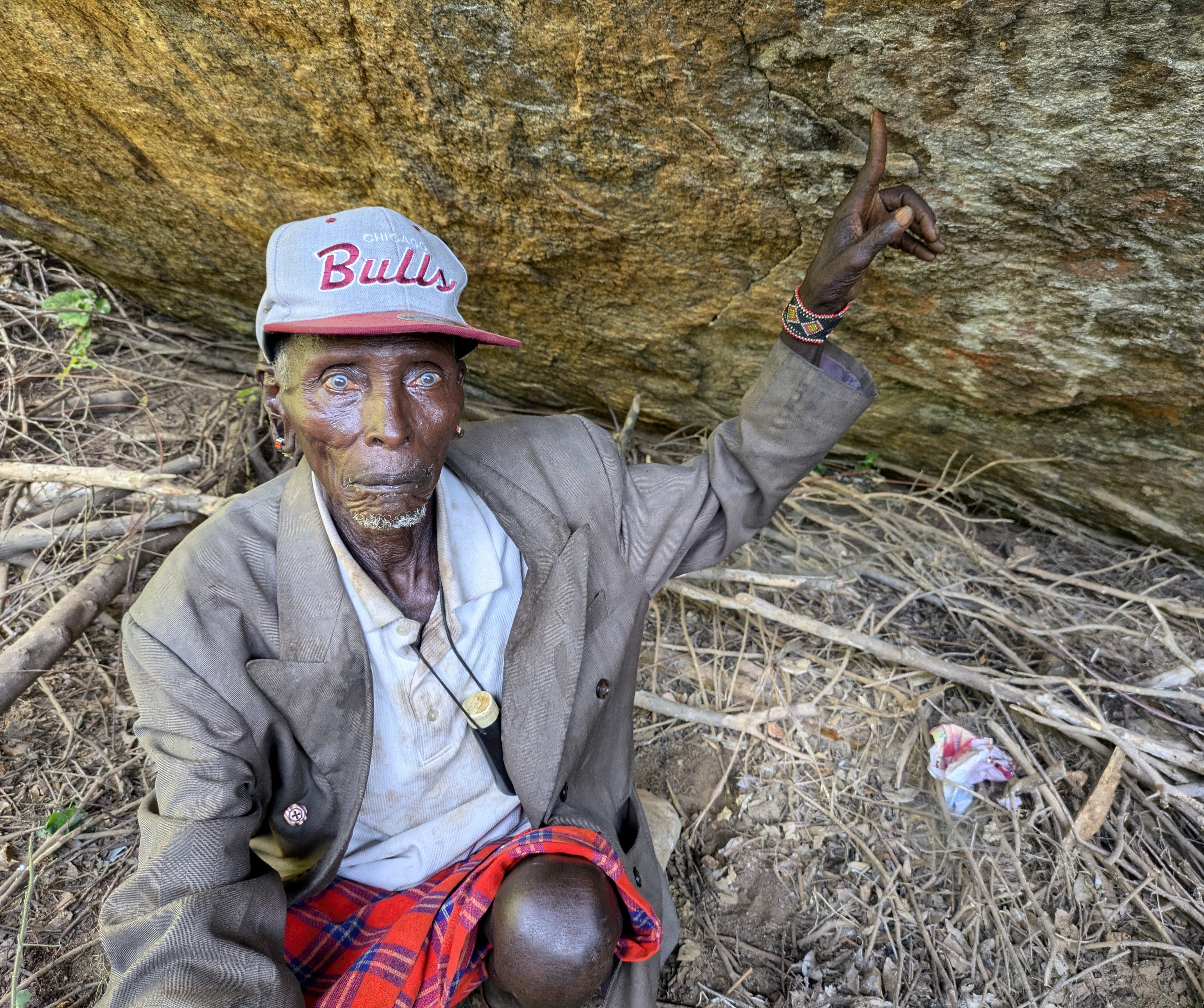
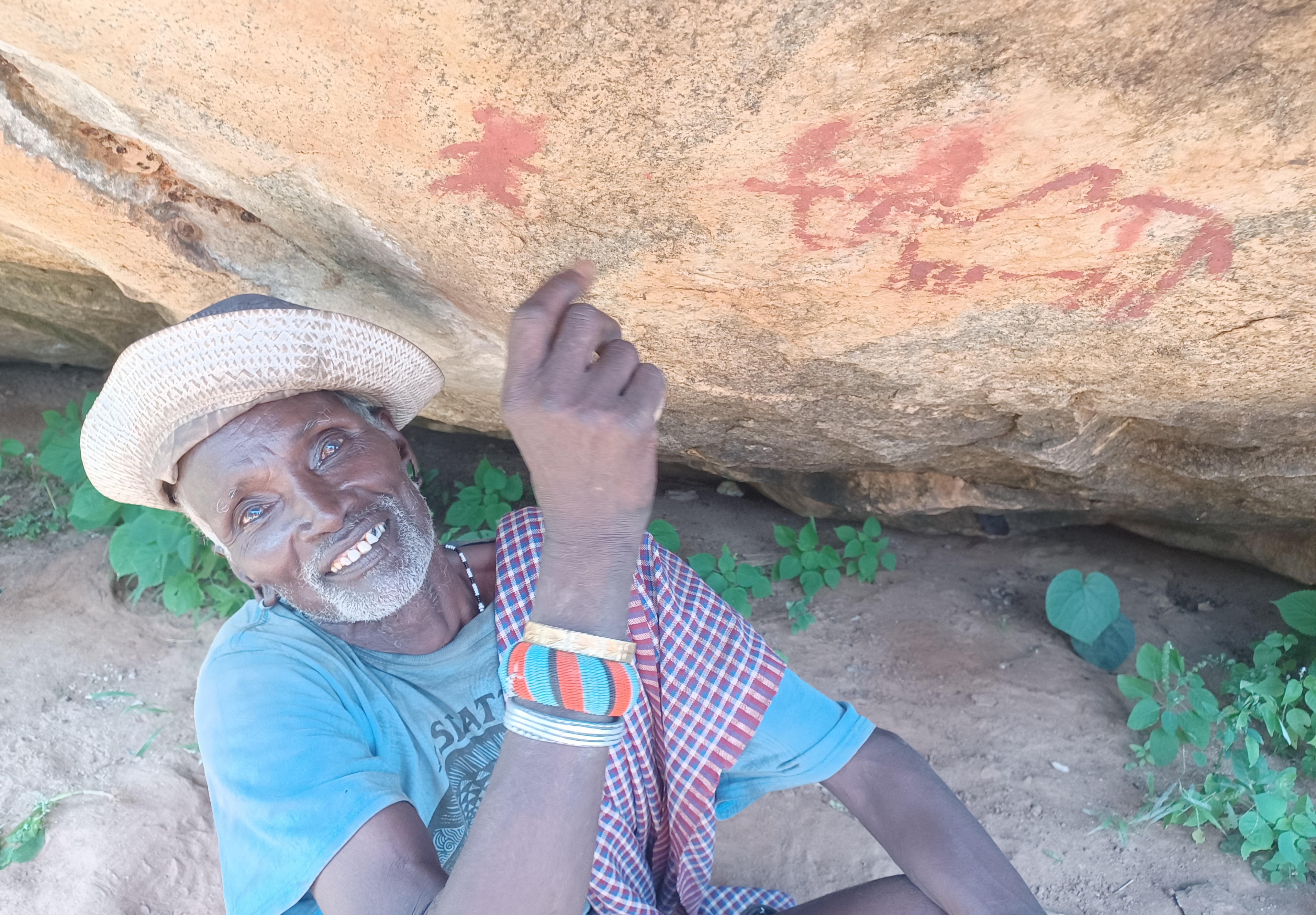
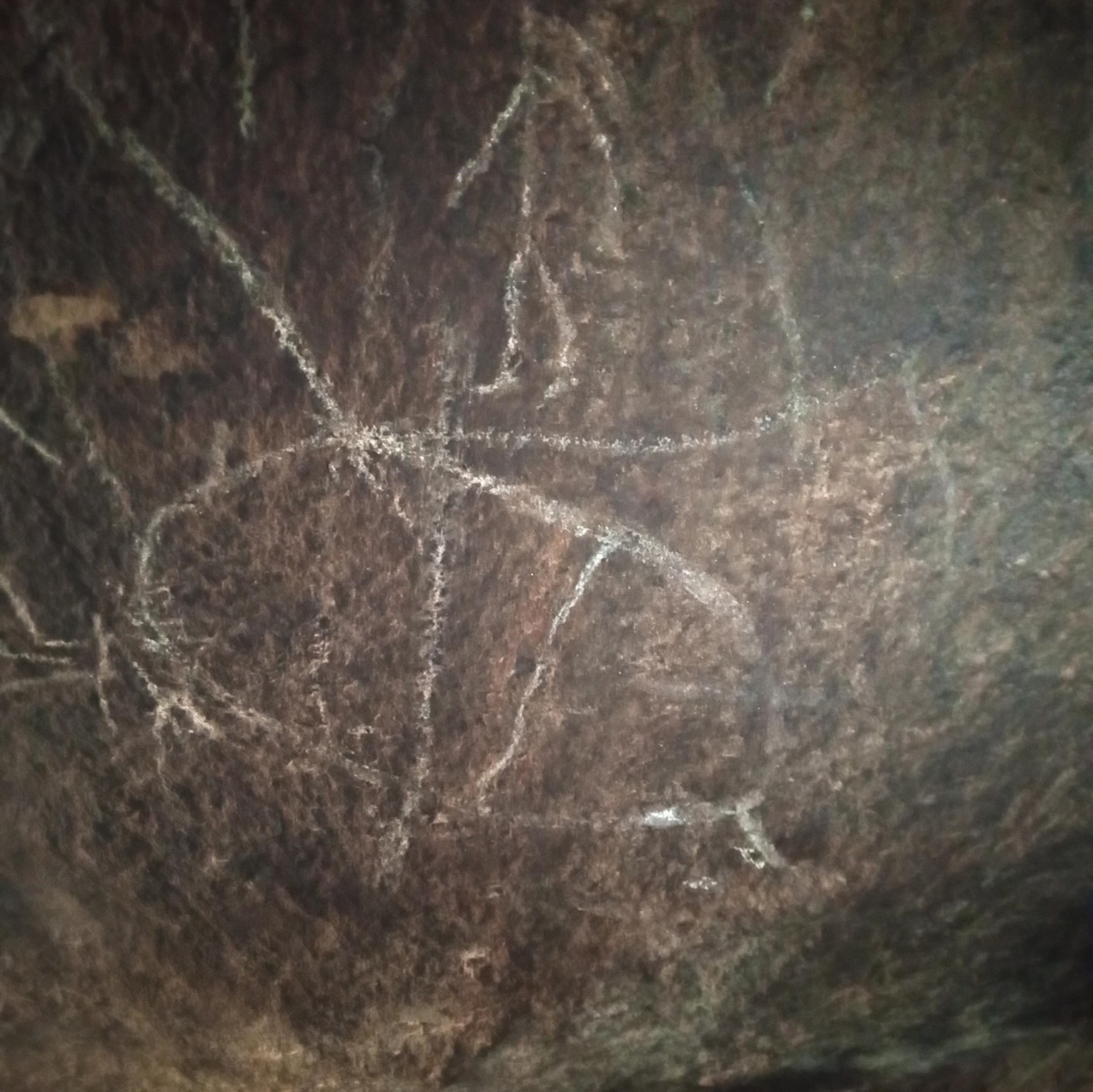
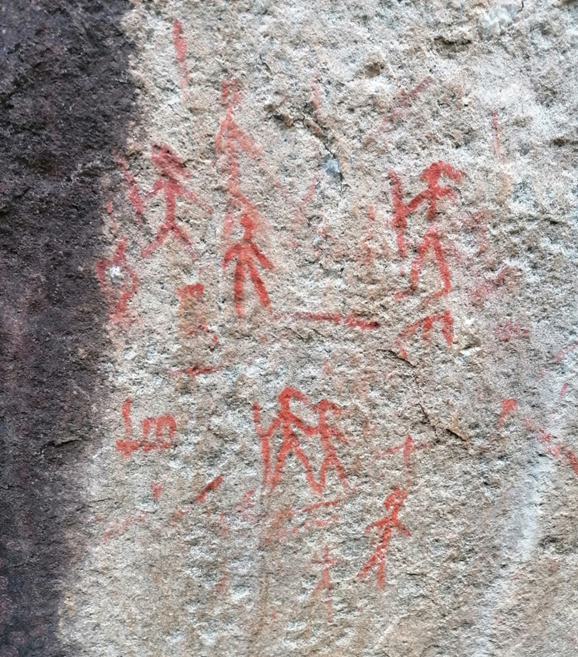
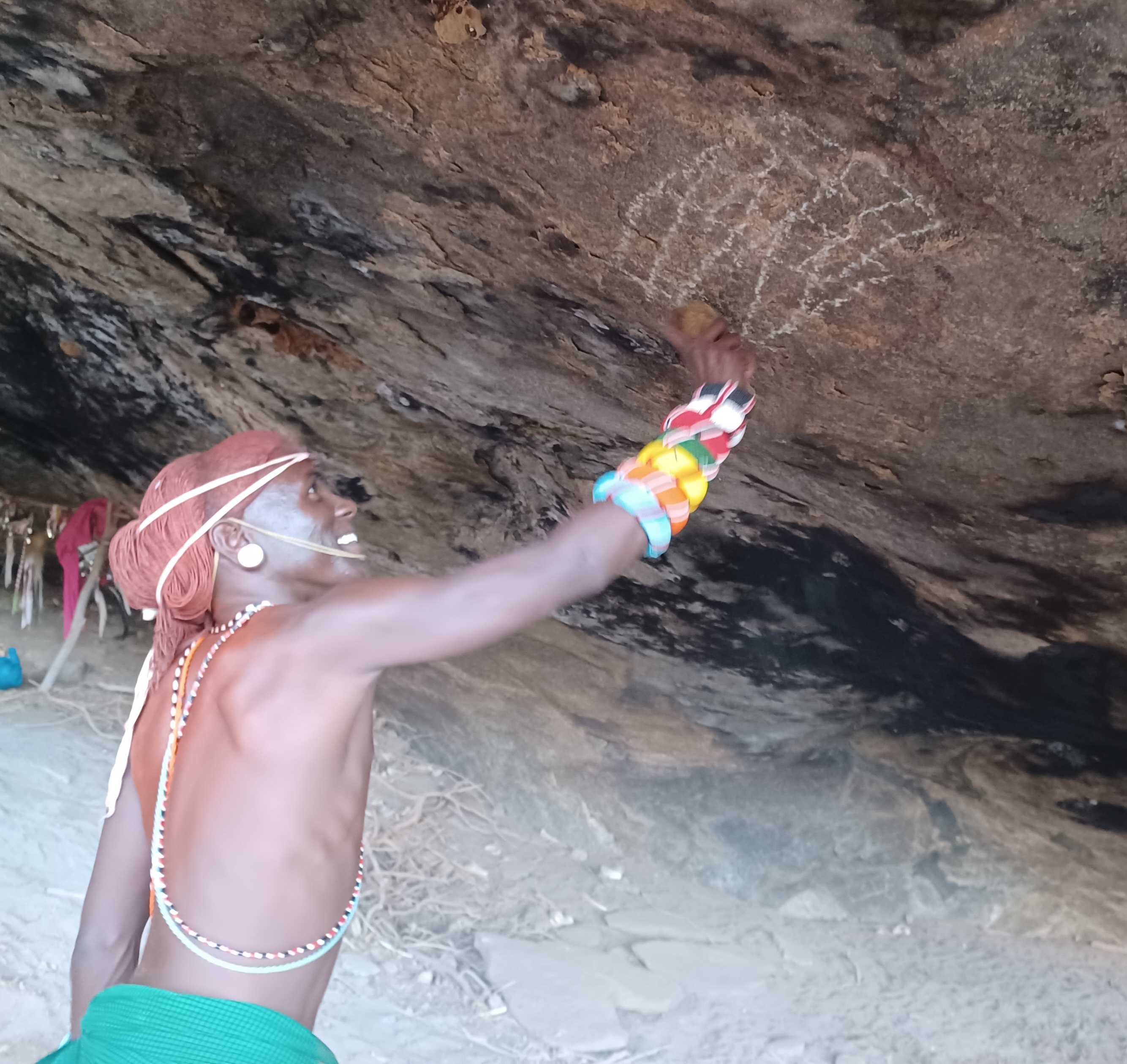
Loingeru Leparsore is one of the rock painters. He is pointing at himself beside his fellow Lmurran in a painting he made in Soitnauno cave, Ngurunit, in the early 1980s. Above the Lmurran, he painted the dangerous animals that were passing by: an elephant and a lion, signalling the brave Lmurran protecting the community.
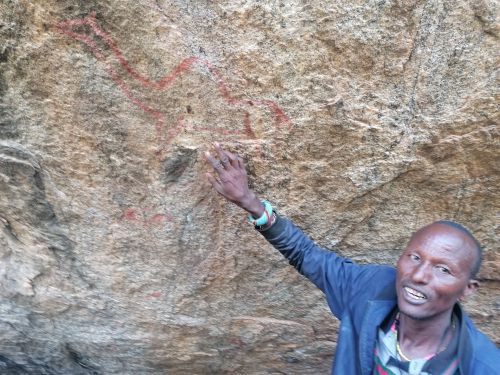
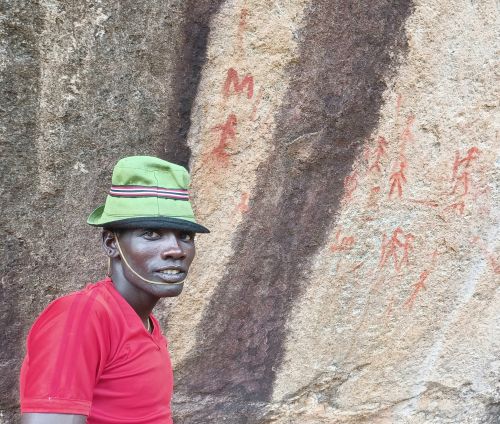
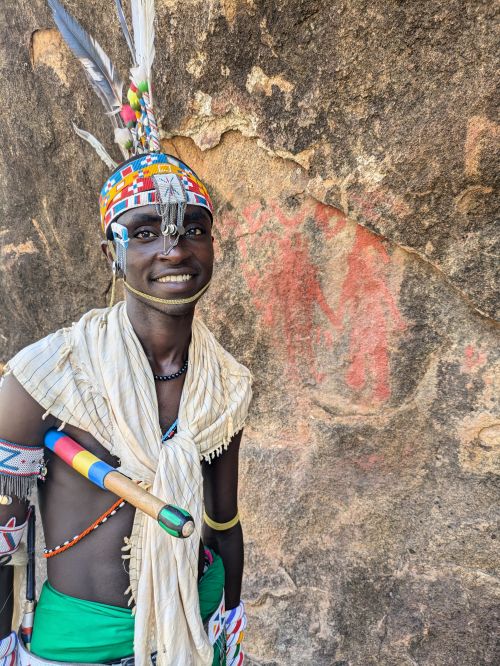
Lamnyiyan Lenkurukuri
Lkimaniki · 1948-1961
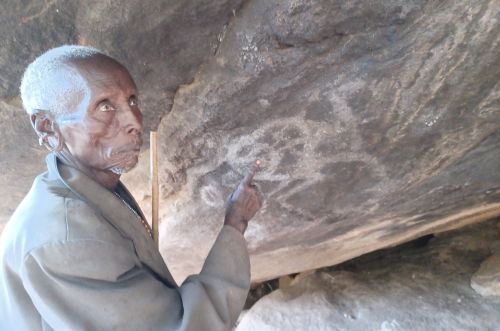
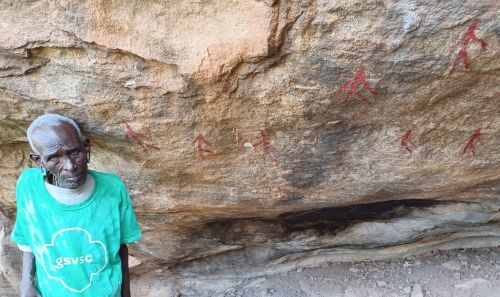
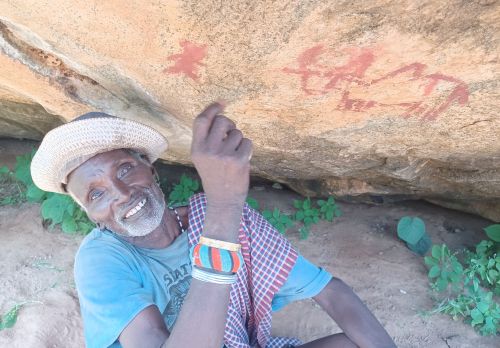
Lamnyiyan Lenkurukuri was born around 1934 on the western side of the Ndoto mountains in Samburu County, northern Kenya. He has lived in the mountains all his life. His family were Ndorobos, hunter-gatherers, killing wild animals like buffaloes, rhinos, giraffes and eating honey.
Lamnyiyan Lenkurukuri was born around 1934 on the western side of the Ndoto mountains in Samburu County, northern Kenya. He has lived in the mountains all his life. His family were Ndorobos, hunter-gatherers, killing wild animals like buffaloes, rhinos, giraffes and eating honey. The landscape was more open at that time, and it was easy to hunt with spear, bow and poisoned arrows. When helping the Samburu herdsmen they were gifted with a few cows and goats. They also acquired livestock by raiding the Turkana.
Lamnyiyan Lenkurukuri was about 14 years old when he was circumcised as a Lmurran in April 1948. As an Ndorobo he knew all the caves in the mountains. After initiation, four of the morans, two brothers Lengewas and two cousins Lenkurukuri, went to Lpirnyinyi/ Lamanira cave. They stayed in the cave for two weeks to fatten, become strong and healthy, eating two bulls. Later in the same year, 1948, Lenkurukuri, together with three other morans, went to Takoko cave, eating four bulls and staying for a month.
Lenkurukuri painted in both Lamanira and Takoko cave, as well as in two more caves in the following years. His focus was the slaughtering and eating of the bulls. Lenkurukuri loved cows and whenever he used the fat from the slaughtered bull to paint, it reminded him of the bull and a good meal.
Zaire Leturra, Lmooli, painted later in Takoko cave (1990) and in Lamanira cave (1994). Zaire changed the name from Takoko to Lng'aboli cave. Zaire saw Lamnyiyan Lenkurukuri's paintings but did not know who had made them or when they were made and could not interpret them.
Lenkurukuri has one wife and four sons. All the boys have gone to school and have not spent time in the caves.
Video Interview
Lamnyiyan Lenkurukuri Interview
Watch his story in his own words
The Rock Shelters
Two sites where Lamnyiyan painted his life story
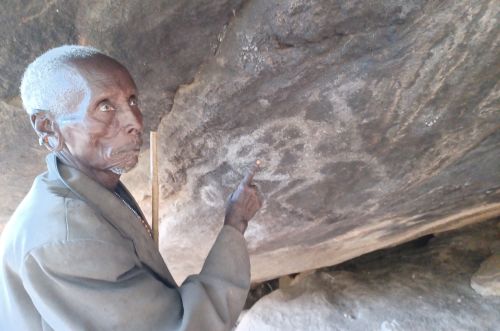
Lpirnyinyi Cave
The four morans came here in April 1948
The four morans coming to this cave in April 1948 first brought one bull for meat feasting at the cave, and after a week another bull, one bull from each family. Lamnyiyan Lenkurukuri made several paintings in the cave, using fat from the bulls.
The four morans coming to this cave in April 1948 first brought one bull to slaughter and eat at the cave, and after a week another bull, one bull from each family. Lamnyiyan Lenkurukuri made several paintings in the cave, using fat from the bulls.
He drew the first bull they feasted on, also the lungs and intestines. Below the bull he drew the meat taking out from it: the stomach, liver and kidney. To the right of the bull, Lenkurukuri painted two morans, himself and his cousin.
The first painting Lenkurukuri made in the cave was of the bees in a tree close to the cave. He painted a bee, the beehive and the leaves to hold the honey.
One of the morans, Lenkakofeng Lengewa, painted a spear, which was used to kill the wild animals in the surroundings.
Just before leaving the cave, Lamankiyan Lenkurukuri made a final painting. He drew clouds with rain, that they had experienced in the cave, and their approaching walk, a long, winding trail in the mountains, ending at a boma for the goats.
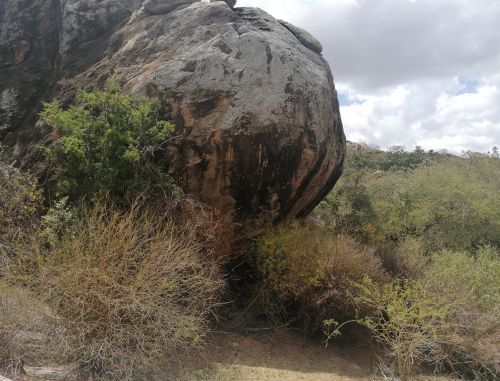
Takoko cave
Takoko means a cooked meal of bones from meat
Lamnyiyan Lenkurukuri arrived at Takoko cave with three other morans in late 1948. Lomelo Lenaropi was the leader, being the oldest. The Lmurran stayed in the cave for four weeks, eating one bull each week, the bulls brought to the cave from each one of the Lmurran families.
Lamnyiyan Lenkurukuri arrived at Takoko cave with three other morans in late 1948. Lomelo Lenaropi was the leader, being the oldest. Takoko means a cooked meal of bones from meat. The Lmurran stayed in the cave for four weeks, eating one bull each week, the bulls brought to the cave from each one of the Lmurran families.
Both Lenkiyan Lenkurukuri and Lomelo Lenaropi painted in the cave at the same time. They each had their beds under the rock, and painted on the rock above them, while lying down. Lenkurukuri painted, from right to left, the path for the cows coming from a manyata or their grazing land to the place of slaughter and the cave. He added a little bit to the painting for each bull they ate.
Lenkurukuri and Lomelo painted completely independent of each other, and they never talked about it.
Lpirnyinyi Cave Paintings
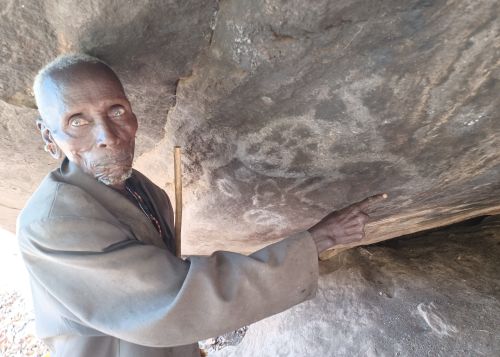
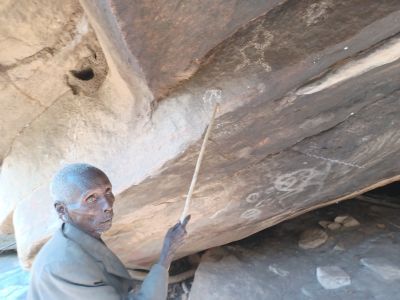
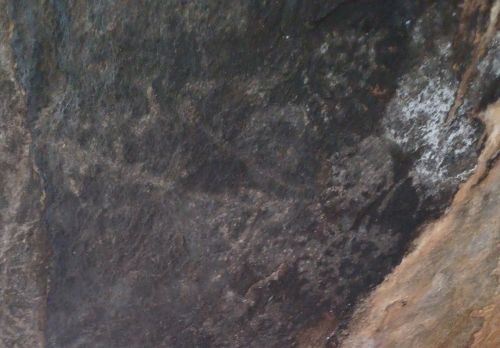
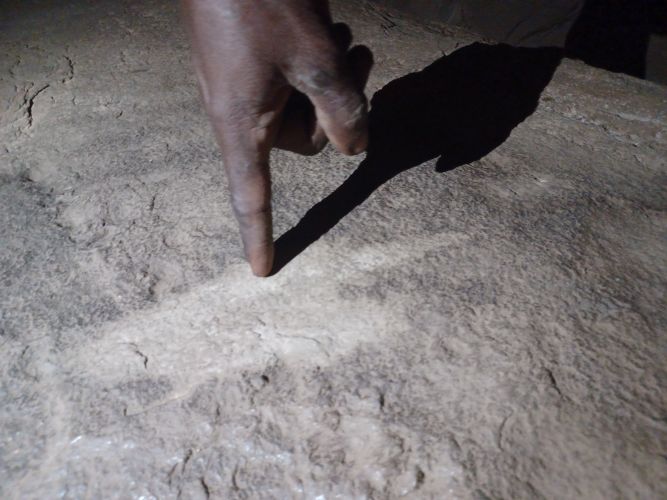
🎨 Takoko cave paintings
Lmeiboki Lesas
Lkichili · 1961-1976
Lmeiboki Lesas is a Samburu born around 1945 in Ilaut, Marsabit county in northern Kenya. He was circumcised in 1961 in the Lkichili ageset. After his initiation, he crossed the Ndoto Mountains with his herd and some fellow Lmurran, finding good grazing in the area of Marti Dorop.
Lmeiboki Lesas is a Samburu born around 1945 in Ilaut, Marsabit county in northern Kenya. He was circumcised in 1961 in the Lkichili ageset.
After his initiation, he crossed the Ndoto Mountains with his herd and some fellow Lmurran. They found good grazing for their cows in the area of Marti Dorop. There were also many good caves where they could celebrate loikar. Lmeiboki Lesas has made paintings in seven or eight caves, depicting only Lmurran. In four of these caves, Mpirrich, Mpurungus, Naidele and Lchorro, he has explained the stories behind his paintings, named all the Lmurran he painted, and the reason why he painted (as a memory). He created the paintings during the first half of his moranhood, from 1961 to about 1965. At that time there were many wild animals in the mountains and on the lowland: rhinos, zebras, giraffes, buffalos, elephants, but Lmeiboki Lesas never painted them. In the beginning of moranhood, Lesas used stone knives to slaughter and cut the meat. He made the knives himself from pieces of a special dark stone he found on the ground. Later in the 1960s he also got hold of iron knives.
During his time as a Lmurran, Lmeiboki Lesas met a beautiful girl in Marti Dorop, whom he later married. Today he has three wives and 16 children and still lives in Marti Dorop.
Video Interview
Lmeiboki Lesas Interview
Coming Soon
The Rock Shelters
Four sites where Lmeiboki painted his life story
 (1).jpg)
Mpirrich Cave
Eight morans first, then fifteen
Lmeiboki Lesas arrived at Mpirrich cave after his initiation in 1961. At first, they were eight morans, feasting on a bull's meat. After the meal, Lmeiboki Lesas decided to paint six of the Lmurran present, including himself.
Lmeiboki Lesas arrived at Mpirrich cave after his initiation in 1961. At first, they were eight morans, slaughtering and eating a bull. After the meal, Lmeiboki Lesas decided to paint six of the Lmurran present, including himself.
When they brought another bull to the cave two more Lmurran joined them, along with five Lmurran guests. After eating that bull, Lmeiboki Lesas decided to paint all the 15 Lmurran in the cave. In 2023 he was able to identify all these 15 painted Lmurran by name, from right to left: Lekorleite, Levrari, Lekutukori… He painted himself in the middle. Between the two sets of paintings, he painted a fairly large Lmurran with a high feather. That was the leader of the group: Lodotu Lolngojine.
In this cave, there are also paintings from Lkichami ageset, 2005, made by Lparaa Leamalio and Ltudungwa Lempei.
rsd.jpg)
Mpurungus Cave
Six Lmurran, one camel, many bulls
Lmeiboki Lesas came to Mpurungus cave two years after initiation, in 1963, together with six Lmurran in total. They stayed there for more than a month, eating bulls' meat, and also one camel.
Lmeiboki Lesas came to Mpurungus cave two years after initiation, in 1963, together with six Lmurran in total. They stayed there for more than a month, eating bulls, and also one camel. When relaxing after a meal, Lmeiboki Lesas painted the six Lmurran.
In 2023 he had no difficulty identifying all the six Lmurran on the rock wall: Lewano, Lokireri, Lepatoye, Leparnat, Lemoroti and himself.
There are many more paintings of Lmurran in Mpurungus cave. 16 of them were made by Letiyan Labarakwe, when staying in the cave after initiation in the Lkuroro ageset in early 1978. Another 12 Lmurran were painted by Loboru Lekaana about two months later, in the same year, when he stayed there with his Lmurran group.
.jpg)
Naidele Cave
Three Lmurran, two months
Lmeiboki Lesas arrived at this cave around 1964. They were three Lmurran staying there for two months, eating several bulls. After one of the meals, Lmeiboki Lesas painted himself on the right and the other two Lmurran, Lokoli and Lemadala, to the left of him.
Lmeiboki Lesas arrived at this cave around 1964. They were three Lmurran staying there for two months, eating several bulls. After one of the meals, Lmeiboki Lesas painted himself on the right and the other two Lmurran, Lokoli and Lemadala, to the left of him.
There are many more paintings of Lmurran in Naidele cave from other painters and agesets.
Lchorro Cave
Spring of water – six warriors, two months
Lchorro means spring of water. Lmeiboki Lesas came to this cave in the mid-1960s. They were altogether six warriors, staying in the cave for two months, eating both goats and bulls.
Lchorro means spring of water. Lmeiboki Lesas came to this cave in the mid-1960s. They were altogether six warriors, staying in the cave for two months, eating both goats and bulls. After a meal, both Lmeiboki Lesas and his close friend Leimele painted. They started painting on the right and continued gradually toward the left. All of the Lmurran were painted, some of them twice, as well as a few guests. Some of the paintings have since washed away or are barely visible today.
Ltingilan Labarakwe also painted in this cave, the three Lmurran who stayed there in 2006, about one year after initiation in the Lkichami ageset.
🎨 Mpirrich Cave Paintings
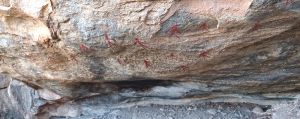
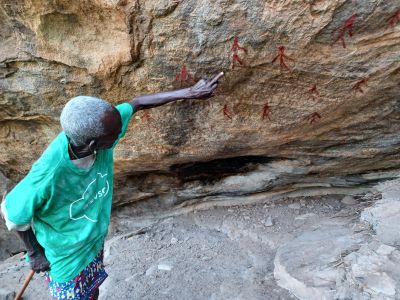
🎨 Mpurungus Cave Paintings
.jpg)
.jpg)
.jpg)
🎨 Naidele Cave Paintings
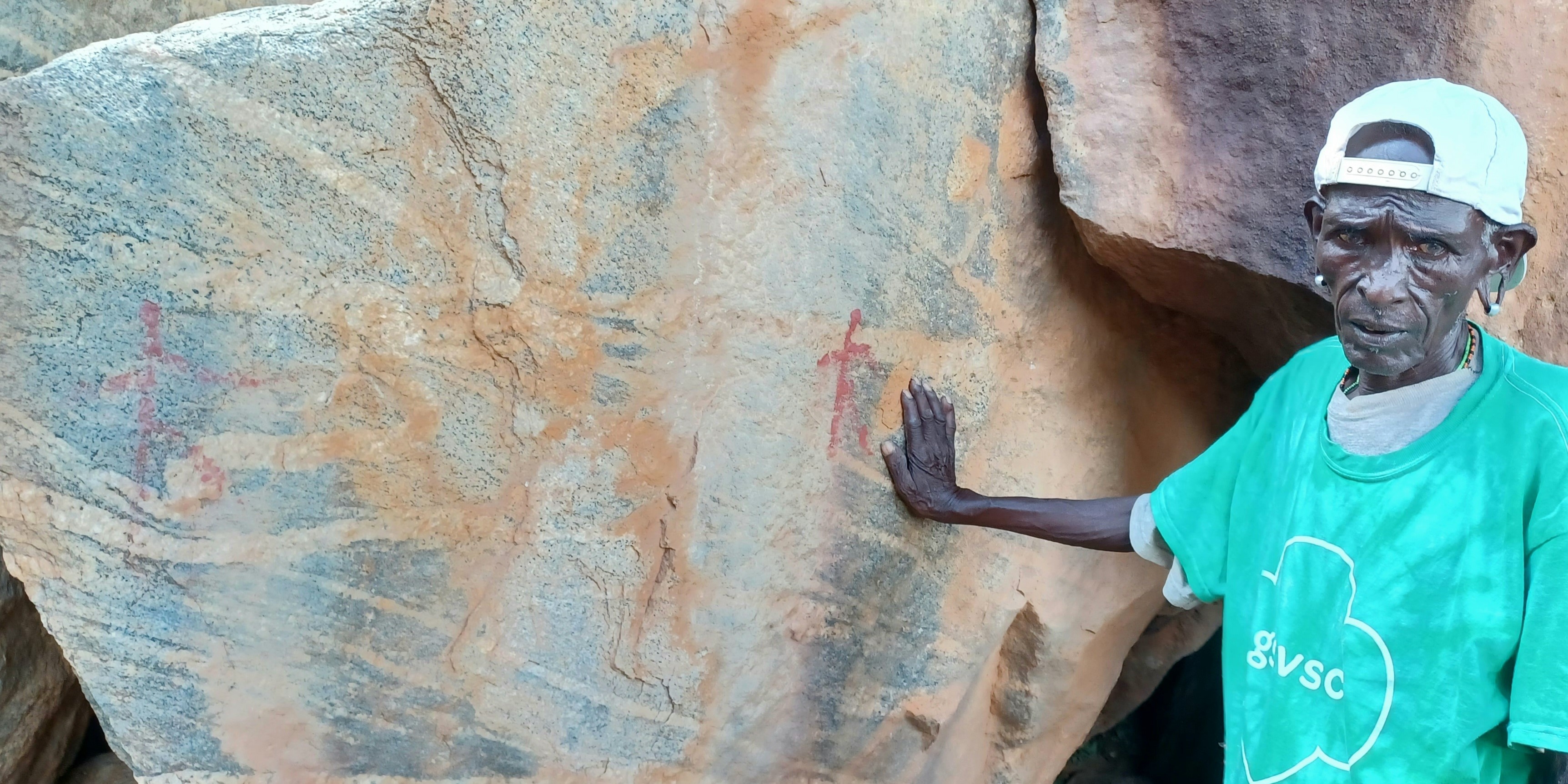
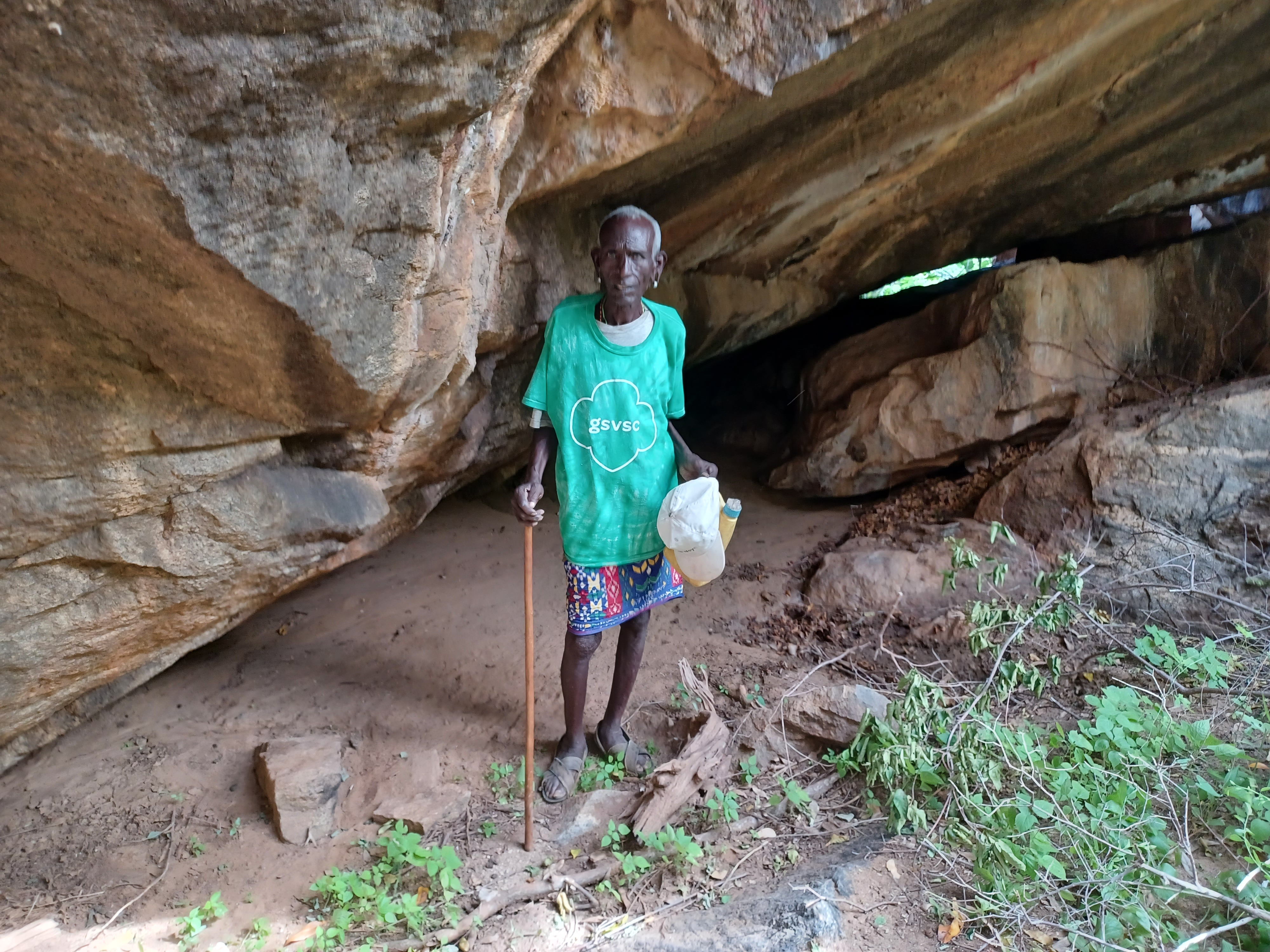
🎨 Lchorro Cave Paintings
.jpg)
Lmurran Paintings in Marti Dorop
.jpg)
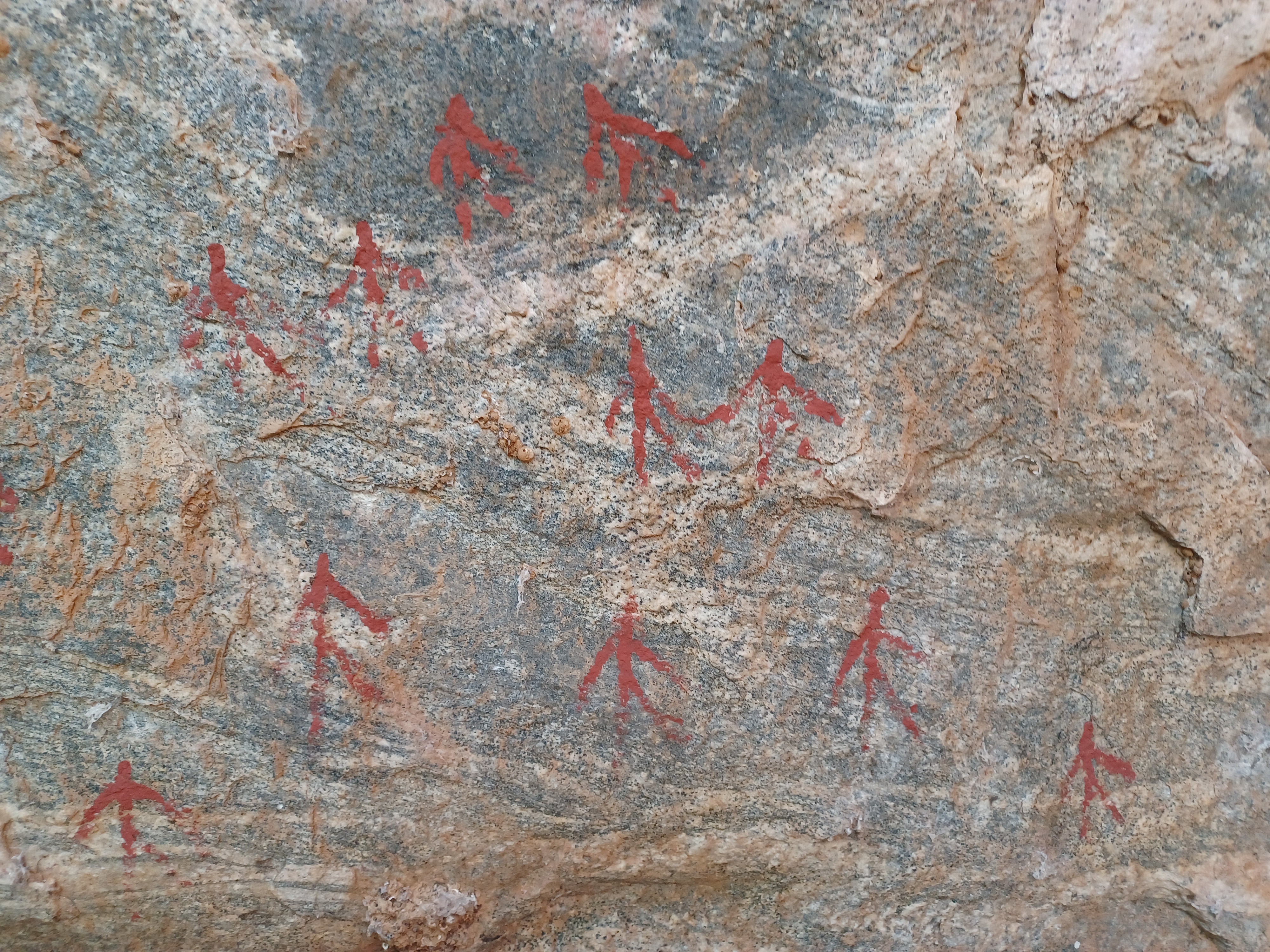
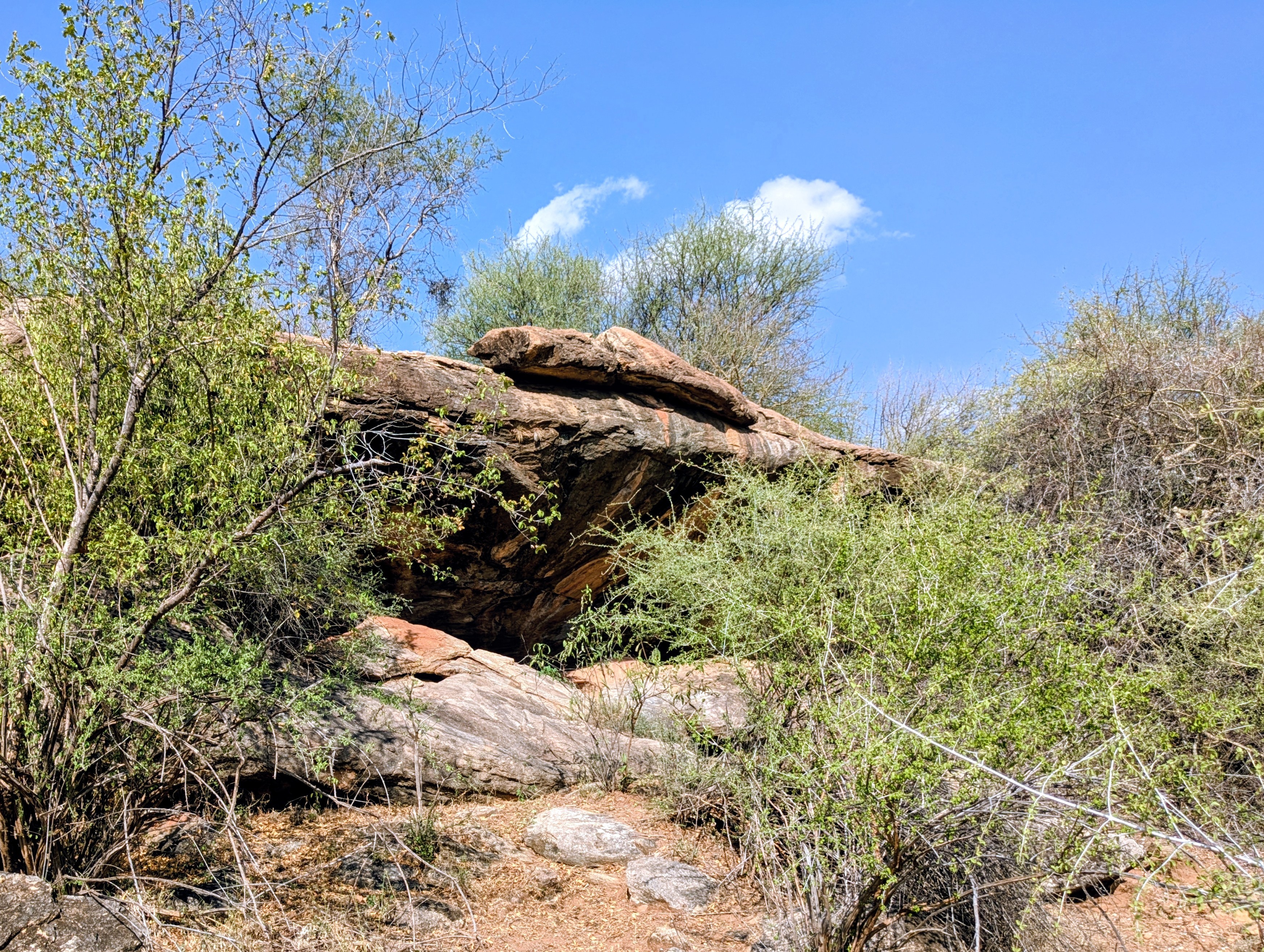
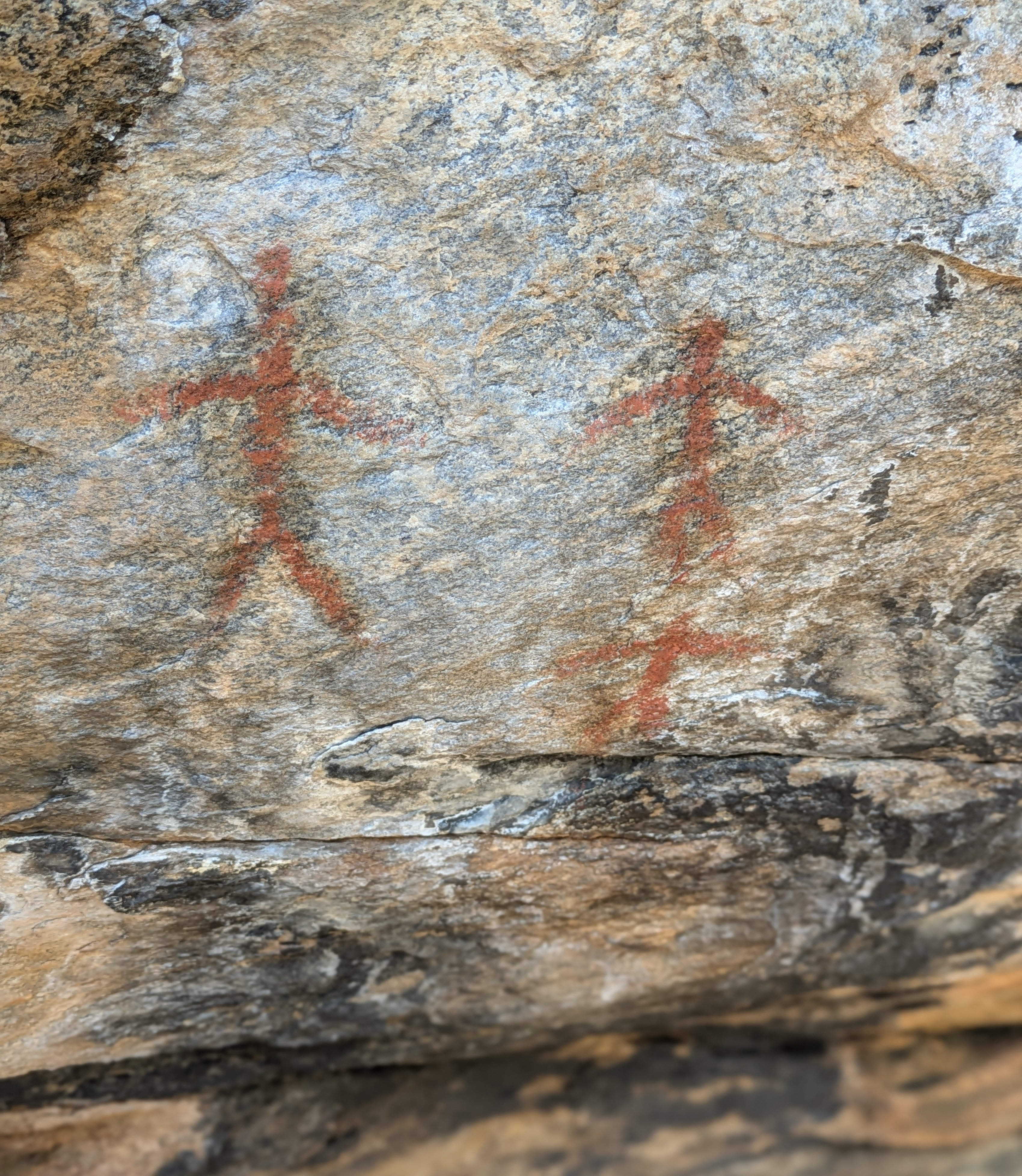
In the Ndoto mountains, next to the village of Marti Dorop, there are many caves and shelters, used by the Lmurran. In these shelters, it is possible to find paintings from all the Lmurran agesets, from late 1940s (Lkimaniki) to the present day (Lkiseku). What is remarkable is that almost all the illustrations depict Lmurran, Lmurran and more Lmurran, no bulls, no wild animals, nothing except Lmurran.
Lmeiboki Lesas says that he was inspired by the earlier paintings he saw in the shelters. He just copied what he saw, imitating the existing images. He did not want to do any changes. The current Lmurran continue in the same tradition.
What is also remarkable is that the rock painters can name all the Lmurran shown on the rock wall. Even if the Lmurran paintings look more or less the same, the painter had a specific person in mind, when making each one.
.jpg)
Loingeru Leparsore
Lkuroro · 1976-1990
Loingeru Leparsore is a Samburu storyteller and rock artist from northern Kenya, born around 1951 in Arsim village, in the Ndoto Mountains. His family belonged to the Ndorobo, a hunter-gatherer people, who stayed in caves and survived by hunting with spears, bows, and traps.
Loingeru Leparsore is a Samburu storyteller and rock artist from northern Kenya, born around 1951 in Arsim village, in the Ndoto Mountains. His family belonged to the Ndorobo, a hunter-gatherer people, who stayed in caves and survived by hunting with spears, bows, and traps. Like the other Samburu, they lived in large family groups and practiced polygamy.
Loingeru remembers his great-grandfather Nkaakeli (Lmarikon ageset), his grandfather Napono (Lmirisho), and his father Lekateiya (Lmekuri). From his grandfather, he learned about the tensions between the Ndorobo and Samburu warriors, who sometimes competed over rock shelters. There were disputes, but the Samburu warriors usually avoided fighting the Ndorobo, who were known and feared for their skills.
Napono was the first in the family to settle near Ngurunit, drawn by the chance to hunt Cape buffalo. Over time, the family moved down from the highlands into villages and had more contact with the pastoral Samburu. Loingeru's father became a Samburu warrior, lived in local shelters, and married Nkiloten Letura. Not long after, Loingeru was born.
When Loingeru was young, his family still depended mostly on hunting and gathering. They collected fruits, plants, and honey, and kept a small number of animals. He went to primary school in Ngurunit for a short time in the 1960s but did not stay long. In those days, wildlife was everywhere—elephants, giraffes, zebras, buffalo, rhinos, lions, and leopards—but Loingeru saw their numbers slowly disappear as he grew older.
In 1976, when he was about twenty-five, Loingeru was initiated into the Lkiroro age set and became one of the elder warriors. His duties included guarding livestock and sometimes leading raids. It was a dangerous time. Armed Shifta groups hunted elephants for ivory, and wildlife declined sharply until the Kenyan Wildlife Service finally forced the Shifta out.
After about fifteen years as a warrior, Loingeru became a junior elder. He married gradually four wives and became the father of thirty-two children. His families live across Samburuland, in Ngurunit, Ilaut, South Horr, and Laisamis. Over the years, he also worked as a home guard and briefly served as a police officer.
"The rock remembers what we leave behind. Each painting is a prayer, a memory, a promise to those who come after."
Video Interview
Loingeru Leparsore Interview
Watch his story in his own words
The Rock Shelters
Three sites where Loingeru painted his life story
.jpg)
Noongosowani
The Buffalo Place
Noongosowani Cave (the buffalo place), named by his grandfather, served as a family base. Shortly after his initiation in 1976, Loingeru stayed there for about a year together with other morans. They hunted buffalo, dangerous work that once left him badly injured in the hip.
Noongosowani Cave (the buffalo place), named by his grandfather, served as a family base. Shortly after his initiation in 1976, Loingeru stayed there for about a year together with other morans. They hunted buffalo, dangerous work that once left him badly injured in the hip. They brought the meat to the shelter and processed it by roasting, boiling, and drying, while guarding it from predators.
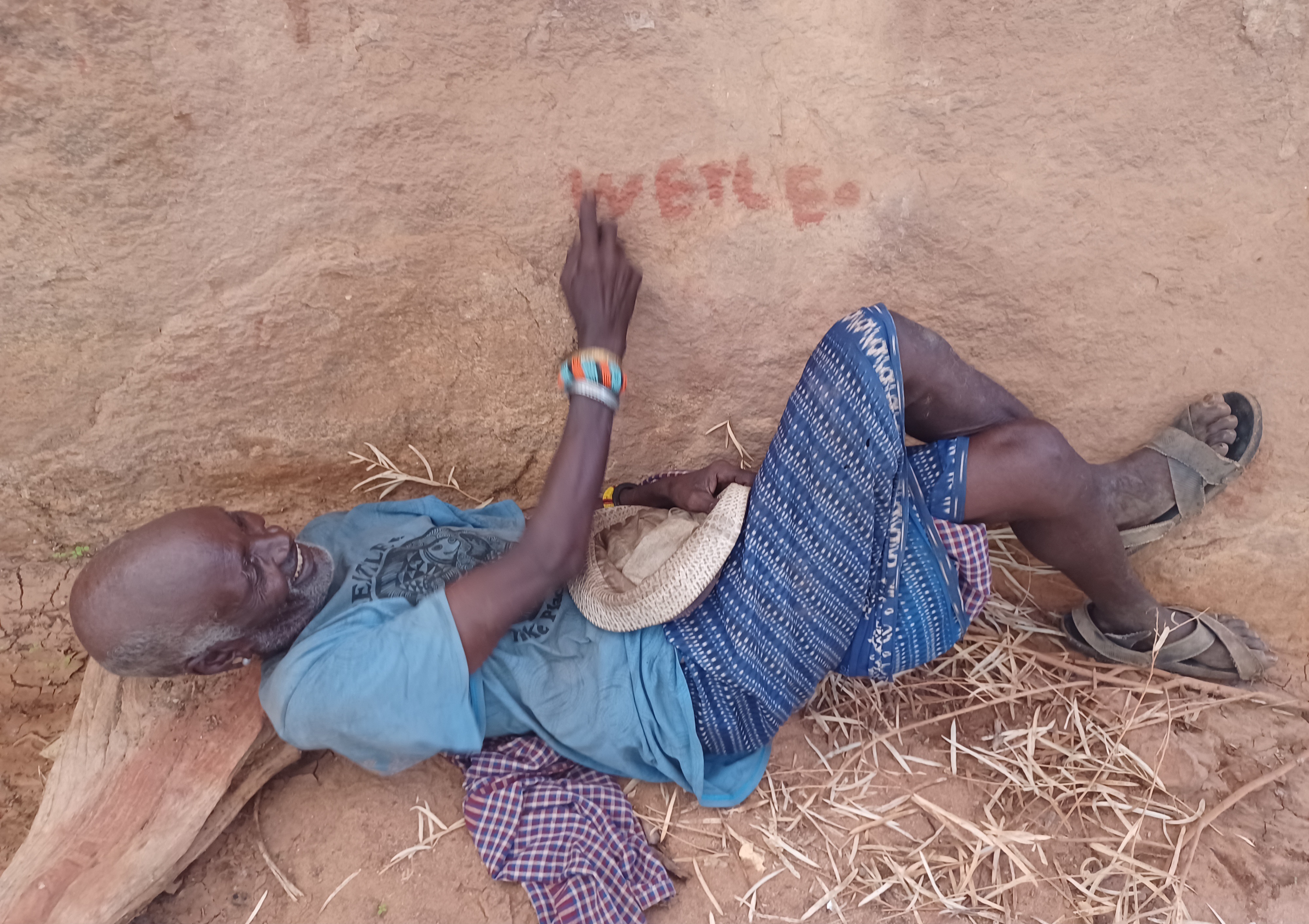
In this shelter, Loingeru made his first paintings. He used red ochre from a small bag he carried, even wrote small letters he had learned at school, just for fun, to show that he could write. Higher up in the shelter, he painted himself hunting a buffalo and several geometric shapes. These shapes represent the meat cut into portions. He also painted sticks for roasting, and racks for drying the food. He made a platform to be able to paint high up on the wall.
"This was my home, and I wanted to decorate my home."
Soitnauno
Standing Rock
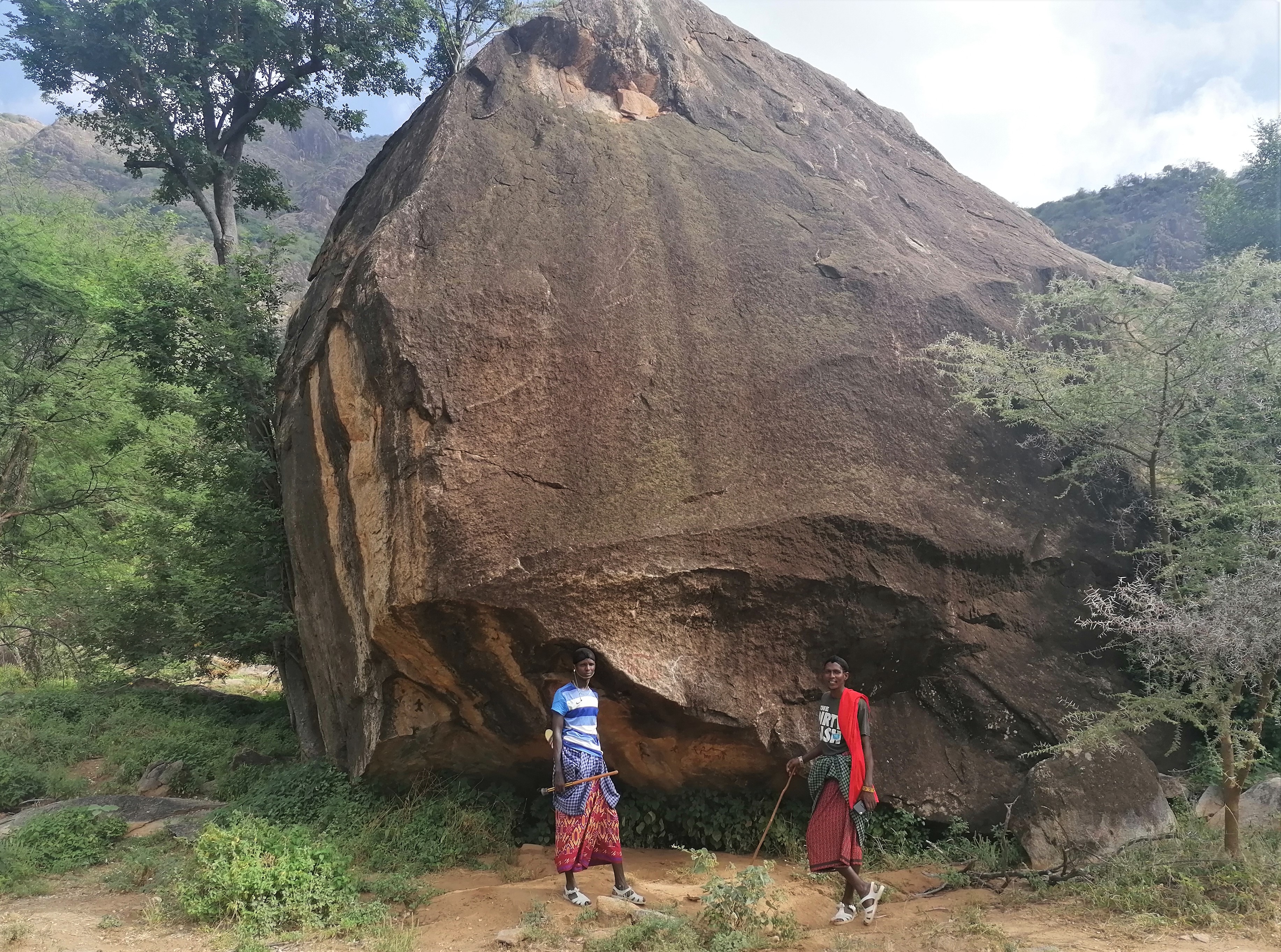
At Soitnauno Rock Shelter (standing rock), near the Gille River, Loingeru lived for six to seven months in the early-mid-1980s, together with other warriors. They hunted buffalo, feasted on bulls and goat meat, watered livestock and coped with insecurity from poachers.
At Soitnauno Rock Shelter (standing rock), near the Gille River, Loingeru lived for six to seven months in the early-mid-1980s, together with other warriors. They hunted buffalo, slaughtered bulls and goats, watered livestock and coped with insecurity from poachers.
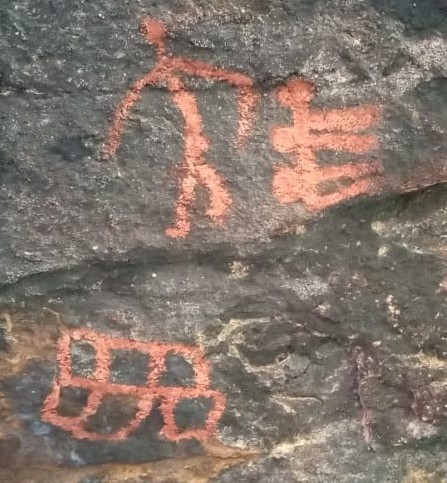
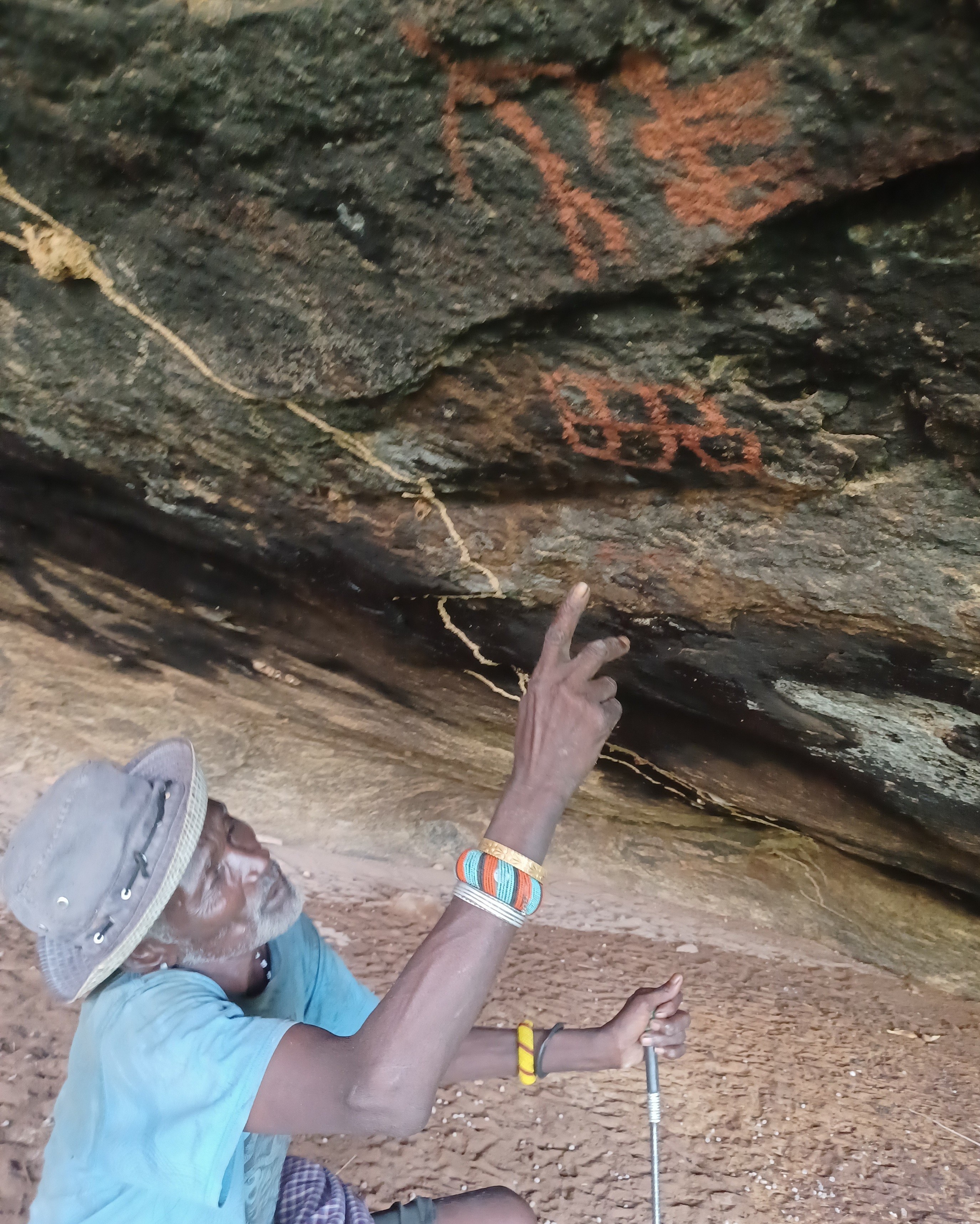
Loingeru painted the animals he saw: bulls, lions, and elephants. He turned ordinary experiences into visual memory. He also painted his fellow warriors, and himself two times, once as a well-fed and strong warrior. Loingeru said that the paintings signalled courage and bravery to Samburu women passing by.
Several paintings on the rock have disappeared, washed away by wind and rain.
.jpg)
Noolkineji
He-Goats Place
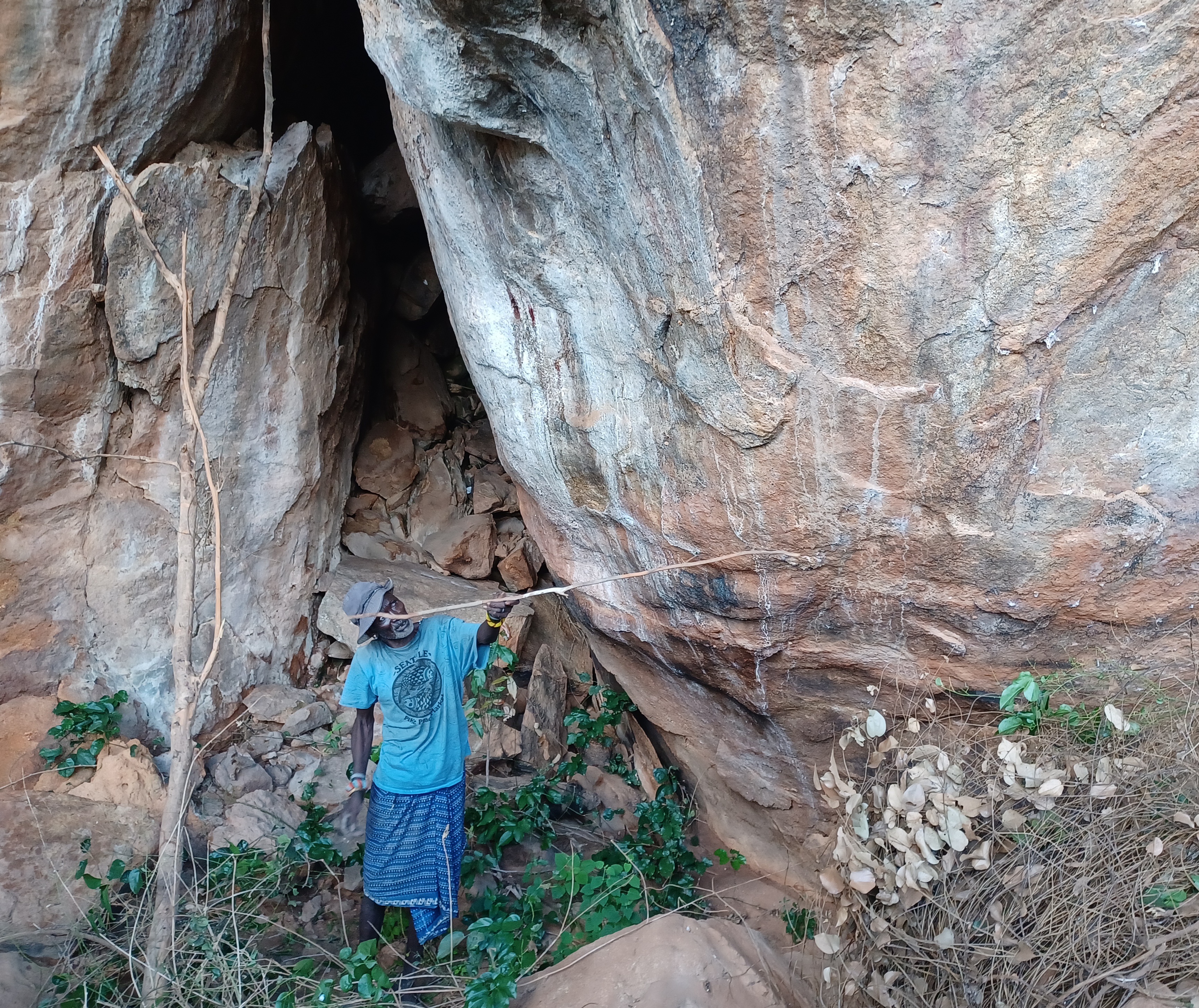
Noolkineji Cave (he-goats place), high up in the hills, was used as a refuge. Loingeru and six other warriors hid here while hunting and raiding goats. They stayed there for about six months. The paintings tell very personal stories.
Noolkineji Cave (he-goats place), high up in the hills, was used as a refuge. Loingeru and six other warriors hid here while hunting and raiding goats. They stayed there for about six months. The paintings tell very personal stories. They are Loingeru's memories painted on the rock.
One painting depicts himself and how they cared for an injured companion by giving him soft goat meat. Beside it on the wall are small squares showing the harder buffalo meat, shared over six days.
"A record of care and sharing among warriors."
🎨 Noongosowani Paintings
.jpg)
.jpg)
🎨 Soitnauno Paintings
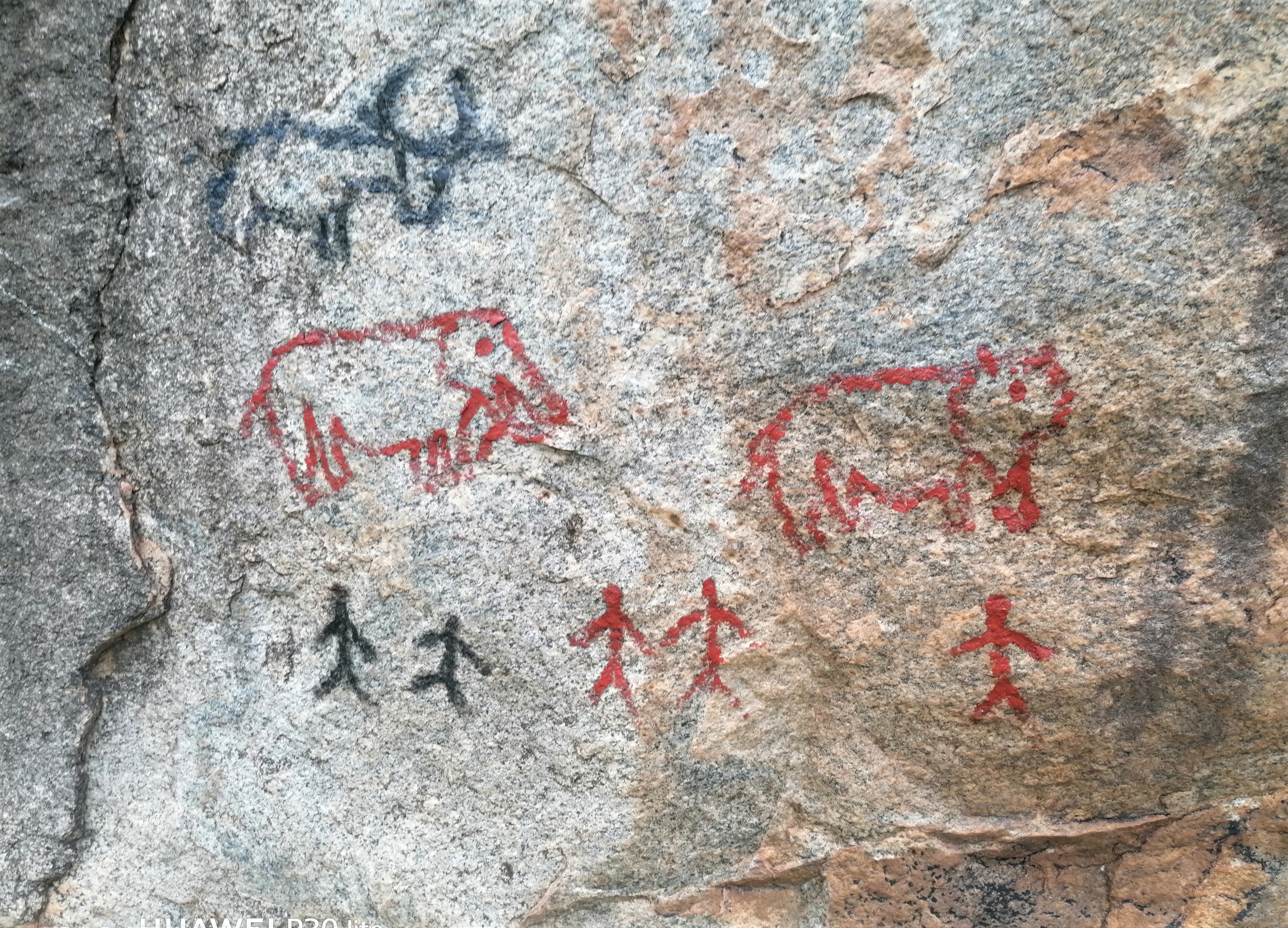
Middle: An elephant and a lion disturbing the lmurran
Top: The black cow with big horns they brought to the cave to slaughter and eat
.jpg)
🎨 Noolkineji Paintings
.jpg)
A Life Remembered in Rock
Across the rock shelters, Loingeru Leparsore used his paintings to tell the story of his life as a Samburu moran. His images are not abstract symbols. Instead, they show real moments he experienced—hunts, his companions, food they shared, dangers he faced, and moments of pride.
The images form a visual diary, preserving the lived experiences of a Samburu warrior and the changing landscape of northern Kenya.
Zaire Lenturra
Lmooli · 1990-2005
Zaire Leturra was born around 1972 in the small village of Keleswa on the western side of the Ndoto mountains. He is a Samburu pastoralist with cows and goats, still living in a manyata in Keleswa. He has four wives and 15 children.
Zaire Leturra was born around 1972 in the small village of Keleswa on the western side of the Ndoto mountains. He is a Samburu pastoralist with cows and goats, still living in a manyata in Keleswa. He has four wives and 15 children.
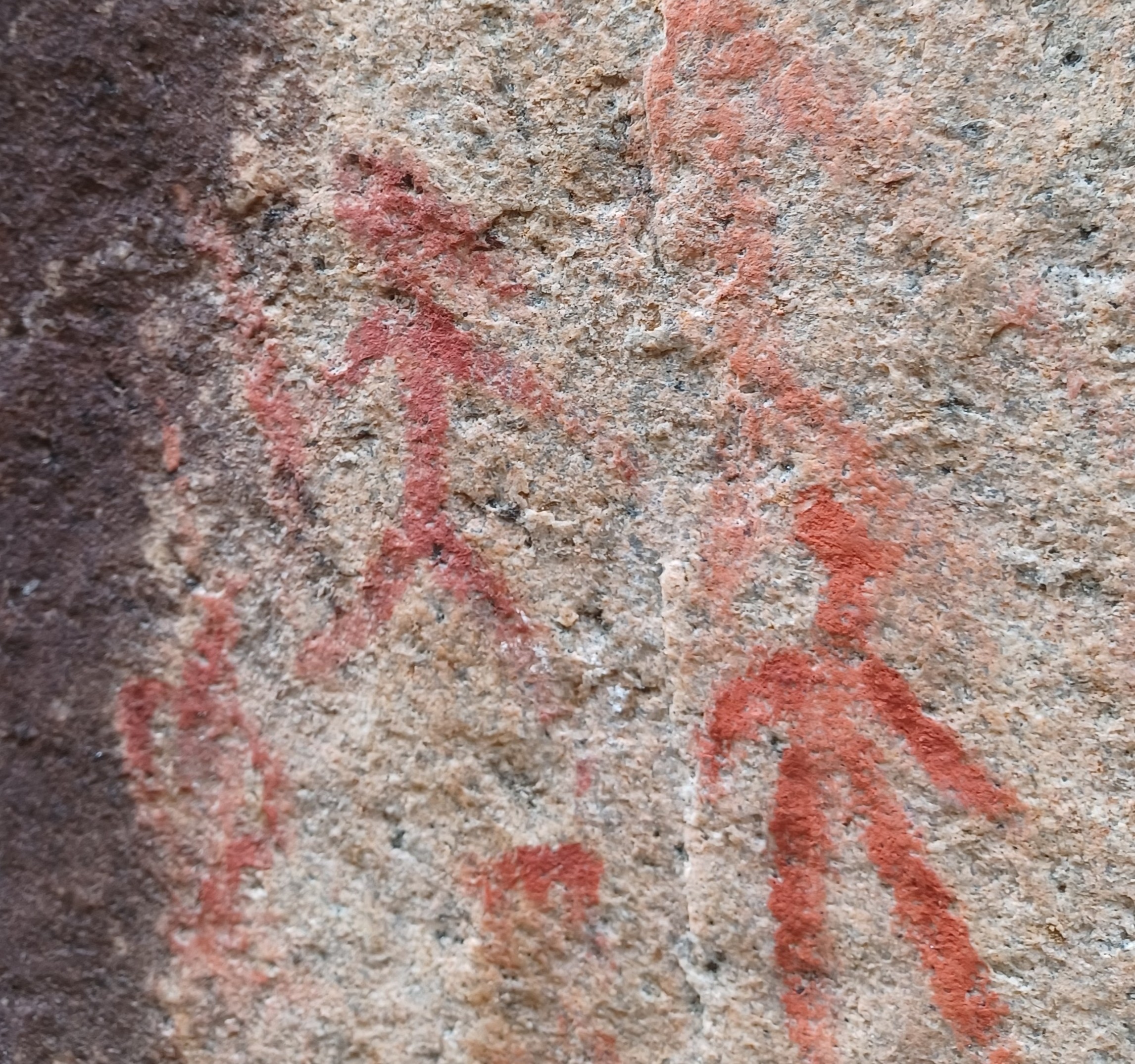
In June 1990, at the age of about 18, Zaire was circumcised as a Samburu Lmurrani in the Lmooli ageset. He lived the life as a Lmurrani in the Ndoto mountains for fifteen years. Zaire has always liked using his hands for modelling or painting. During the first part of his moranhood, 1990 to 1994, he painted in four of the caves and shelters where he stayed. His paintings mainly depict his memories of loikar, the feasting on the cows, camels and goats they brought to the caves to slaughter and eat. Eating fatty meat was a way to become a healthy, attractive and strong warrior, capable of protecting the community. But Zaire has also made other paintings, including an owl, the water hole, herb trees and a fingerprint of his left hand to show that he had been in that cave. Very exciting are the various parts of a lion he painted in Lng'aboli cave.
When Zaire is telling the stories of his paintings, we suddenly understand the meaning of them, and the paintings come to life. The most fascinating story is probably the hunt of the lion, but the stories of how the Lmurran slaughtered cows and camels, divided the meat, and ate it in order to become strong and healthy, are also captivating and illustrated in the paintings. He made his paintings as memories of what he found important from his stay together with other Lmurran in the caves.
Note that Lmangiyan Lenkurukuri from the Lkimaniki ageset painted in two of the same caves more than 40 years before Zaire Leturra painted there in 1990 and 1994. Zaire saw those earlier paintings but did not understand the meaning of them.
Video Interview
Zaire Lenturra Interview
Coming Soon
The Rock Shelters
Four sites where Zaire painted his life story
Lng'aboli Cave
Named after a tree that grows close to the cave
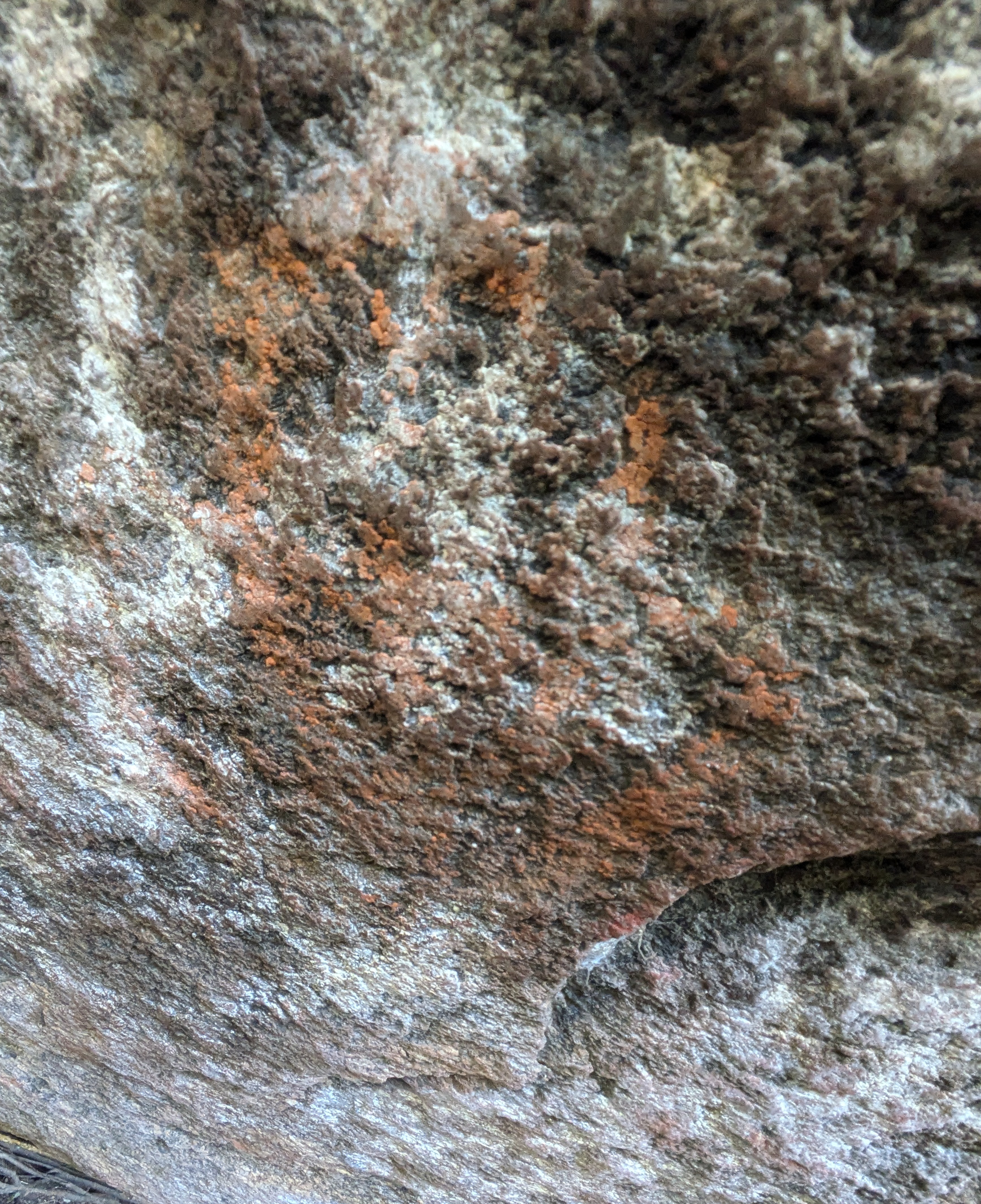
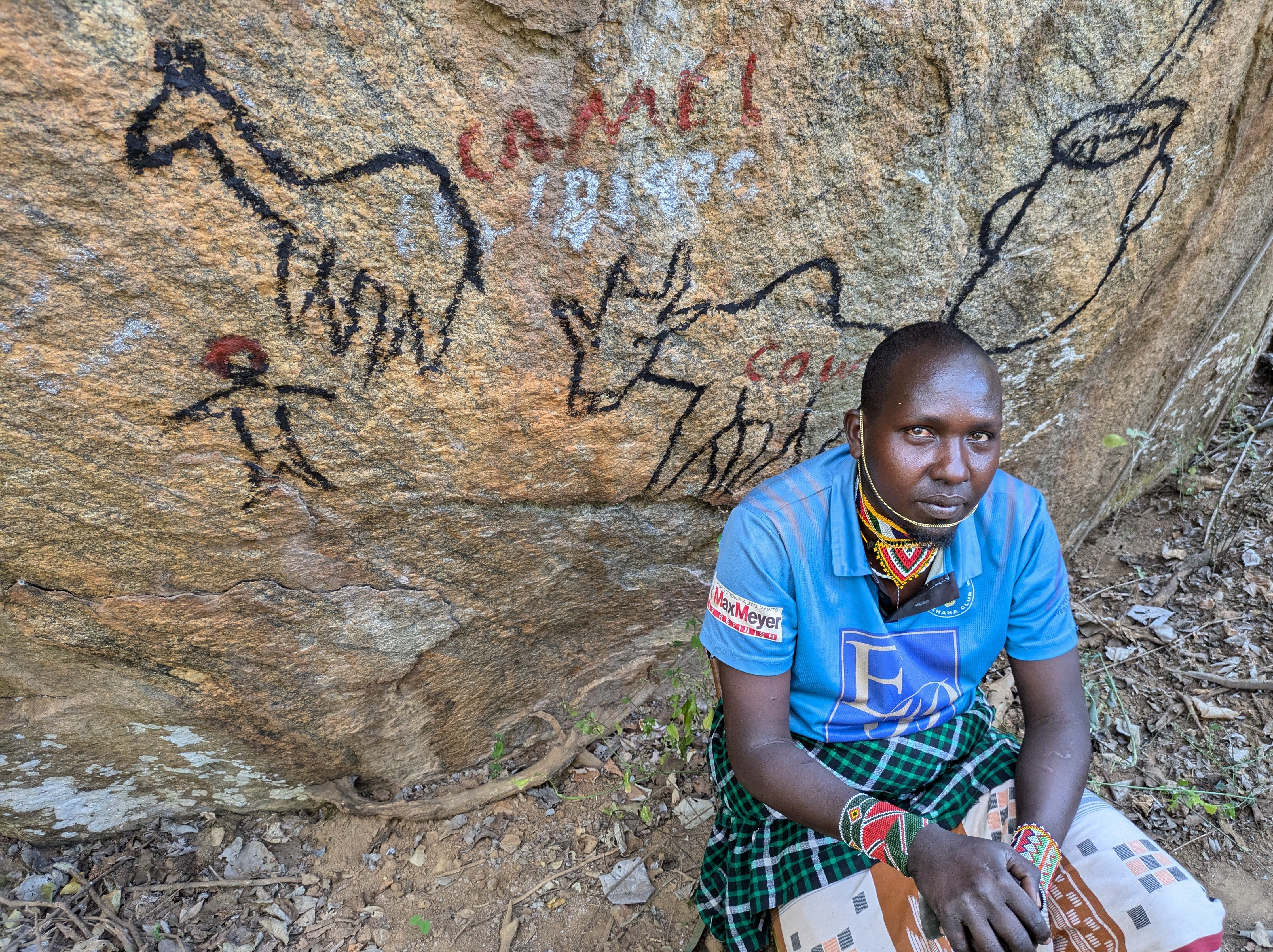
A group of six warriors, with Zaire as their leader, walked up to this cave in the mountains just after circumcision in June 1990. They brought a fat, old camel, named Kerio, to slaughter and eat. The camel was named after, and was a descendant of, a camel stolen in a raid from the Turkana several decades earlier. Zaire renamed the cave, from Takoko to Lng'aboli. Lng'aboli is a tree that grows close to the cave. When relaxing, after eating the meat of the camel, Zaire got inspired by the earlier paintings in the cave and decided to paint the camel, as a reminder of the feast and the tasty meat. He used red ochre from his hair mixed with fat.
Zaire renamed the cave, from Takoko to Lng'aboli. Lng'aboli is a tree that grows close to the cave. When relaxing, after eating the meat of the camel, Zaire got inspired by the earlier paintings in the cave and decided to paint the camel, as a reminder of the feast and the tasty meat. He used red ochra from his hair mixed with fat.
Later the Lmurran brought a big bull to slaughter and eat in the cave. Zaire used the fat from the bull to paint it on the rock. He also painted the way they organized, cut and roasted the meat of the bull.
When lying down to rest in the cave, he saw the older white paintings above him, although he did not understand them, and wanted to paint more. He drew his manyata at home with the huts inside, the water hole near the cave, herb trees, an owl, sticks for drying the meat and his left hand on the rock wall to show that he had been here.
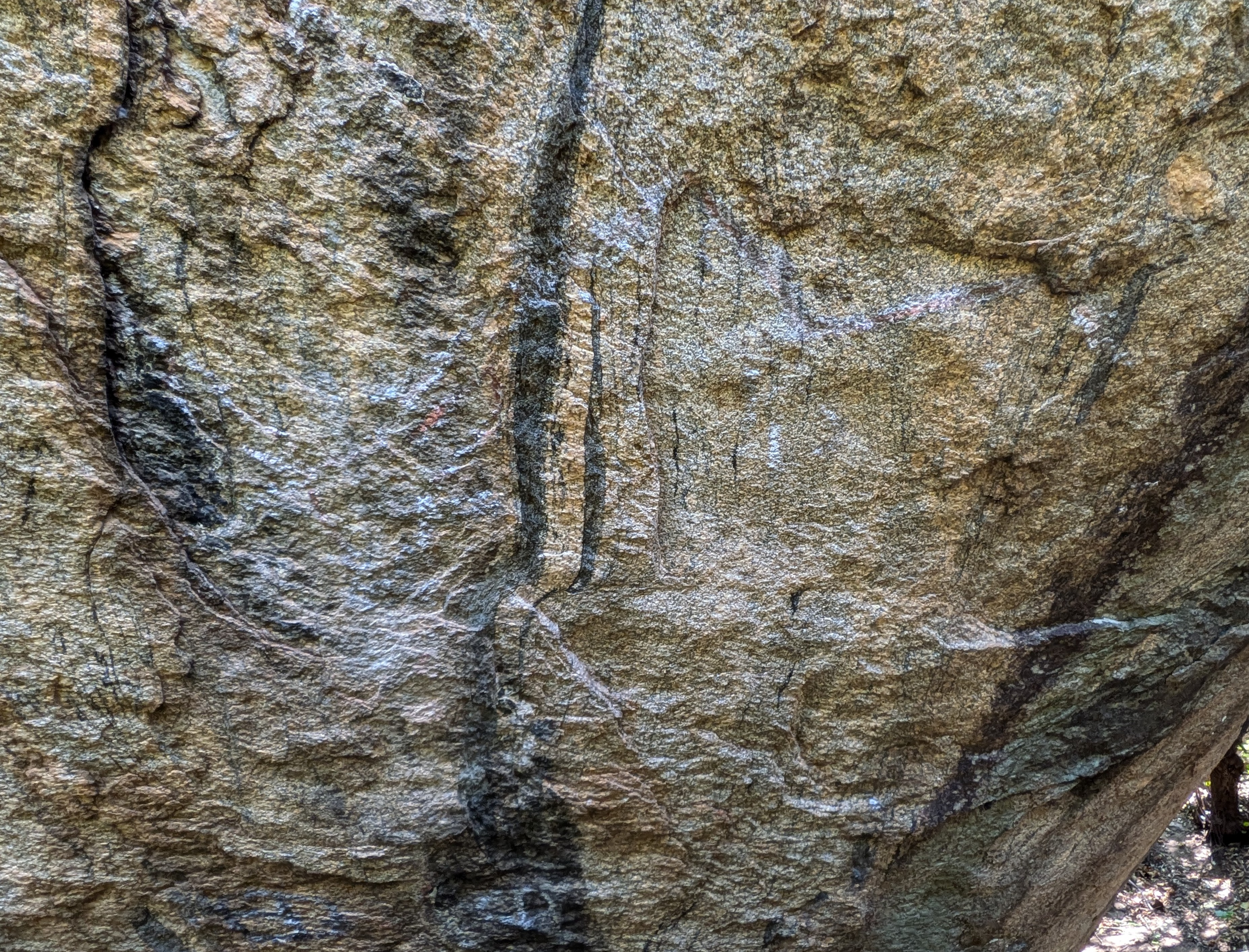
Lng'aboli - Lion Hunt
A dangerous hunt that made them kings among the Lmurran
The lion had killed several cows close to the village and the Lmurran warriors were called to kill it. They left the remains of one of the massacred cows under a tree, close to the cave. One of the Lmurrani, Samiya Lerumpen, climbed up into the tree with his spear and waited for the lion.
The lion had killed several cows close to the village and the Lmurran warriors were called to kill it. They left the remains of one of the massacred cows under a tree, close to the cave. One of the Lmurrani, Samiya Lerumpen, climbed up into the tree with his spear and waited for the lion. Zaire and another Lmurrani chased the lion and then took cover behind some nearby trees.
When the lion began to eat from the dead cow, Samiya threw his spear from the tree top and killed the lion in one strike. The Lmurran cut the skin of the lion into long strips, and each Lmurran received a couple of strips. These lion strips are very valuable and used at weddings and other ceremonies.
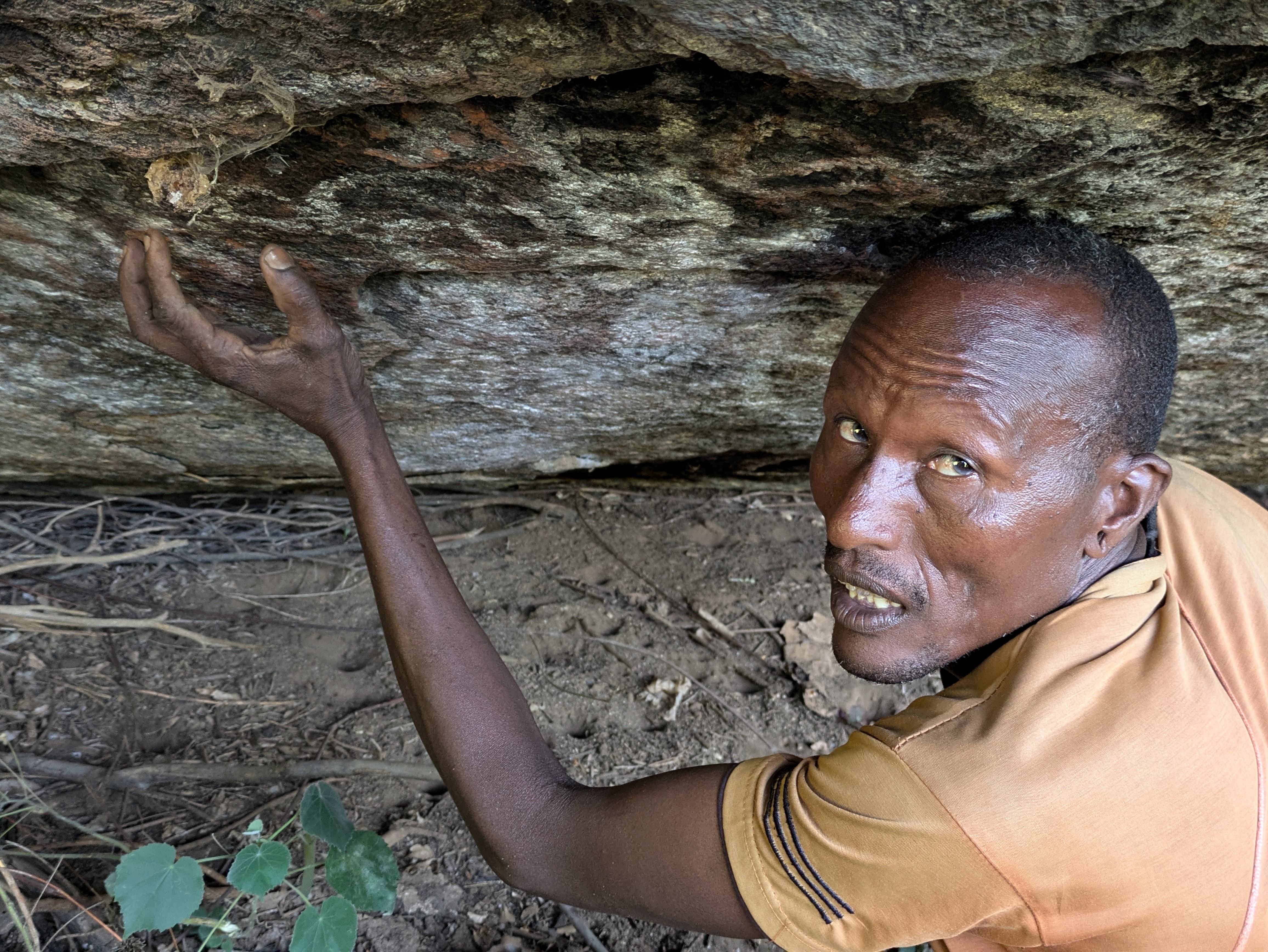
Those who have killed a lion with a spear are considered "kings" among the Lmurran, Zaire says. Of course, he had to paint the dangerous lion on the rock, not the hunt itself but the lion and its various parts. Far down on the rock wall he painted the long spear they used. To the left of the lion he made a print of his hand. It is only through Zaire's story, we can understand the meaning of these images.
Lng'aboli Cave 2
Zaire came here with two other Lmurran after spending two weeks in the previous cave
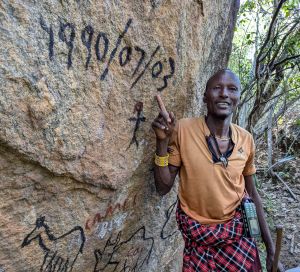
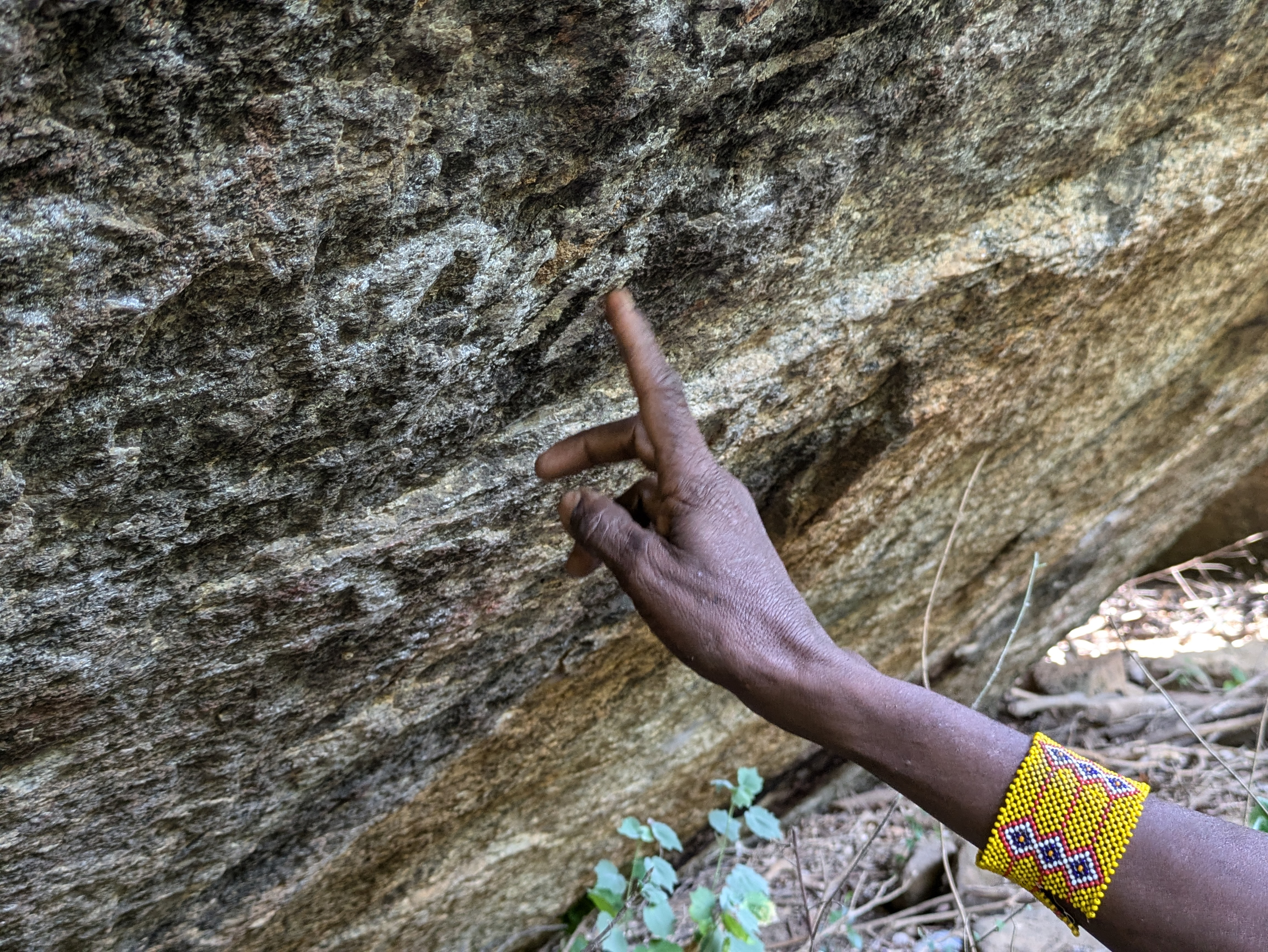
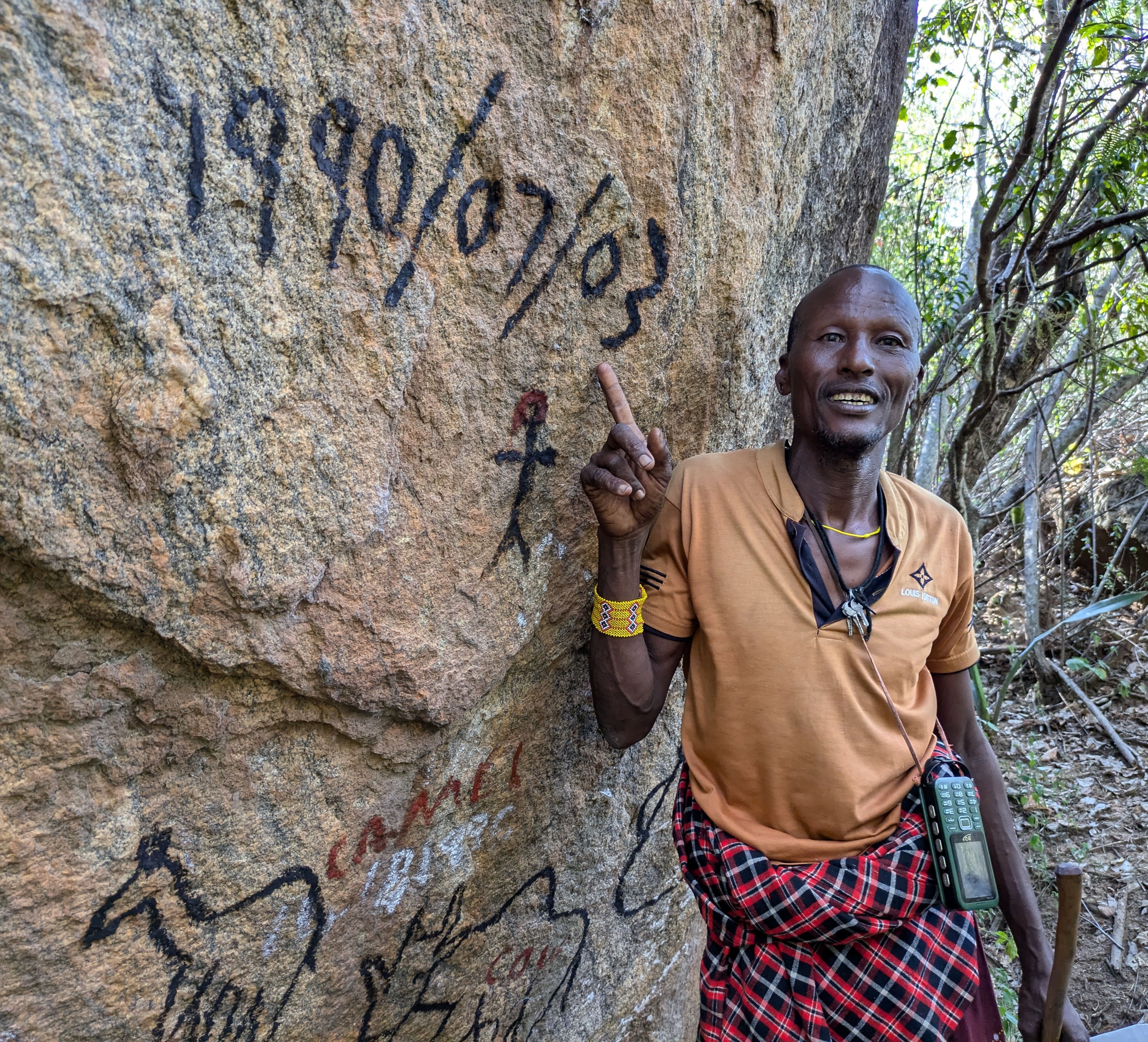
Zaire came to the cave with two other Lmurran after spending two weeks in the previous Lng'aboli cave. His warrior friend Lpatinkin, who had attended school, wrote the date of their arrival in the cave, 3 July 1990. Zaire painted Lpatinkin in black with red hair.
Zaire came to the cave with two other Lmurran after spending two weeks in the previous Lng'aboli cave. His warrior friend Lpatinkin, who had attended school, wrote the date of their arrival in the cave, 3 July 1990. Zaire painted Lpatinkin in black with red hair.
There are later paintings in Lng'aboli 2 cave made by Julius Lenaropi, after his circumcision in August 2005, in the Lkichami ageset. He painted himself, the cow and the camel they brought to the cave to consume. And he drew the Moti, the pot they used for cooking the tasty soup of the remaining meat.
rs.jpg)
Lpirnyinyi Cave
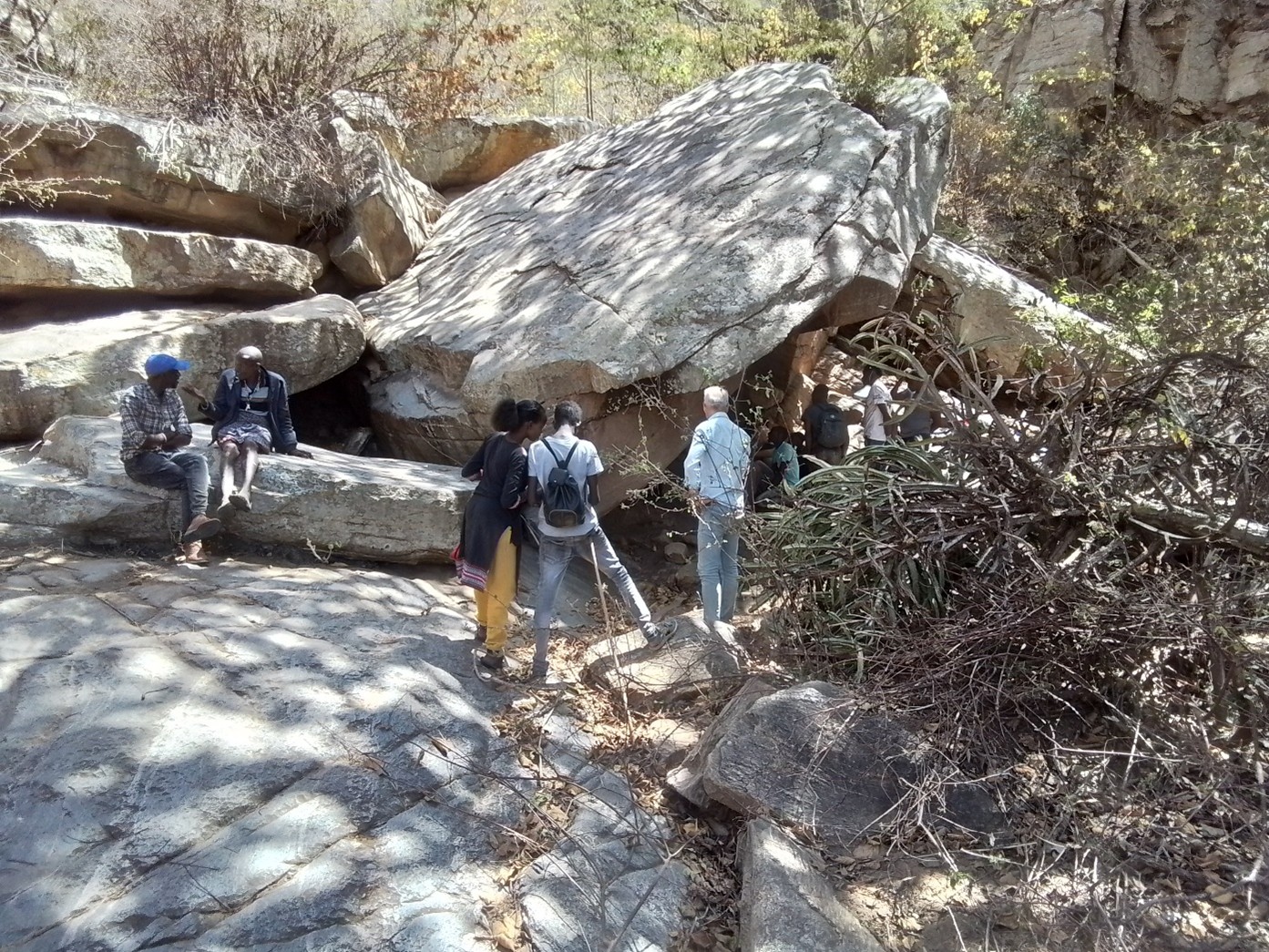
Zaire Leturra came to this cave in 1994, four years after initiation, with five other Lmurran
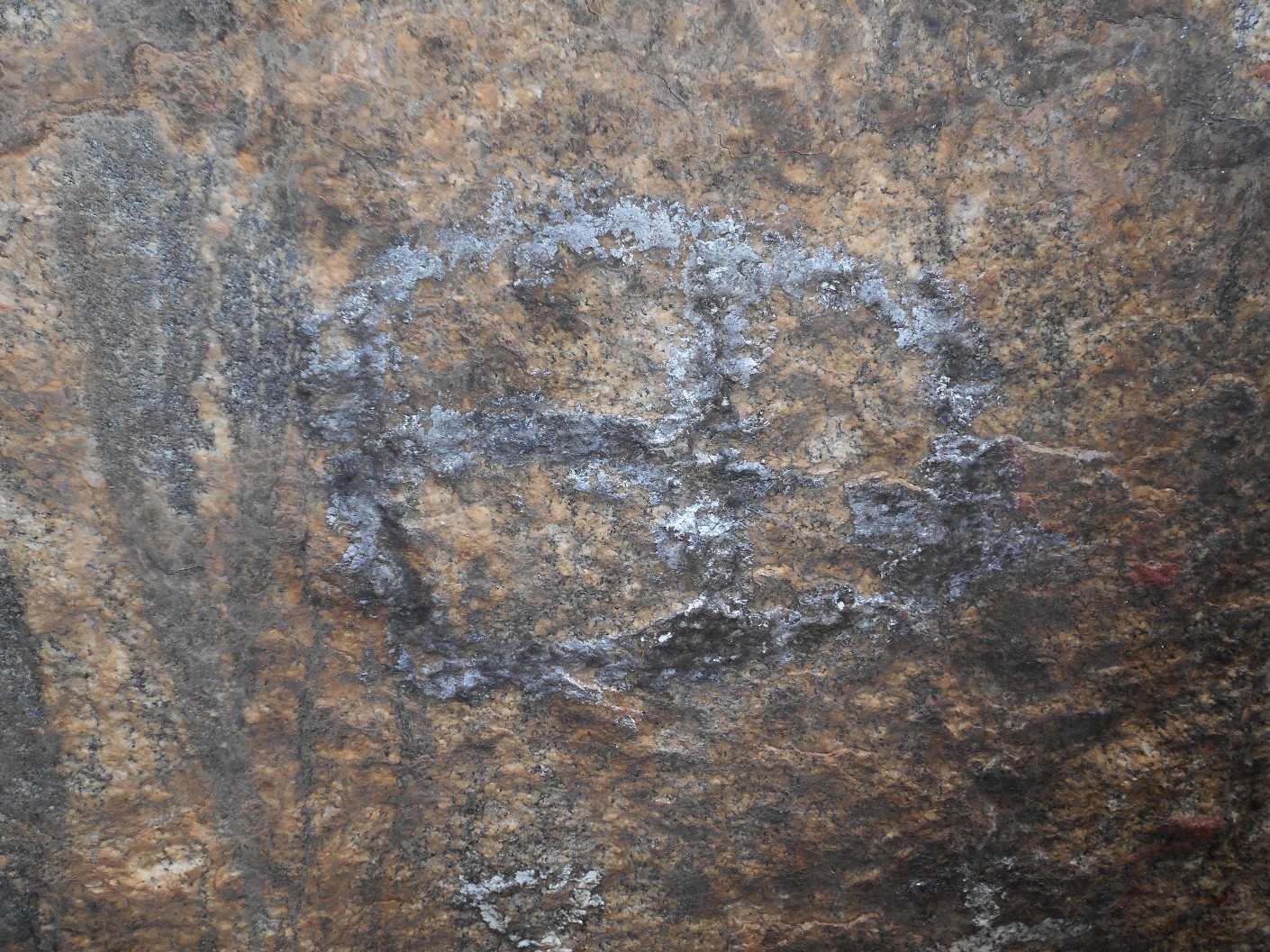
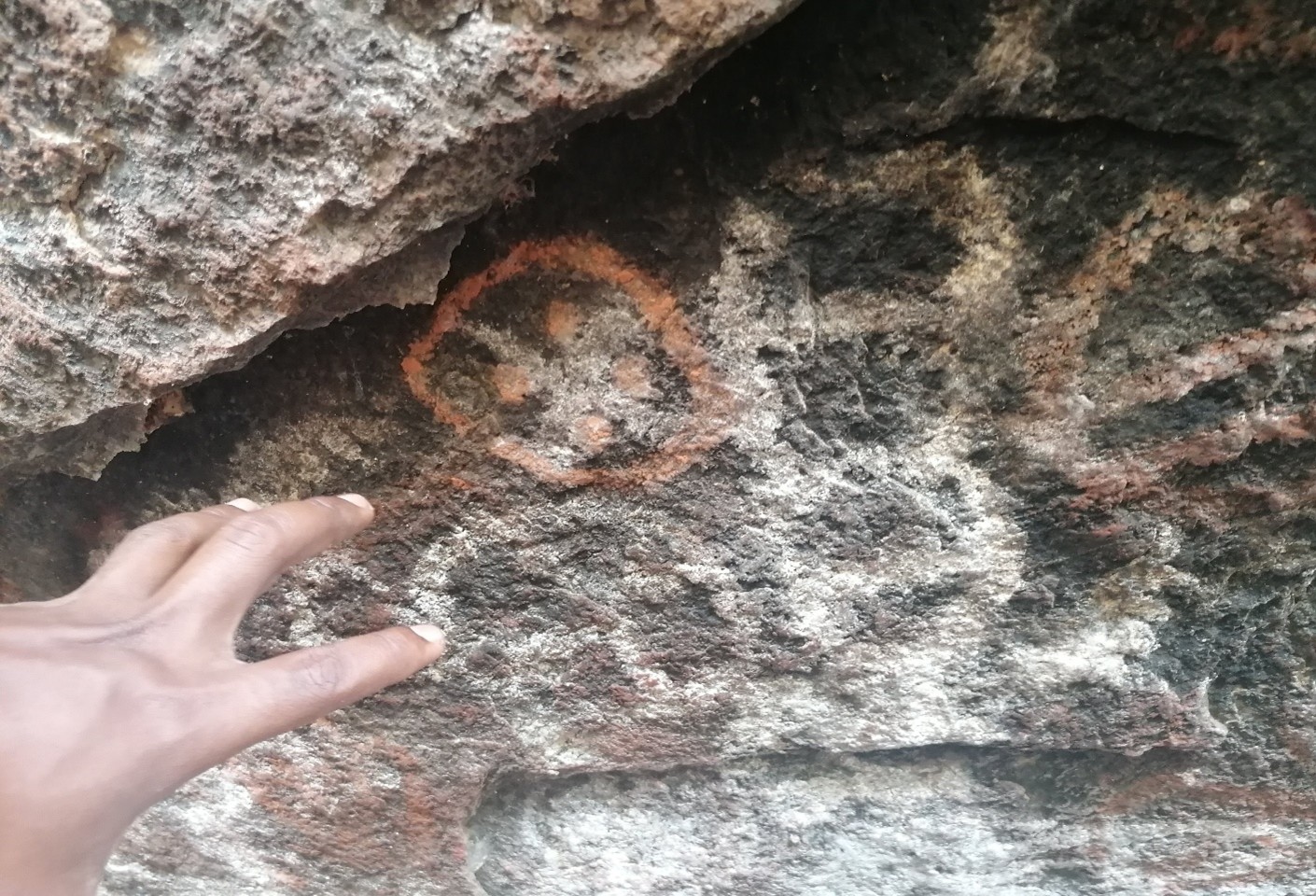
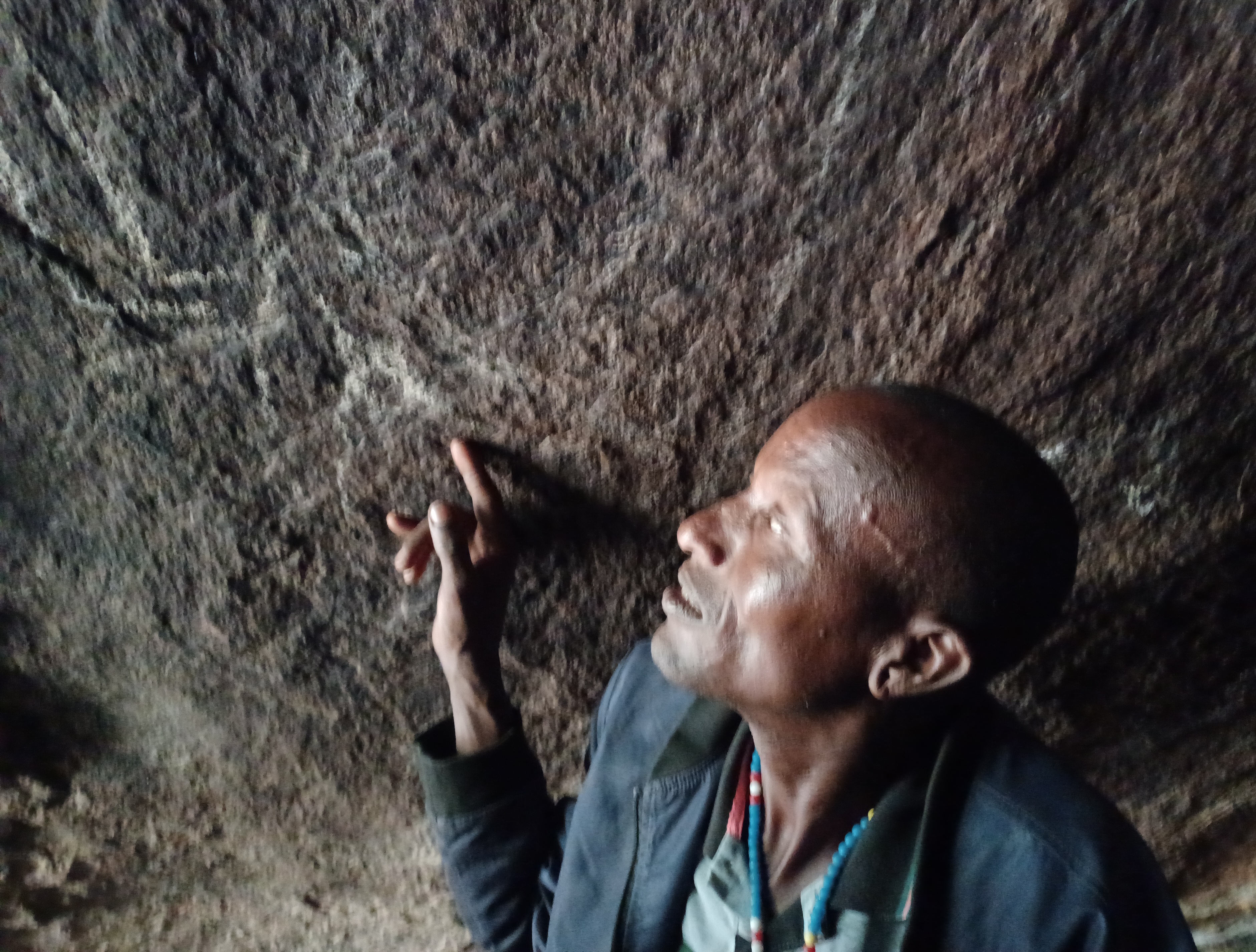
After slaughtering and eating a camel over four days in the cave, first the roasted meat and then a tasty soup of the leftovers, he made a painting inside the cave. He used fat from the camel to paint in white.
After slaughtering and eating a camel over four days in the cave, first the roasted meat and then a tasty soup of the leftovers, he made a painting inside the cave. He used fat from the camel to paint in white.
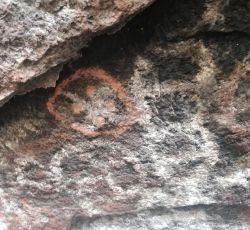
He drew a ring divided into four sections, showing roasted meat on the fireplace, cut into portions for evening and morning meals (started from the right). Around the divided and roasted meat, he painted the six Lmurrani with himself kneeling to the left at the fireplace.
🎨 Lng'aboli Cave Paintings

.jpg)
🎨 Lion Hunt Paintings
.jpg)
🎨 Lng'aboli Cave 2 Paintings
.jpg)
Lpirnyinyi Cave Paintings

Ljinai Lengewa
Lkichami · 2005-2019
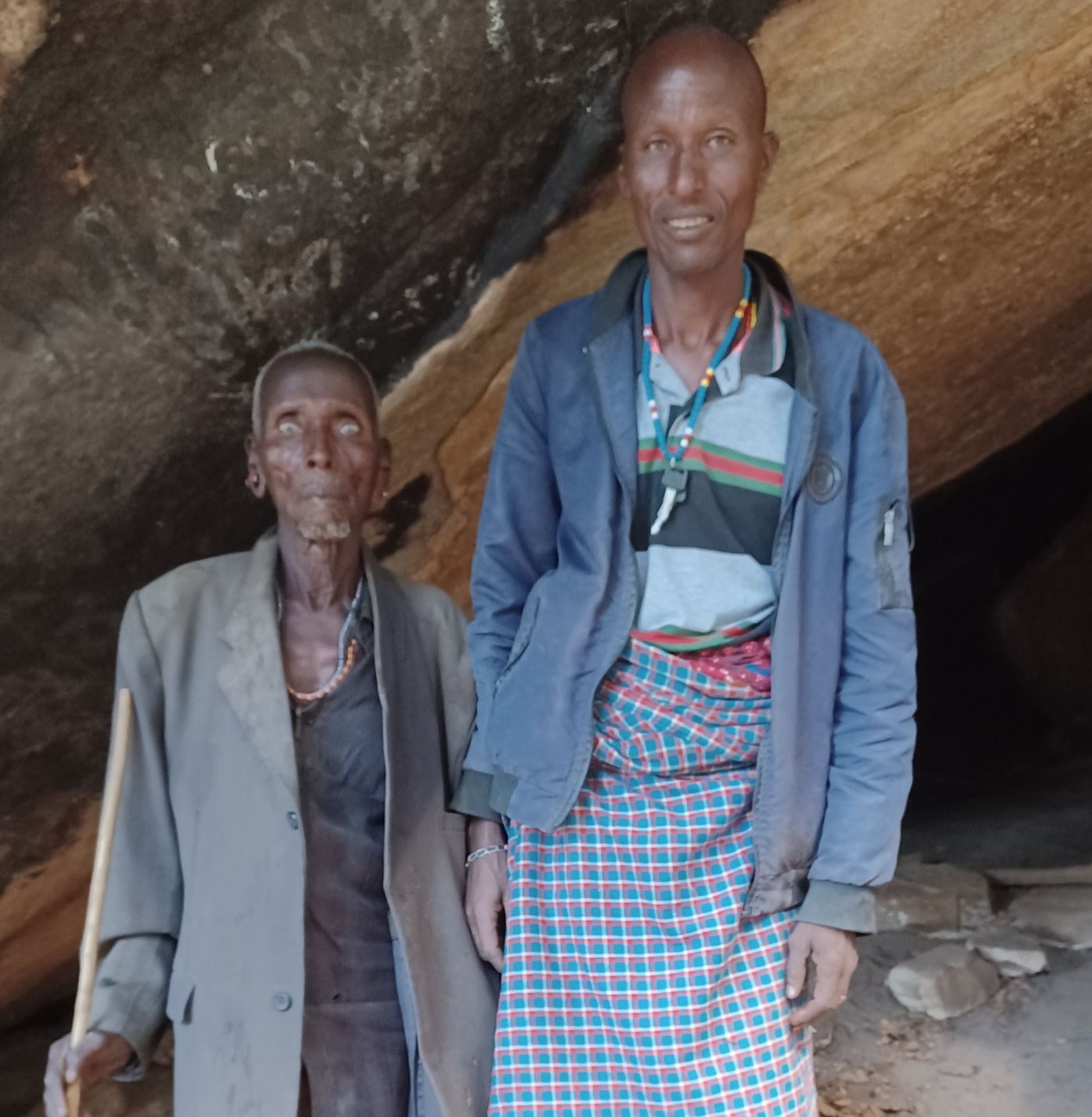
Ljinai Lengewa was born around 1990 in Sumurai village, South Horr, next to the Nyiro mountains. He belongs to the Lengewa family who first came to the area in Ltarigrig age set (1865-1879). The family was Ltorrobos, a hunterer-gatherer group of Samburu, living in the mountains hunting wild animals. Siantee and Labach caves are regarded as the early homes of the family.
Ljinai Lengewa is born around 1990 in Sumuruai village, South Horr, next to the Nyiro mountains. He belongs to the Lengewa family who first came to the area in Ltarigrig age set (1865-1879). The family was Ltorrobos, a hunterer-gatherer group of Samburu, living in the mountains hunting wild animals. Siantee and Labach caves are regarded as the early homes of the family. Over time the Lengewas acquired livestock and moved down to the manyatas in the village.
Ljinai Lengewa started in the local school, but after a few years he had to leave and take care of the cows and goats of the family. He was initiated as a Lmurran in 2005, in the Lkichami ageset, together with 45 other boys. The first cave Ljinai came to was the family cave, Siantee cave, a couple of hours walk up the mountains. It is a hideout, bushy and pleasant, with a good view over the valley below. Ljinai decided to express his experiences from the four-day stay in the cave in paintings in red okra, 28 images. It is a fascinating story on the rock wall, almost like chapters in a book.
Ljinai remained as a Lmurran until 2019 but never painted in any other cave. Today he lives in Sumuruai village, South Horr, with one wife and three children.
Video Interview
Ljinai Lengewa Interview
Coming Soon
Siantee Rock Shelter
Siantee cave is considered the home and the origin of the Lengewa family. It is called Siantee after the first person who stayed here.
Siantee Cave
The family cave of the Lengewa family
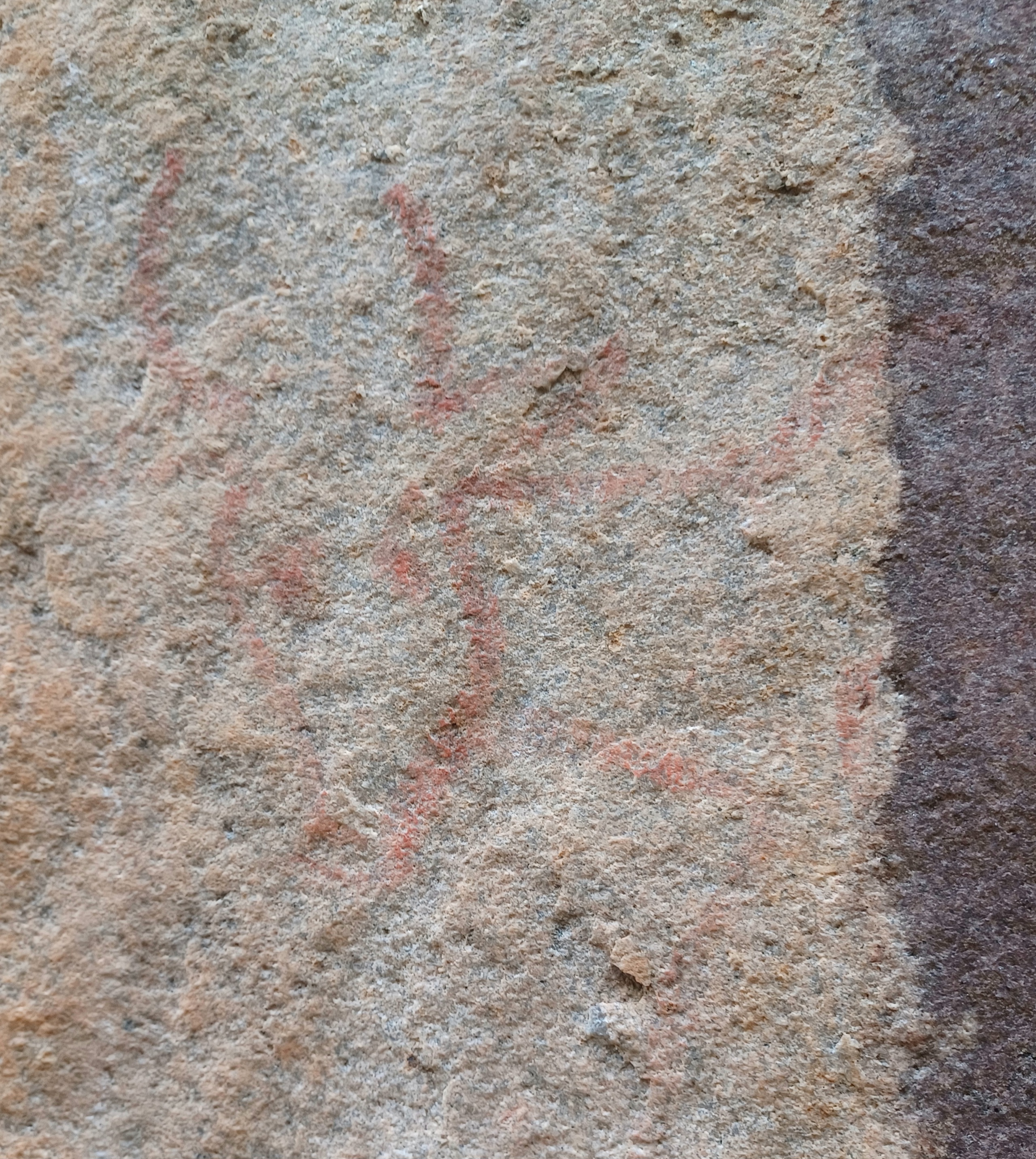
Just after initiation as a Samburu warrior in April 2005, Ljinai brought a bull to the cave, together with a group of six Lmurran. One of them was his best friend Lmurila Lenaidika. Ljinai and Lmurila stayed there for four days, eating the bull.
Just after initiation as a Samburu warrior in April 2005, Ljinai brought a bull to the cave, together with a group of six Lmurran. One of them was his best friend Lmurila Lenaidika. Ljinai and Lmurila stayed there for four days, eating the bull.
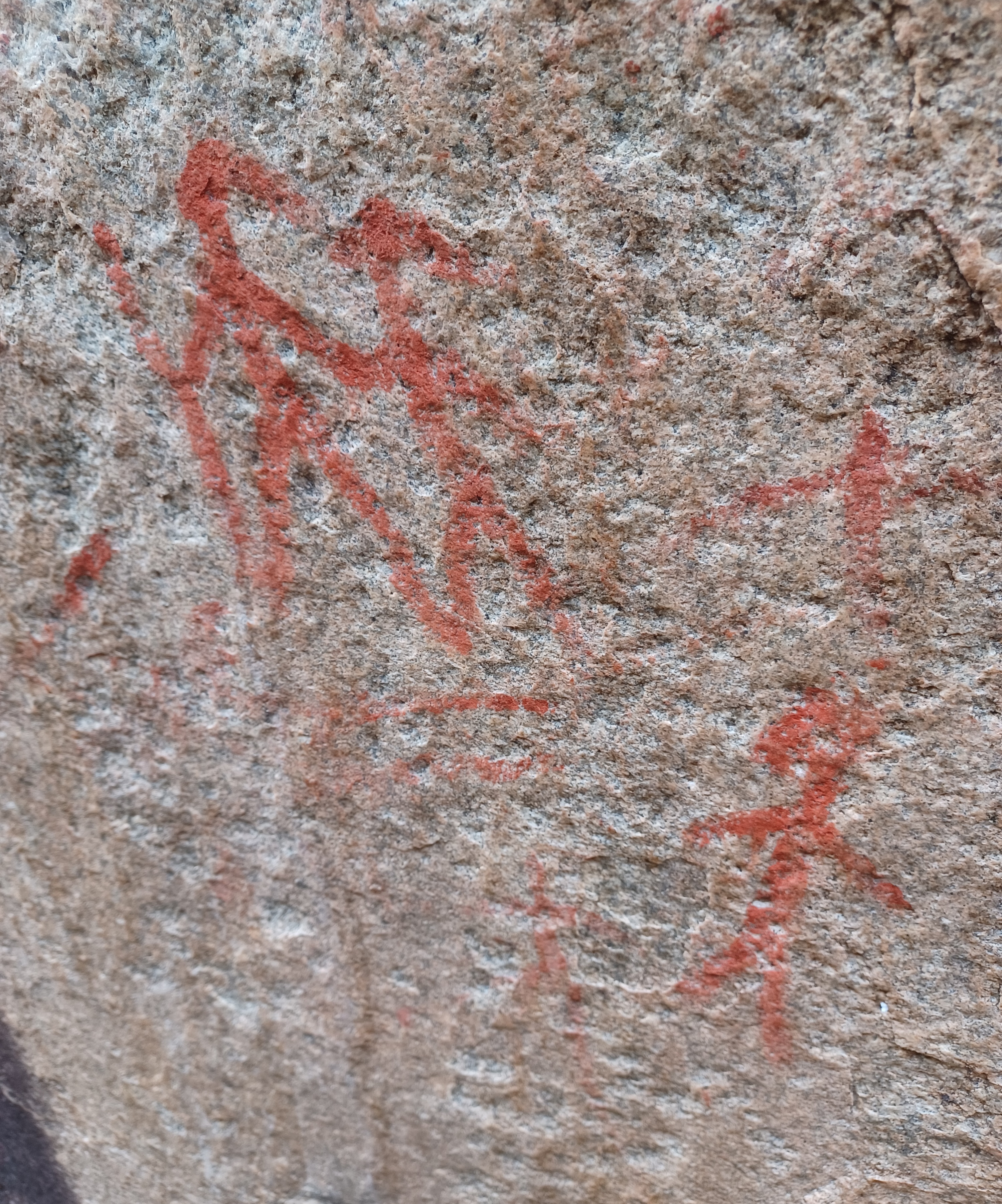
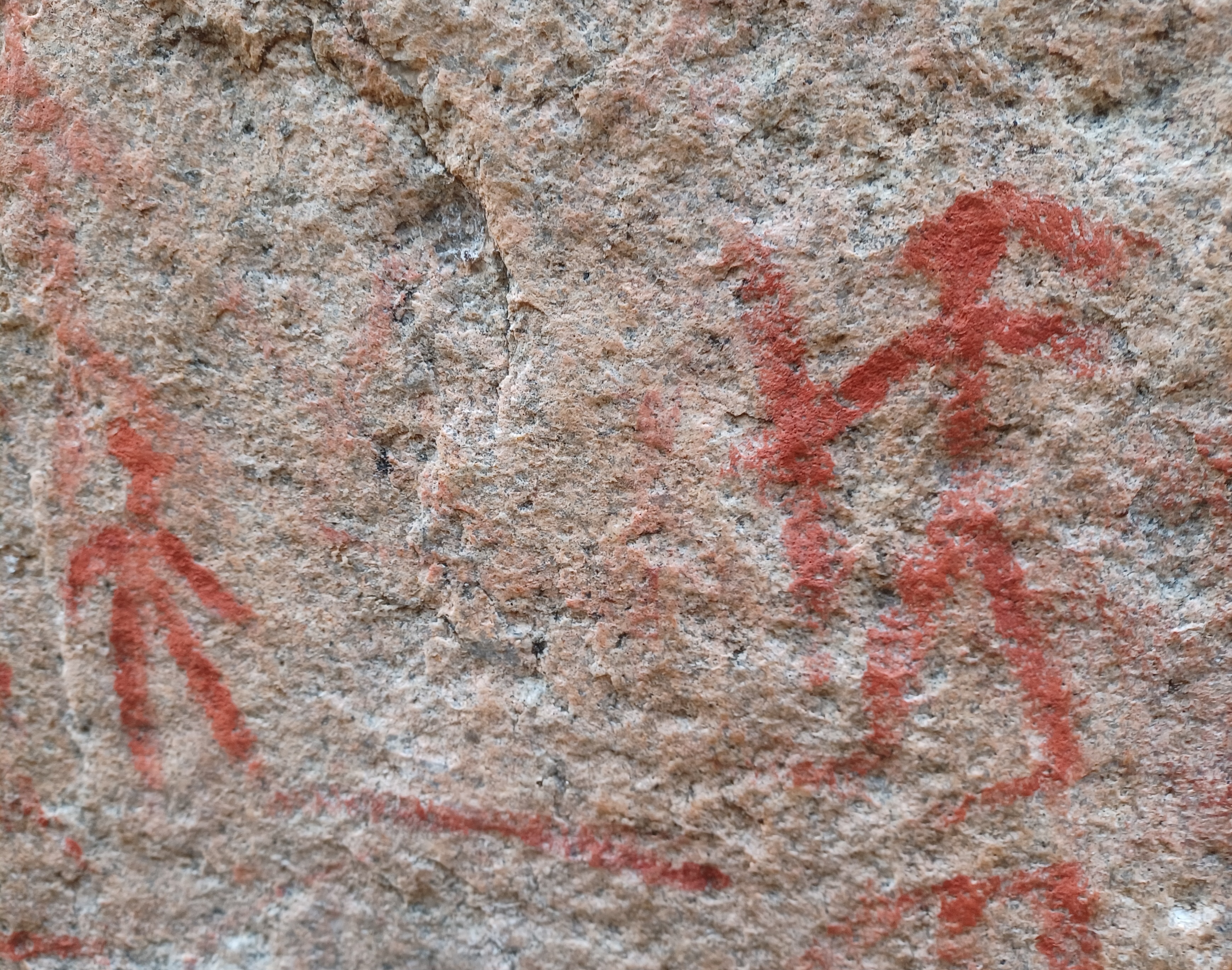
All 28 paintings in the Siantee Rock Shelter are painted by Ljinai Lengewa during the last two days of his stay in the cave. It is his story of what he experienced in the cave, a unique story, that can be unfolded only through Ljinai's own words. The story runs from right to left. It starts with him bringing the fat bull with big horns to the cave for slaughter. He painted him and his friend Lmurila Lenaidekei arriving at the cave, the stools they used, his own bed, a gourd (calabash), and stirring sticks for the pot. He also painted himself with a spear, dancing with his girlfriend in the village, and the manyata at home, where the bull was brought from. Finally, to the left, he painted himself and his friend Lmurila Lenaidekei when leaving the cave after four days. He used red ochre from his head and hair and applied it with his index finger.
Ljinai Lengewa painted some more images on the rock, but they are unfortunately destroyed by running water from heavy rain: several wild animals they saw and the meat from the bull they ate. Behind the rock wall lies the cave, the shelter where the Lmurran stayed.
🏔️ Siantee Cave painting Captions
.jpg)

An Artist Family
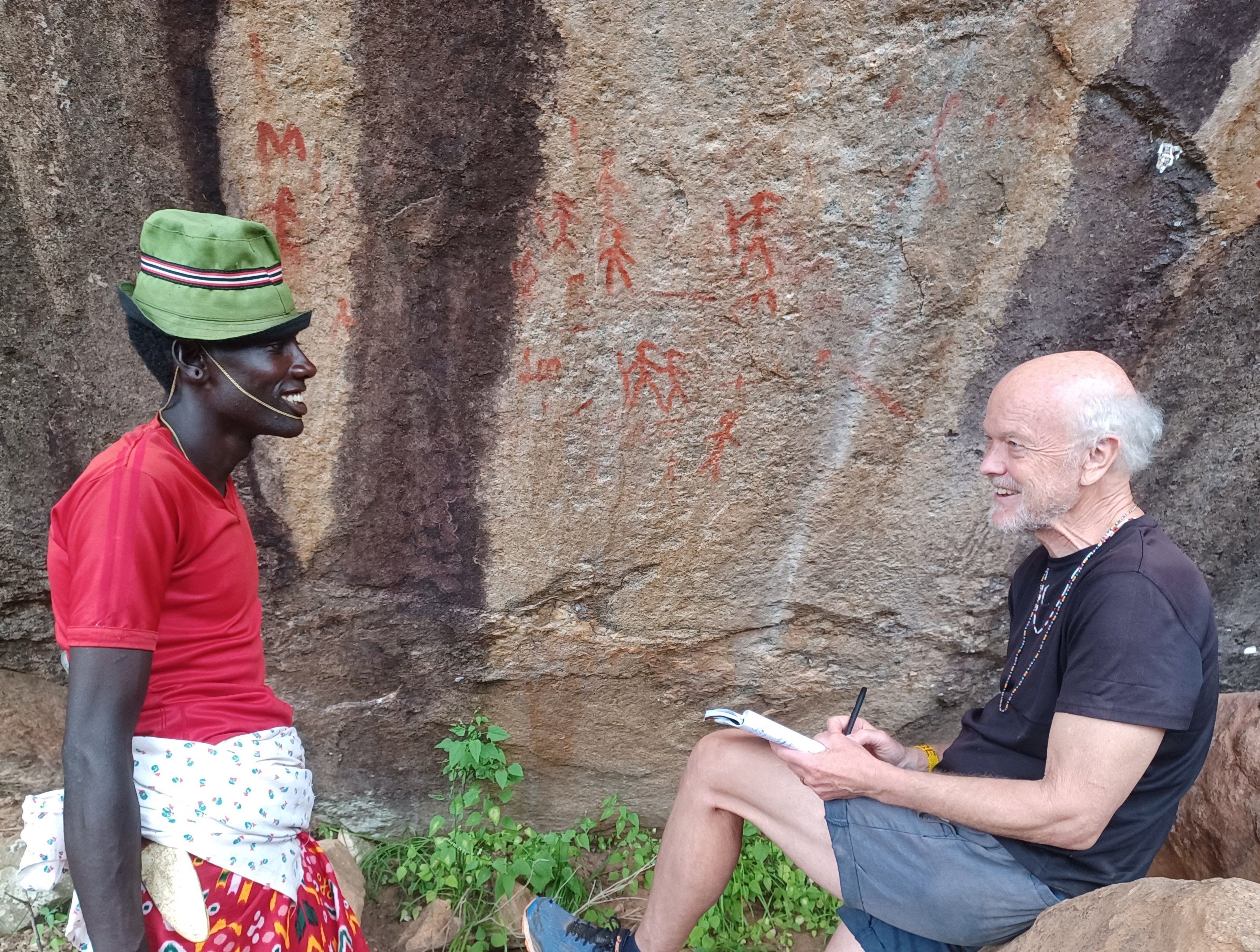
Ljinai Lengewa belongs to a family of rock painters. His cousin, Agen Lengewa, also from the Lkichami ageset (2005-2019), painted in five caves, not far from Siantee cave. His brother Chopina Lengewa, Lmooli (1990-2005) painted in two caves nearby. His father, his uncle, his grandfather and great grandfather, Ltirito (1893-1912) painted, as well as several other family members, maybe even his great, great grandfather from Ltarigrig (1879-1893). Another family member, Ldolin Lengewa, Lkichili (1961-1976), mentions his own paintings and the paintings of his forefathers, throughout all the agesets to Lmarikon (1879-1893), probably also Ltarigrig (1865-1879) and Lkiteku (1851-1865). According to oral family history the Lengewa family came to the eastern side of the Nyiro mountains in Lptaa (1809-1823). They made Labach their homestead. In Lkiteku (1851-1865), they started to use the name Lengewa. For more than 150 years, members of the family have painted in the caves, at loikar, and the current Lmurran still do..
A living legacy of rock art passed down through generations of the Lengewa family.
Roba Lesagaram
Lkiseku · 2019-present
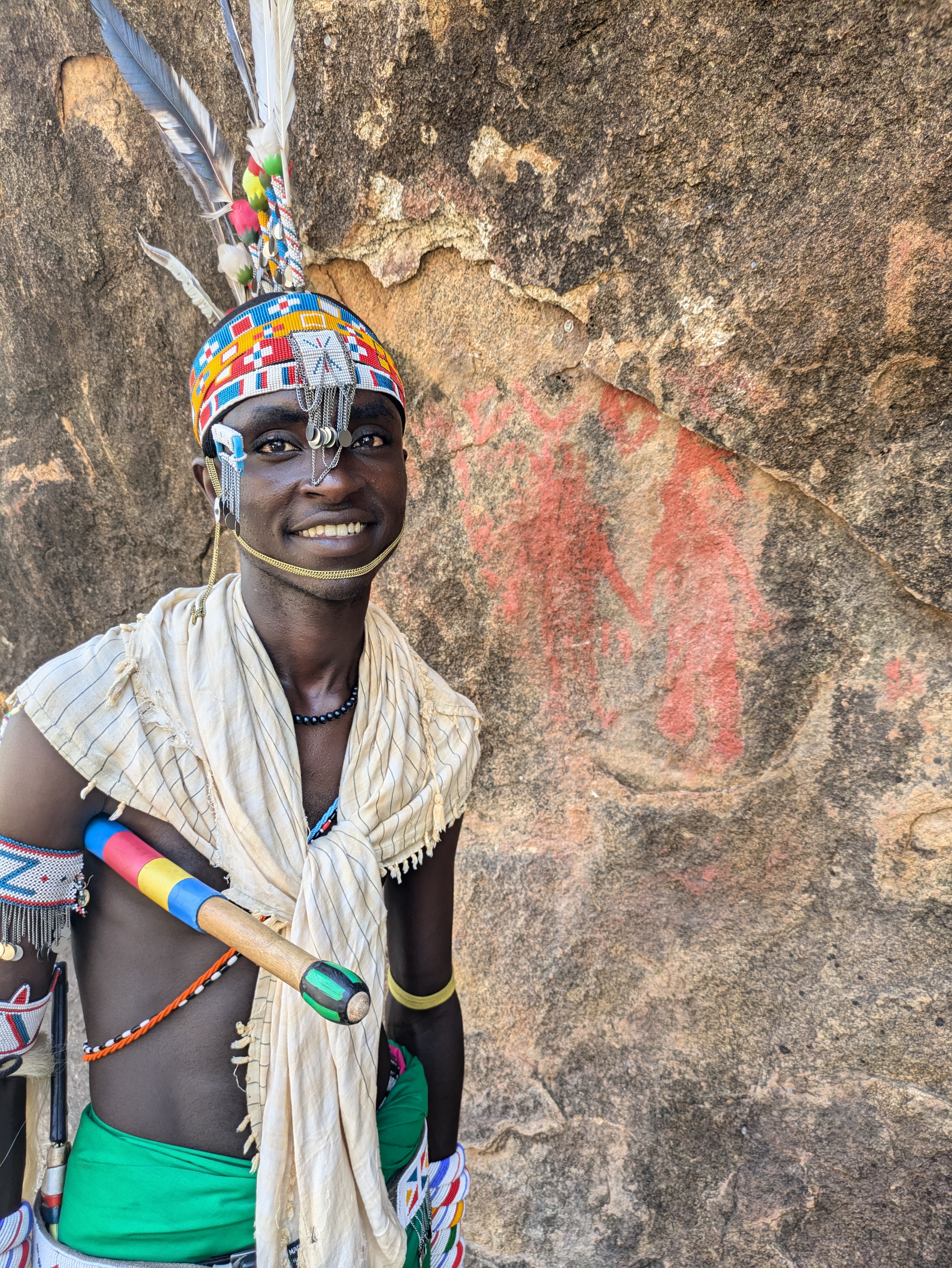
Roba was born in Kari, close to Ngurunit, around 2004. His father is Rendille and his mother is Samburu. He has one sister and four brothers. His family still lives in the same manyata in Kari.
Roba was born in Kari, close to Ngurunit, around 2004. His father is Rendille and his mother is Samburu. He has one sister and four brothers. His family still lives in the same manyata in Kari.
Roba attended Salato Primary School in Ngurunit for three years, but then his father told him to leave and look after the livestock. He was not happy to leave school, but he realized that somebody had to take care of their animals.
Roba was circumcised into the Lkiseku age-set in 2020, together with 47 boys in Ngurunit. He was really looking forward to the free life of a Lmurran.
Roba has painted in three caves: Noldia cave in 2021, together with his friend Lpurrungei Lekalgitele, where they painted a Lmurran and his girlfriend; Nkaji e Nkai cave in 2022, very close to his manyata, where he painted a cow and a camel from home; and Noolkineji cave in 2023, where he painted a cow and himself as a Lmurrani with feathers and a spear. In this cave, two other Lmurran also painted at the same time. Roba says that he will continue to paint. The paintings give him good memories, and people passing by will know that the Lmurran were here and made these paintings. Roba says he enjoys the free life of a Lmurrani. "There is nothing better." He is very careful about the way he looks and the jewellery he wears.
Samburu Rock Art, a Living Tradition
Lkisieku ageset painting in Loikar
The Rock Shelters
Three sites where Roba painted his life story
Noldia Cave
Together with his good friend Lpurrengei Lekalgitele
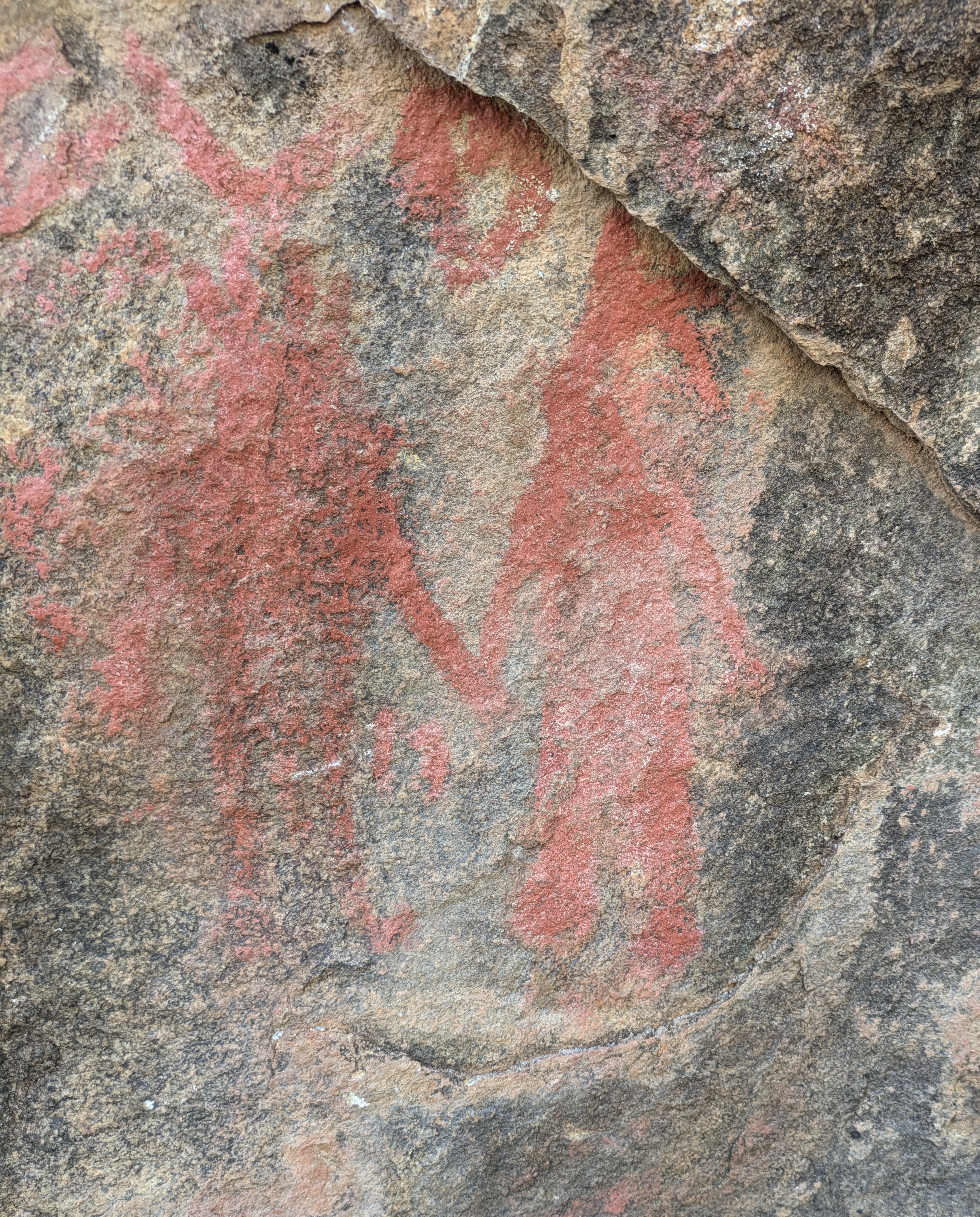
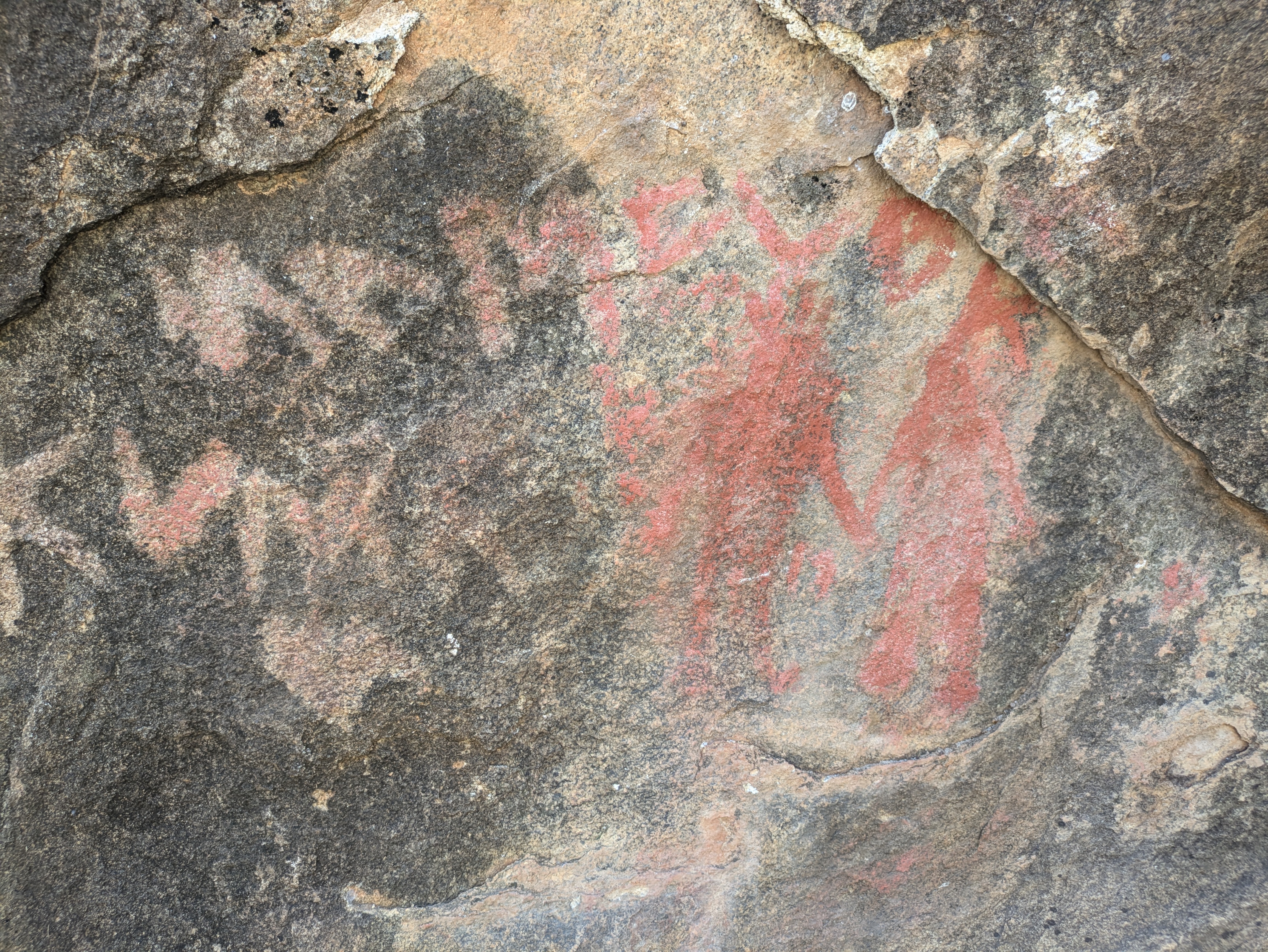
Roba came to this cave after the long rains in April 2021, together with his good friend Lpurrengei Lekalgitele. They wanted to decorate themselves and smear their heads with red ochre. After decorating themselves, they decided to paint.
Roba came to this cave after the long rains in April 2021, together with his good friend Lpurrengei Lekalgitele. They wanted to decorate themselves and smear their heads with red ochre. After decorating themselves, they decided to paint. They bought the red ochre and oil in Ngurunit, brought them to the cave, and mixed them in a small tin. They painted together: a Lmurran and his girlfriend holding hands.
Roba first painted the Lmurran with long feathers, a spear, and a large upper body. Then Lpurrengei painted the girlfriend with many necklaces and beads on her lower legs. Above the couple, Roba wrote NAMELOOK, meaning sweetheart.
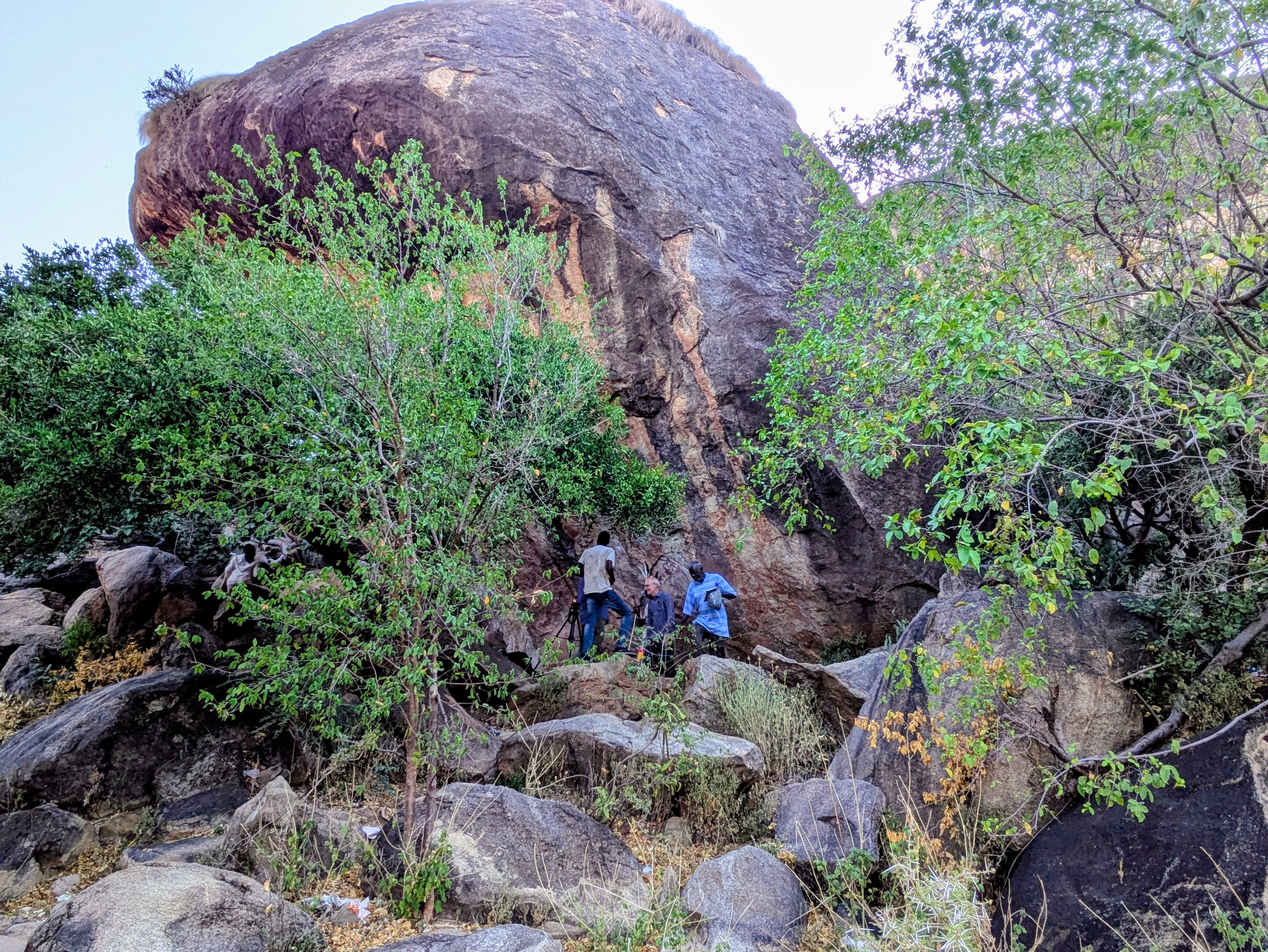
Nkaji e Nkai Cave
House of God – near Roba's home
This cave is near Roba's home, just above their manyata. Roba went there many times as a child, and he still uses it quite a lot with his Lmurran friends. He named the cave Nkaji e Nkai, meaning House of God.
This cave is near Roba's home, just above their manyata. Roba went there many times as a child, and he still uses it quite a lot with his Lmurran friends. He named the cave Nkaji e Nkai, meaning House of God. The name expresses his appreciation of the cave as a good place, a hiding place, protection from the sun, and always cool. The Lmurran often come here to feast on meat, cook, eat, tell stories, have fun, and rest, but they never spend the night there because of the dangerous snakes.
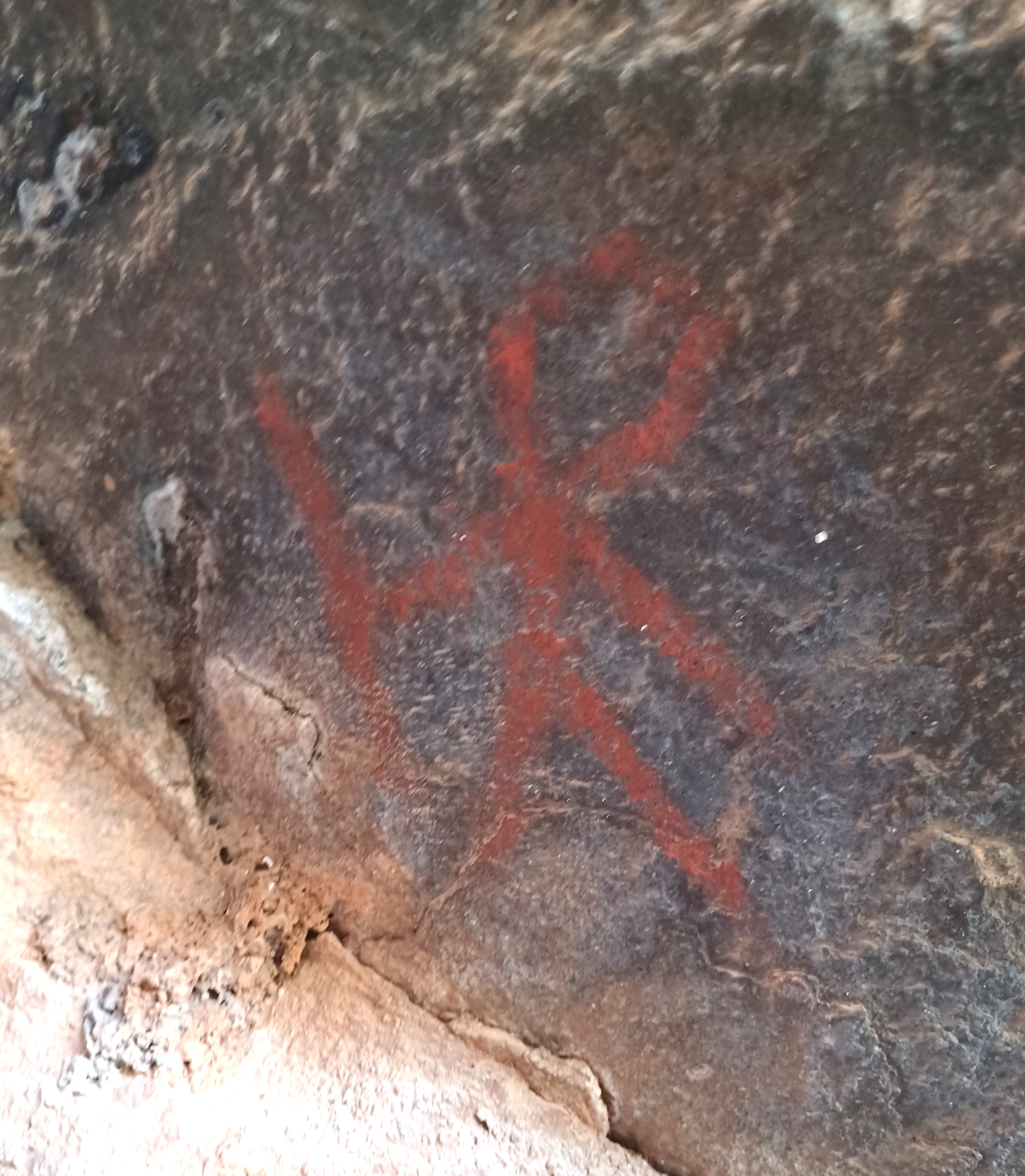
In 2022, four morans came here to plait the hair of one of them, Lekesike, with the support of an elder. They also brought a goat to eat. While sitting and doing nothing, Roba saw the previous paintings in the cave and decided to make his own painting. He imagined his favourite bull from home, as well as the tallest camel, and decided to paint them in red on the rock wall. He found a good space on the rock and first painted the bull, which is named Nanapi. After finishing the bull, he painted the camel, which is named Mporog. When the other Lmurran saw his paintings, they said, "Wow, you did a good job." They were surprised that he was a painter.
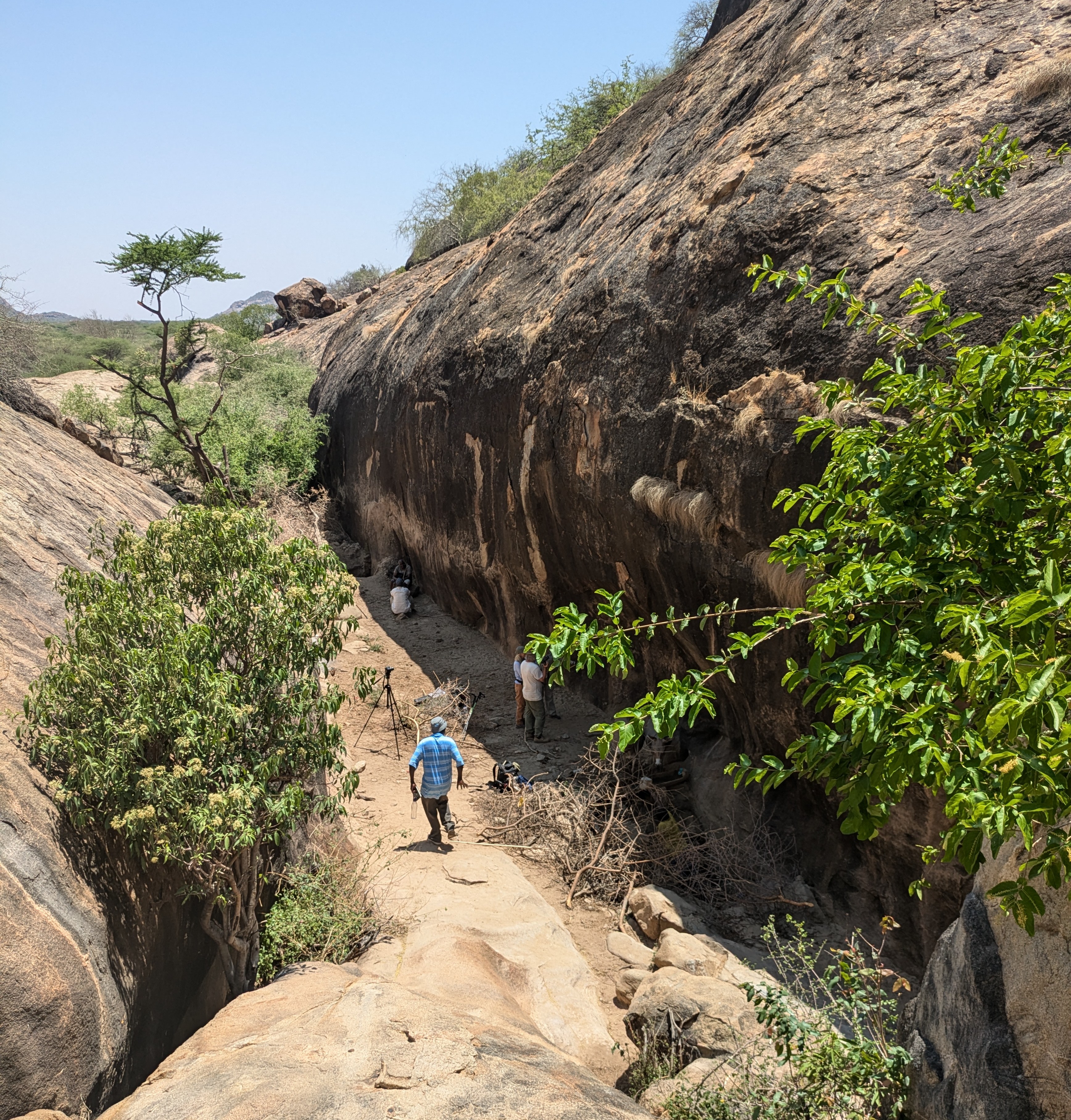
Noolkineji Cave
Ten morans, two goats, and three painters
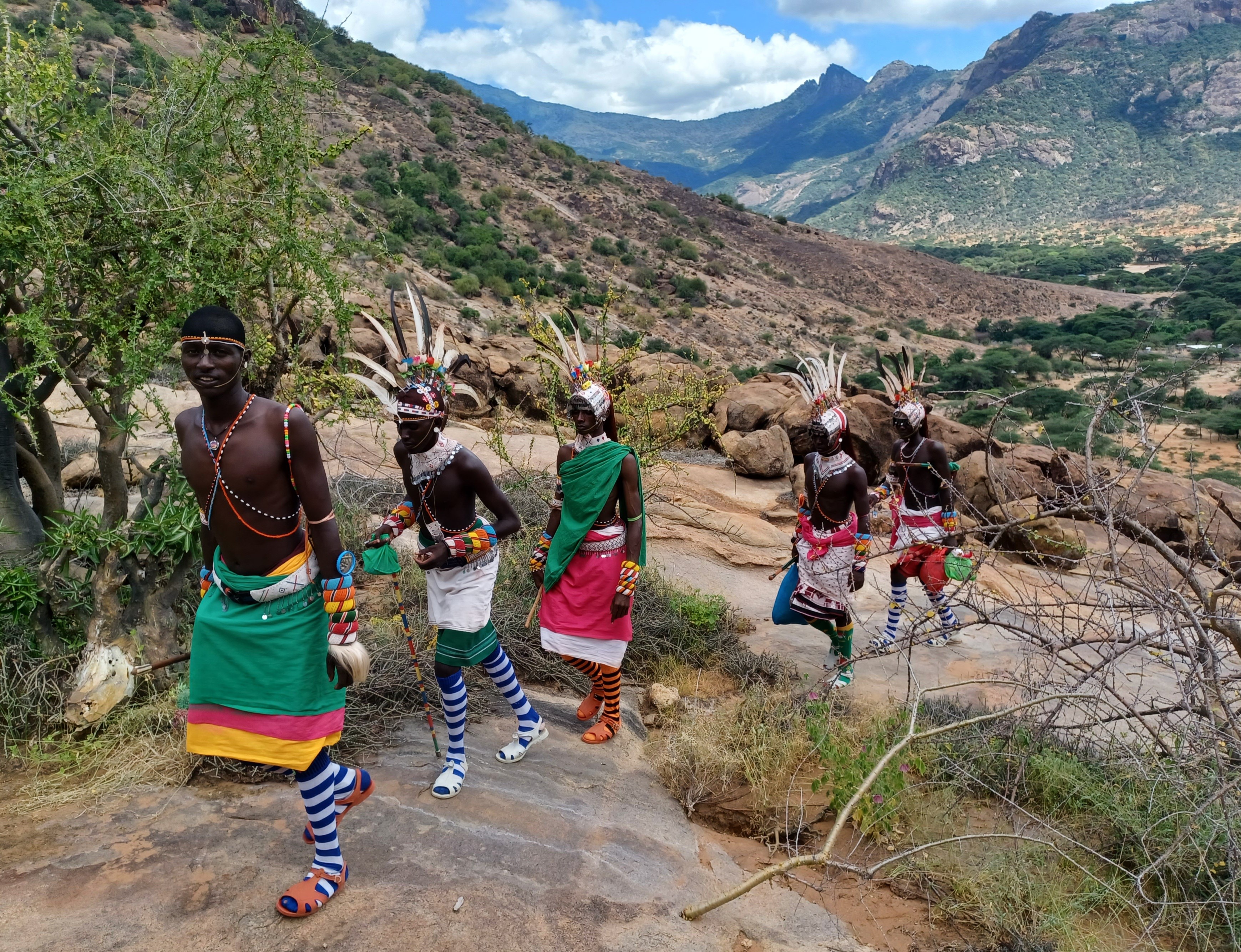
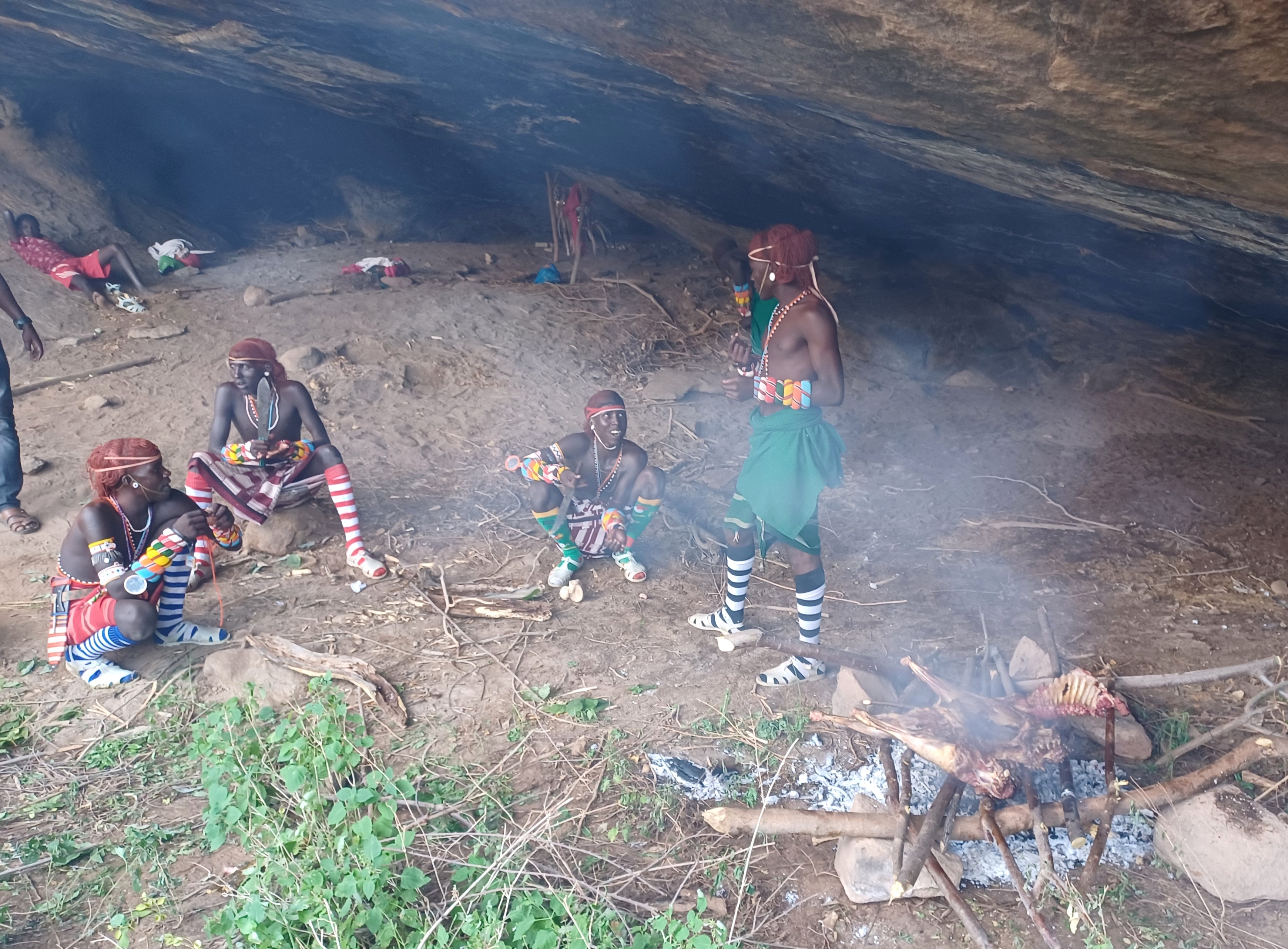
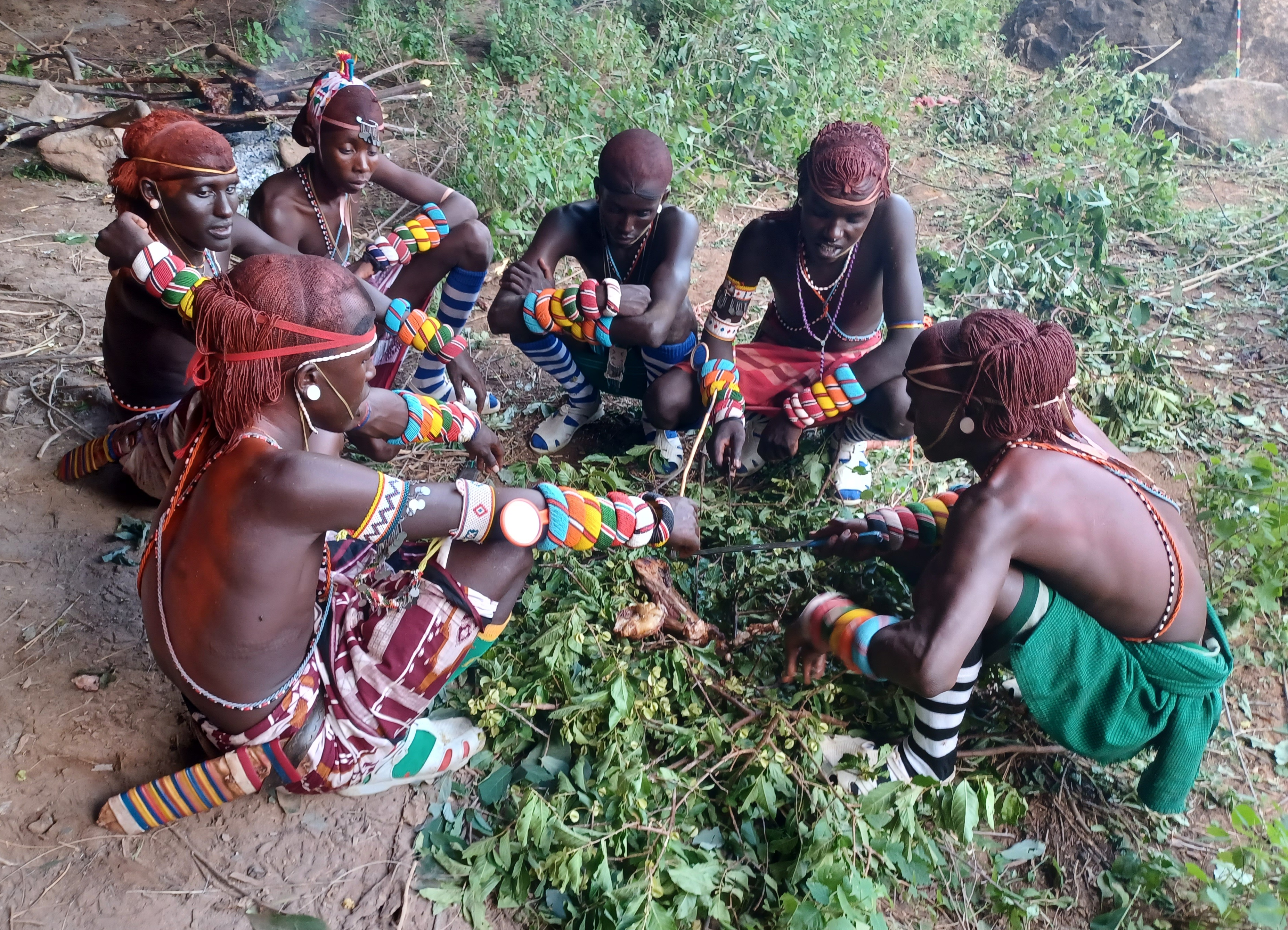
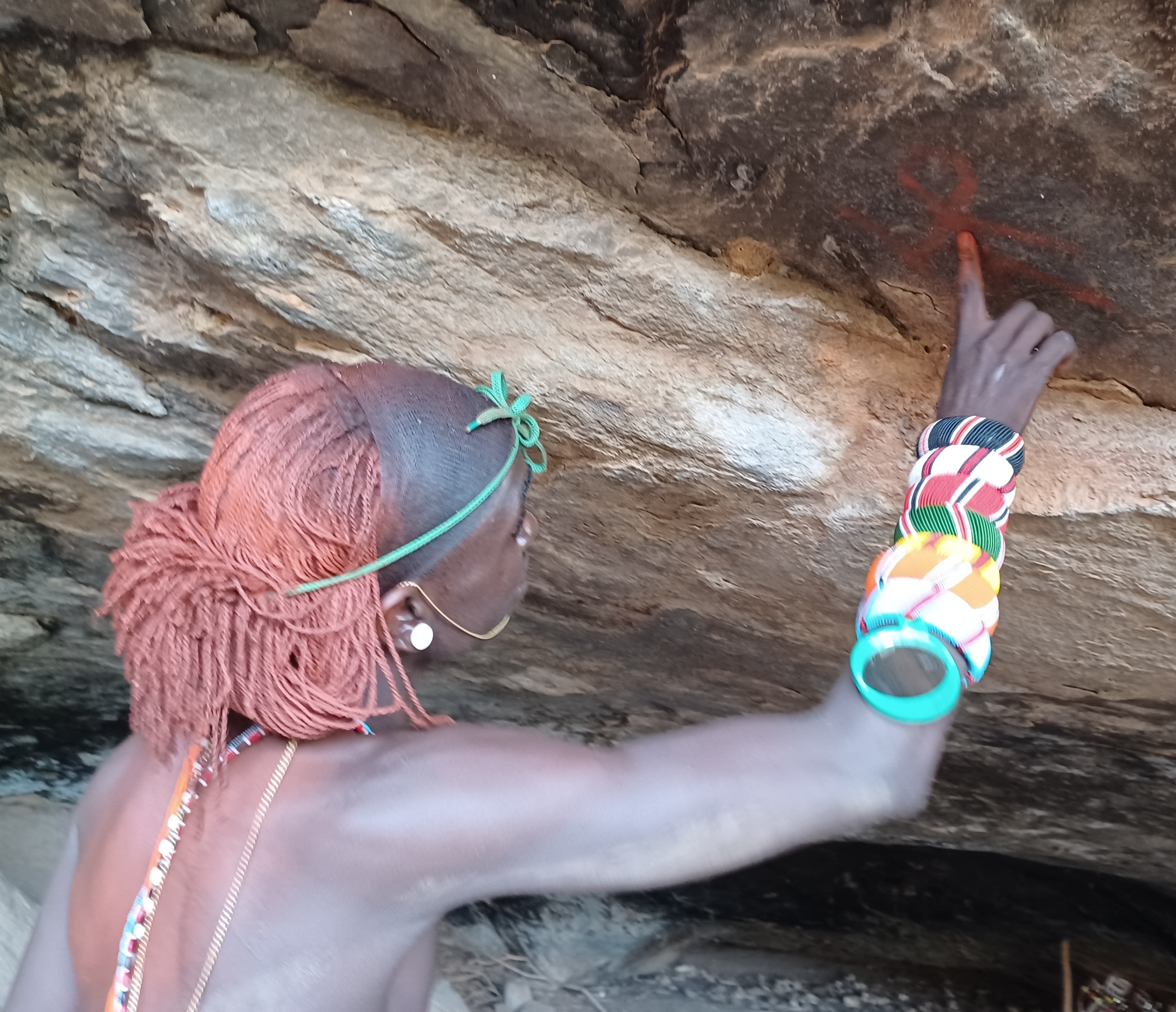
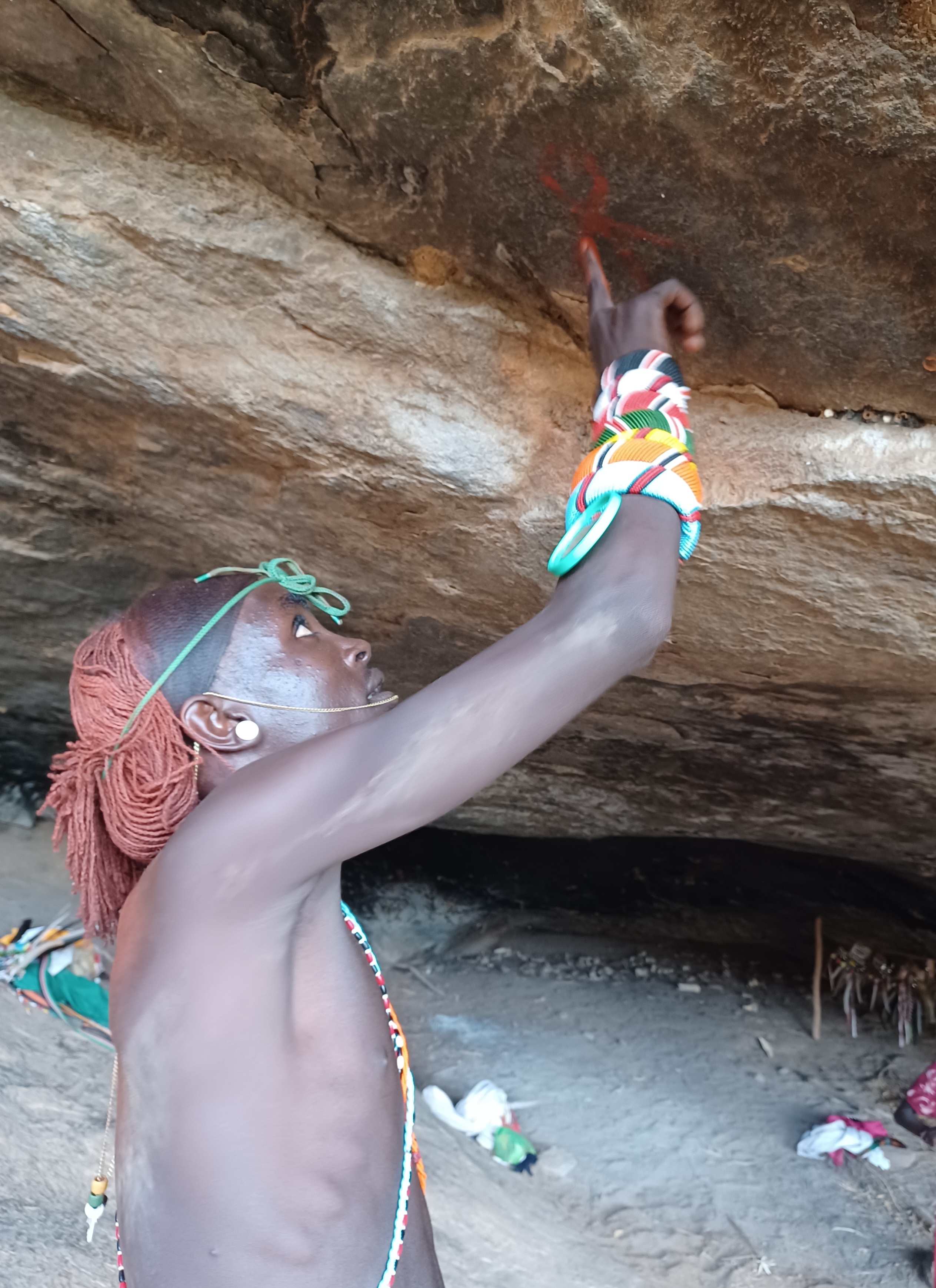
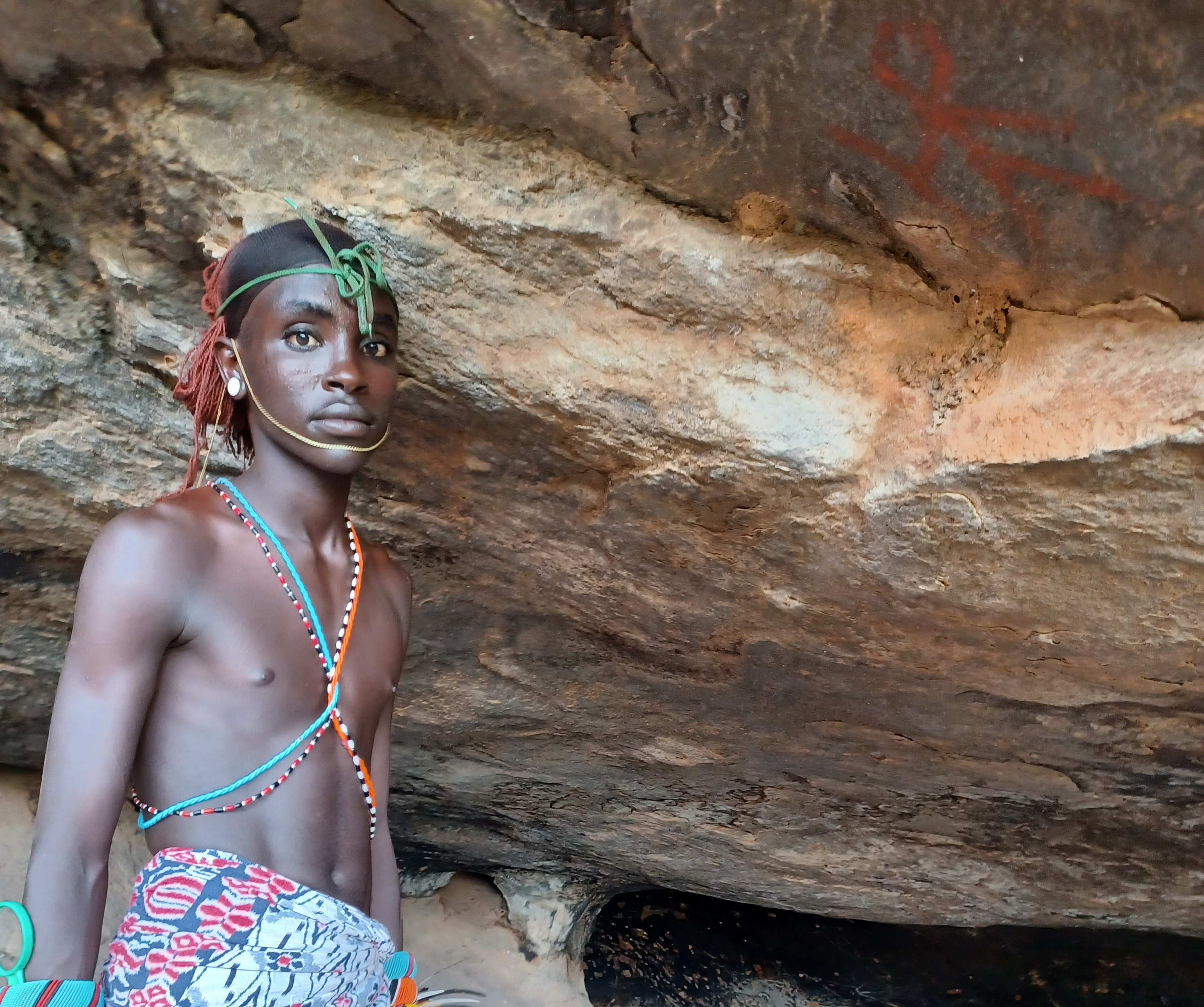
Loingeru Leparsore spent time in this cave in the early to mid-1980s and made a painting. Roba Lesagaram came here with a total of ten morans in May 2023. They slaughtered two goats, and afterwards three of the Lmurran made paintings.
Loingeru Leparsore spent time in this cave in the early to mid-1980s and made a painting (see Loingeru Leparsore). Roba Lesagaram came here with a total of ten morans in May 2023. They slaughtered two goats, and afterwards three of the Lmurran made paintings.
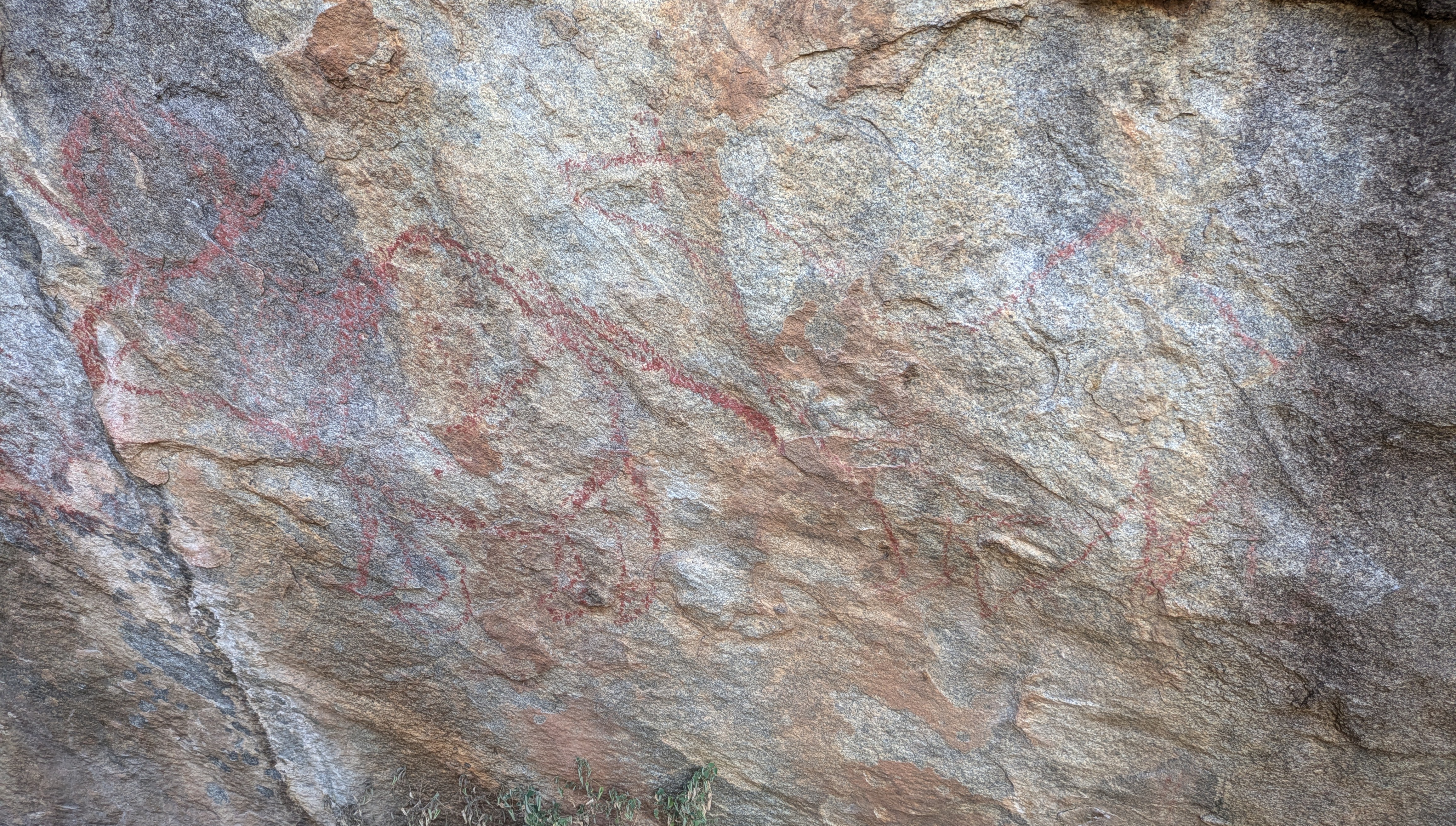
Roba painted a cow using fat from the meat—a cow taken by the recent drought—and also painted himself as a Lmurrani with feathers and a spear, using red ochre from the body and hair.
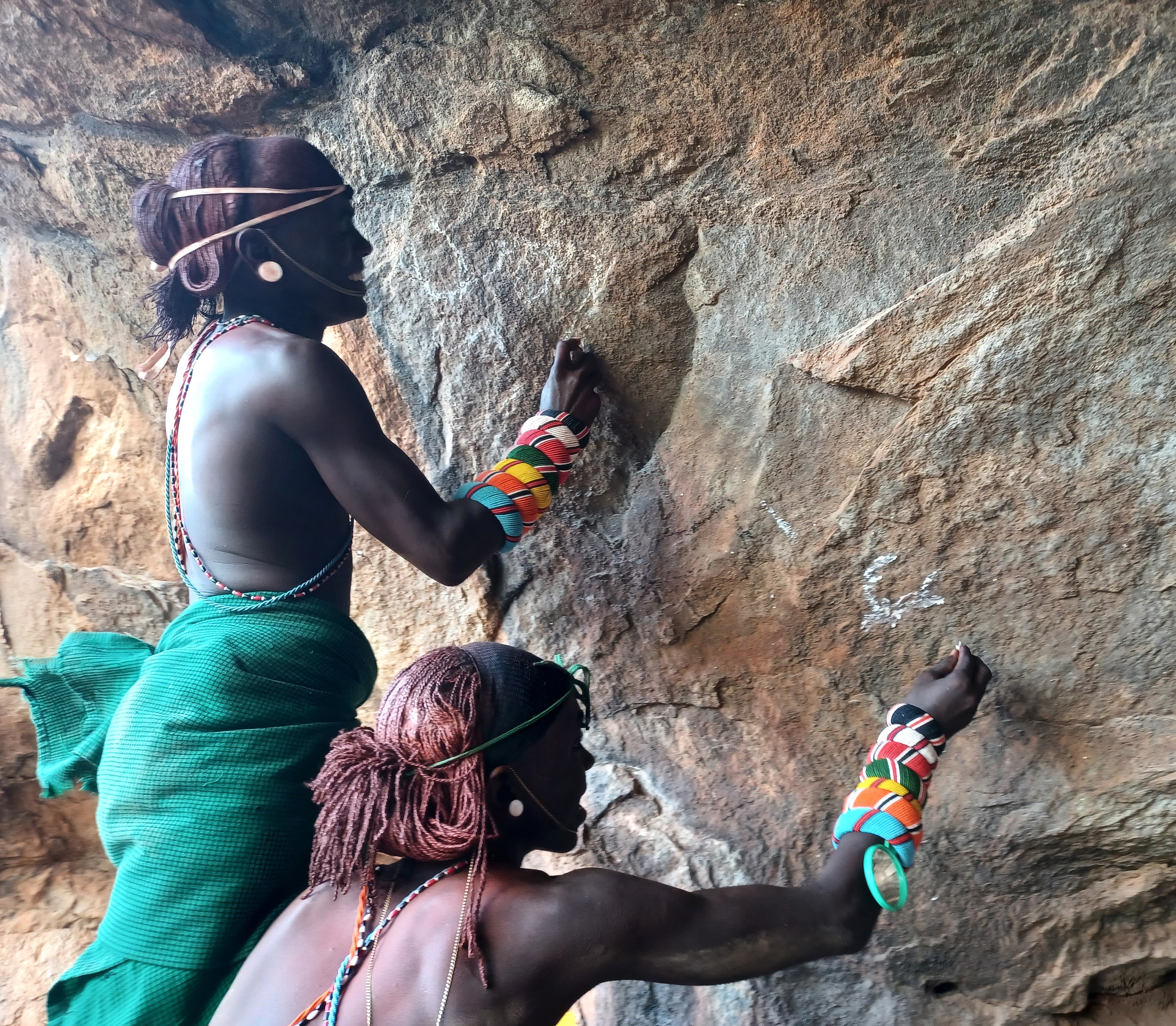
Anthony Lewano carved, with a sharp stone picked up from the ground, a tall moran with feathers, a bull, a camel, and the two "tables" that were used to roast the meat.
Ltoropan Labarakwe first painted a black cow with charcoal from the fire and then carved two more cows with a sharp stone. Cows are essential, he says, and these are cows taken by the drought.
🎨 Noldia Cave Paintings
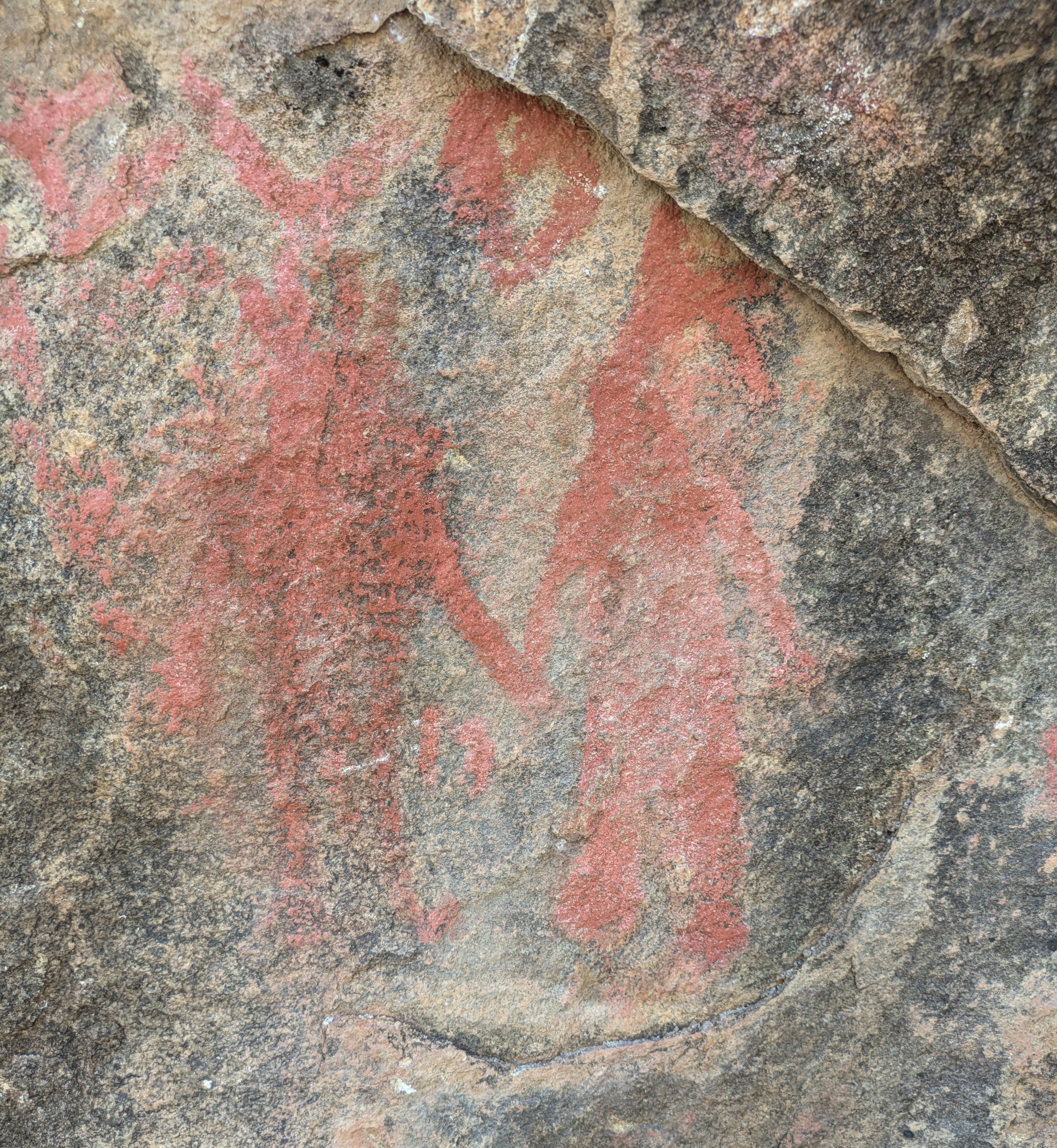
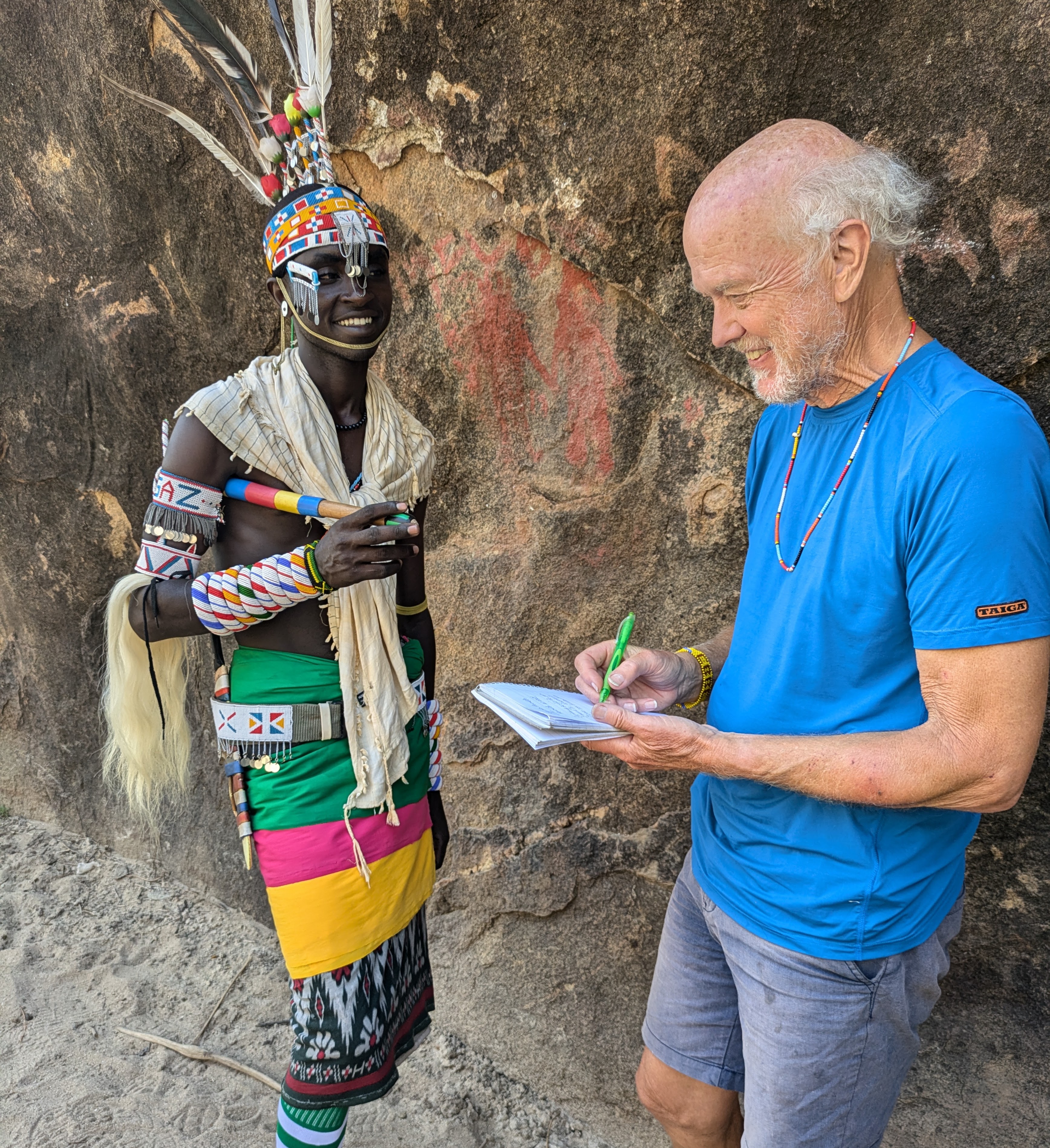
🎨 Nkaji e Nkai Cave Paintings
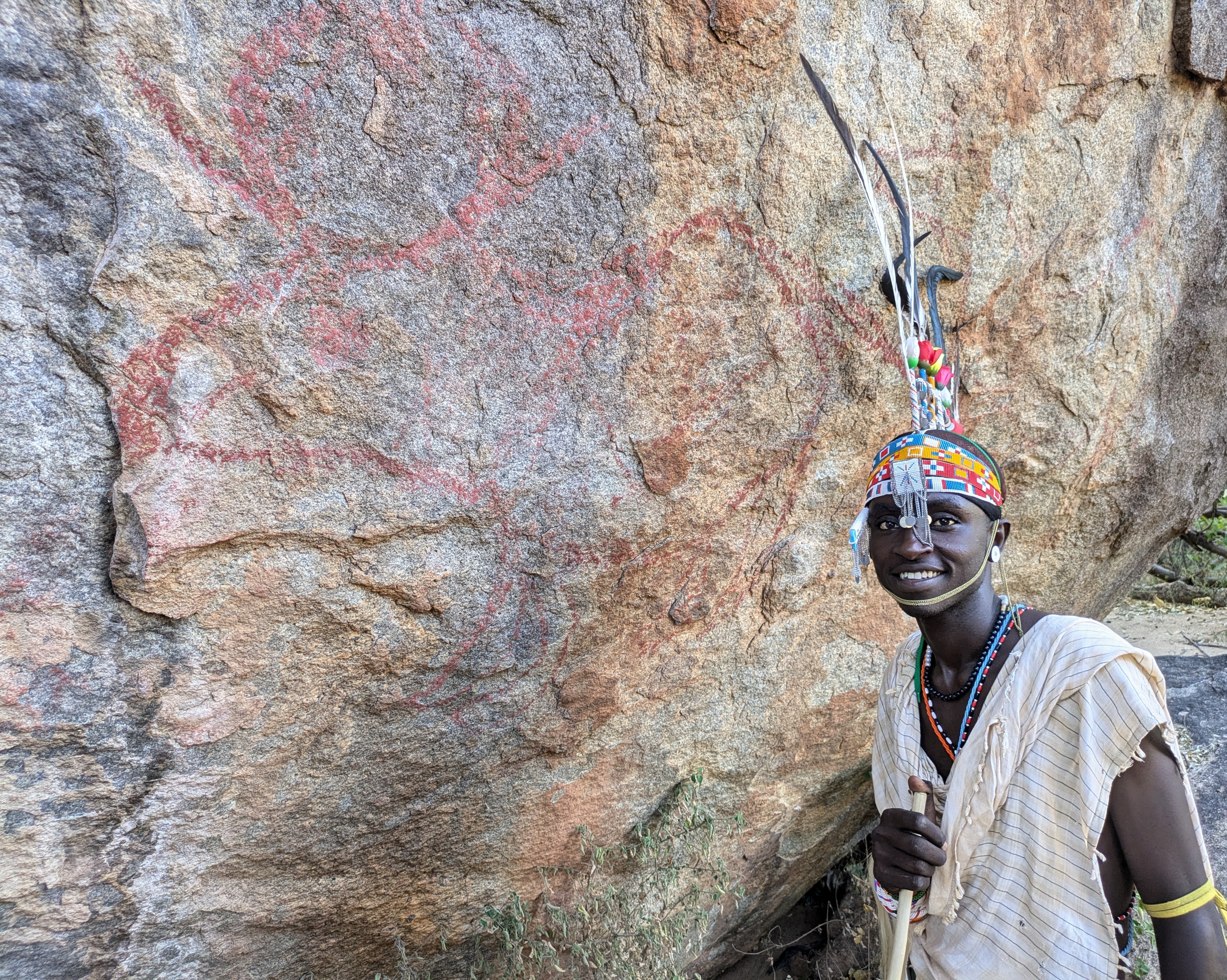
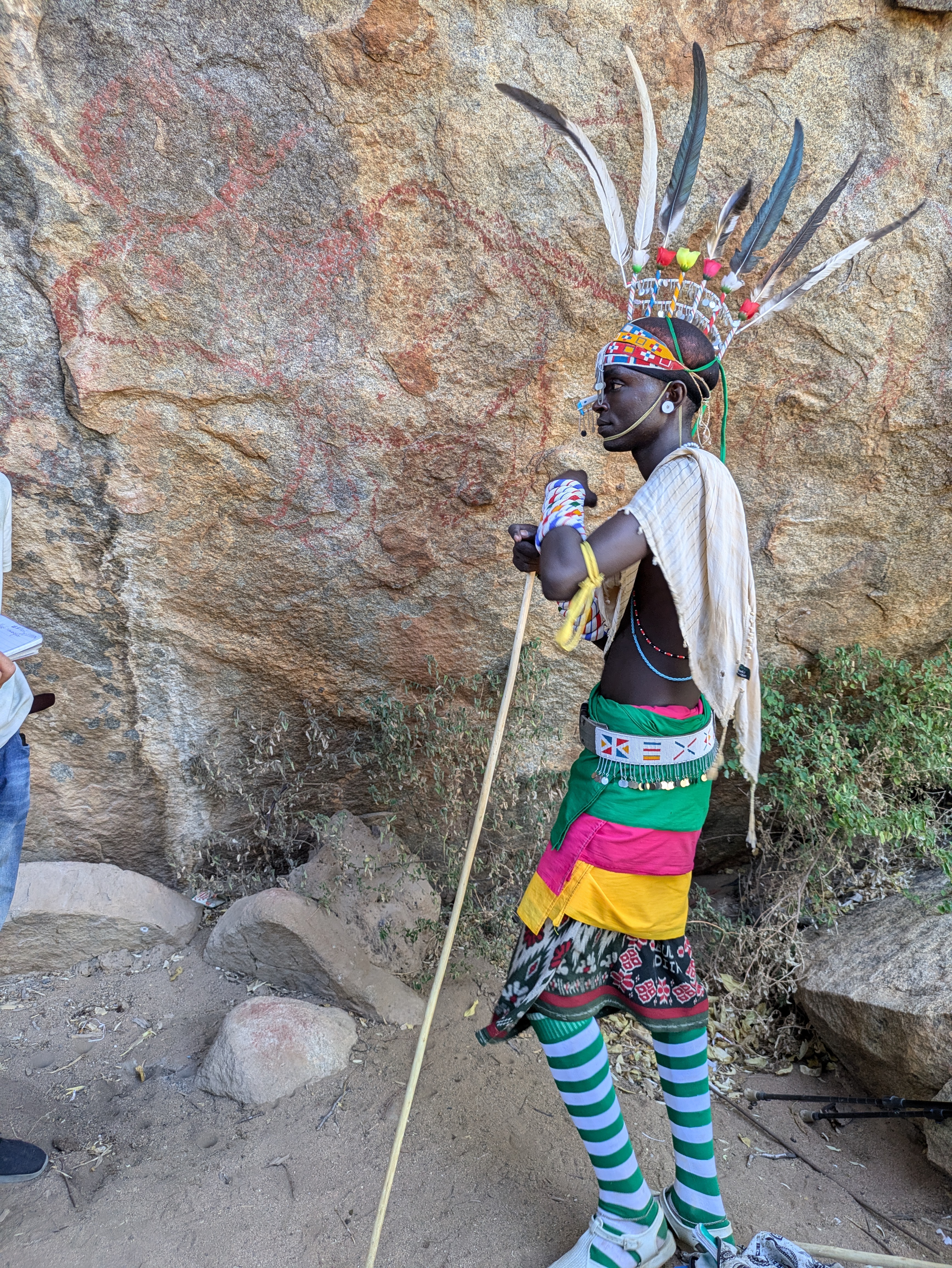
🎨 Noolkineji Cave Paintings
.jpg)
📹 Noolkineji Cave Videos
Noolkeneji 1.mp4
Noolkeneji 2.mp4
Noolkeneji 3.mp4
Rock painting today, a Samburu tradition
Roba Lesagaram and other Lkiseku Lmurran are painting in the caves in the Ndoto and Nyiro mountains today, probably in other mountains in Samburuland as well. They do this as part of loikar, in a similar way as the Samburu Lmurran have done for more than 170 years. The Lmurran slaughter a bull or a goat in the cave, roast it, eat, and talk. After the meal they relax and often, one or two of the Lmurran start to paint, depicting the animal they have just eaten and the Lmurran in the cave.
The current Lkiseku Lmurran, Roba Lesagaram and others, continue the same tradition as the first Samburu from the first half/middle of the 1800s, all the way up to today, and it continues…