Samburu Life
Guardians of Tradition — Warriors of the Land
The Butterfly People
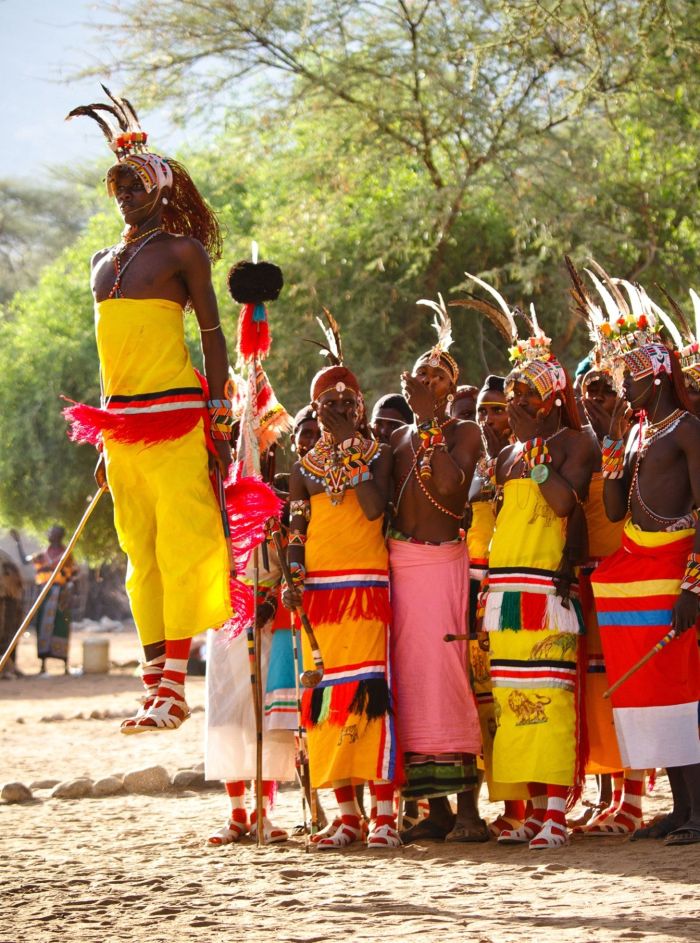
The Samburu are a proud Nilotic people of north-central Kenya, closely related to the Maasai. The origin of the name "Samburu" comes from the word "Samburr", which refers to a leather pouch or bag traditionally carried by the Samburu people to store various items. Neighbouring tribes have historically described the Samburu as "the butterfly people", an expression of their elegance, beauty, and colourful traditional attire.
The Samburu refer to themselves as Loikop, meaning "owners of the land." With a population of over 333,000, they are mainly located in Samburu County and Marsabit County in the Northern Kenya.
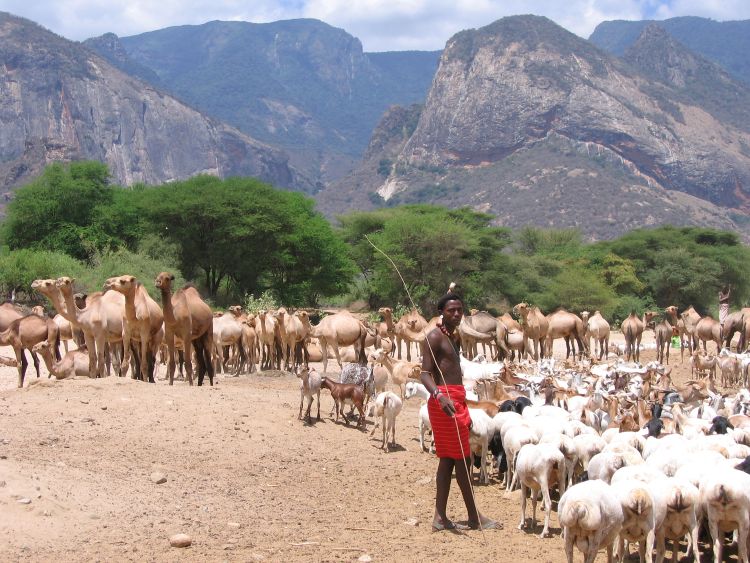
Traditionally semi-nomadic pastoralists, the Samburu primarily herd cattle but also keep sheep, goats, and camels.
A Society of Elders
Samburu society is organized around the authority of elders in a system known as gerontocracy – where elders dominate decision-making, adjudicate disputes, and control marriage arrangements.
The Age-Set System
Age-sets of youths initiated together maintain lifelong bonds, passing through life stages:
- Laiok Boys before circumcision
- Moran Warriors (approximately ages 15-30)
- Junior Elders After graduating from warriorhood, men can marry
- Senior Elders The governing council
Six Rites of Passage
A man in Samburu culture undergoes six rites of passage:
- Muget Lemowo – Transition to elder-hood
- Muget Lenkarna – Warriors given a new name
- Muget Lalaing'oni – Marriage
- Muget Lesikea – Coming from seclusion after circumcision
The Moran Warriors
The Moran (warrior) is the heart of Samburu society – a symbol of heroism, courage, and strength. The institution promotes comradeship, self-esteem, perseverance, and self-sacrifice.
Between the ages of 15 and 30, young Samburu men serve as Morans, guarding the community, protecting livestock from predators, and defending against cattle rustlers.
Did You Know?
In 2015, over 5,000 Samburu morans graduated into senior elders at Sura-Odoru Village.
Loikar – The Warrior's Feast
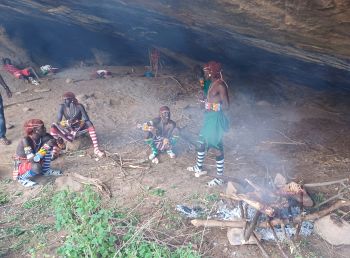
Loikar is a tradition where morans gather to feast, share stories, and paint their experiences on cave walls. It is a time of celebration, bonding, and preserving the history of the Samburu people.
During Loikar, warriors come together to slaughter and eat bulls, decorate themselves with red ochre, and create rock paintings that document their lives and experiences. These gatherings are an essential part of Samburu culture, strengthening the bonds between warriors and passing down traditions to younger generations.
The rock paintings created during Loikar serve as a visual diary, preserving the stories and experiences of Samburu warriors for future generations.
The Manyatta
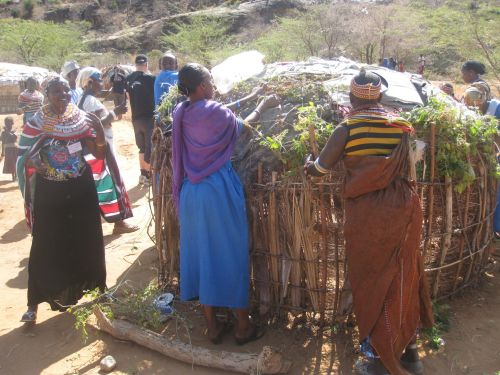
The manyatta is the traditional Samburu homestead, a circular arrangement of huts that serves as the center of family life. Built by women using locally available materials, the manyatta reflects the deep connection between the Samburu people and their environment.
Each manyatta is carefully designed with huts arranged in a circle, with livestock kept in the center for protection. The layout symbolizes the unity and strength of the family, with the cattle at the heart of their existence.
The manyatta is more than just a home – it is a symbol of Samburu identity, resilience, and the enduring bond between the people, their cattle, and the land.
The Initiation Ceremony
The Transition from Boy to Man
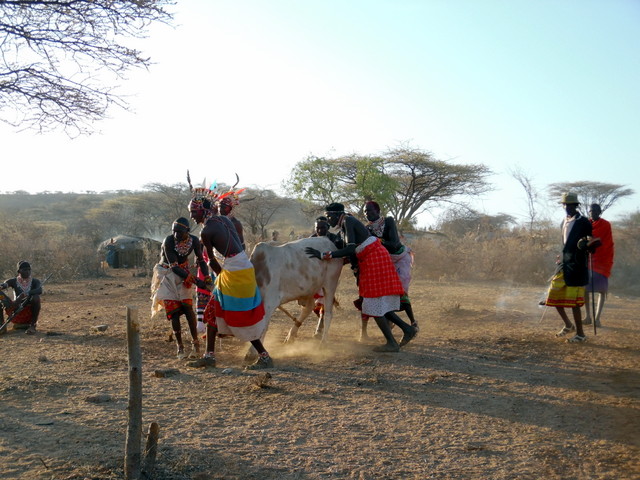
Circumcision occurs every 14-15 years when a new age-set is formed. The ceremony involves a month of training in the forest, ritual circumcision where boys must show no sign of pain, and a month of recovery.
Each boy kills a bull and takes an oath to preserve Samburu heritage.
The Lmuget Ceremony
The Lmuget ceremony takes place every seventh year and marks the passage from boy to warrior.
- More than 400 warriors and over 100 families gather
- Hundreds of cattle are slaughtered during the ceremony
The Samburu Elders
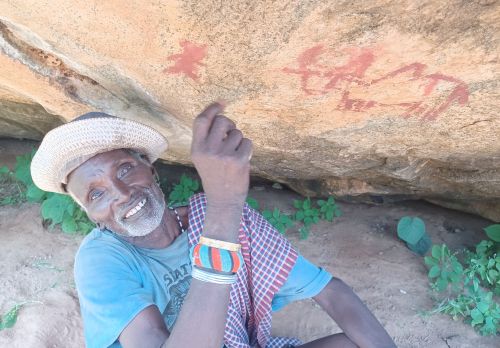
The elders, known as the "Lkunono," form the governing body of Samburu society. They make decisions on law, conflict resolution, and community welfare.
Their authority is respected and unquestioned, derived from decades of experience. They are the keepers of history, law, and custom through oral tradition.
"The wisdom of the elders is the foundation upon which our society stands. They are the keepers of our laws, our stories, and our connection to the ancestors."
— Samburu Proverb
Samburu Beadwork
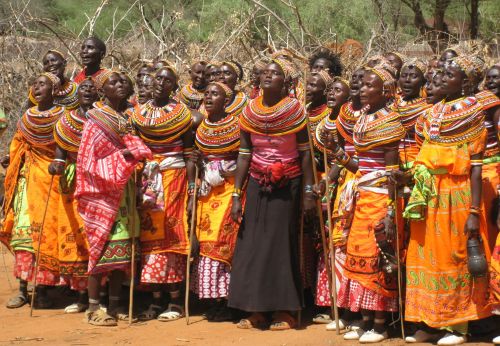
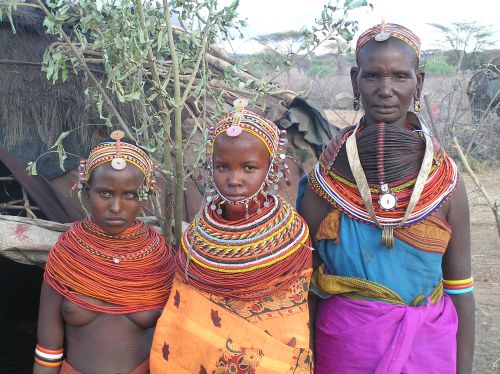
Samburu beadwork is among the most intricate in Africa. Women craft elaborate necklaces, earrings, and headdresses that indicate age, marital status, and number of children.
Colors carry deep meaning:
By age 15 or 16, a girl should have enough beads to support her chin, signifying marriageable age.
Samburu Women in Marriage
Marriage in Samburu culture is a vibrant celebration that strengthens family ties and ensures lineage continuity. Women play a central role, adorned in their finest beadwork and traditional attire.
Polygamy is traditionally practiced, with men taking multiple wives as a sign of wealth and status. Cattle are exchanged as bridewealth to solidify alliances between families.
Women are responsible for building the manyatta (homestead), raising children, and crafting intricate beadwork passed down through generations.
Cattle, Goats and Camels – The Heart of Samburu
Cattle are central to Samburu culture, economy, and social structure. The Samburu believe all cattle were given to them by God (Nkai).
A man's wealth is measured by his herd, used for bride price, settling disputes, and offerings to ancestors.
Milk and blood are staple diets. Cattle are bled while alive by opening the jugular with an arrow and resealing the wound with hot ashes.
Religion and Beliefs
Nkai – The Supreme Being
The Samburu traditionally believe in one God, Nkai (feminine), thought to reside in nature. Offerings and prayers are important for rainfall and livestock.
Diviners and Values
Diviners (Laibon) communicate with spirits through dreams and trances.
At the core of Samburu social values lies nkanyit – a concept of respect, shame, and duty governing relationships.
Rock Painting – A Living Tradition
For over 150 years, Samburu morans have painted their stories on cave walls using red ochre and animal fat, creating a visual diary of their lives in loikar.
Moran Paintings
Warriors paint themselves, the meat feasting and their daily life experiences in caves and shelters.
Rock Art Sites in Samburu and Marsabit
Caves in the mountains of Samburu and Marsabit counties serve as shelters and canvas for each generation.
Living History
The Lkiseku generation continues the rock art tradition, documenting their experiences in the shelters.
Resilience and Adaptation
Today, the Samburu face challenges from climate change, land pressures, and modernization. Yet their culture remains remarkably resilient. Young Samburu navigate between tradition and modernity, honoring their heritage while embracing new opportunities.
The Samburu Digital Museum stands as a testament to this resilience – preserving Samburu traditions while sharing their stories with the world.
Samburu Rock Art
Watch the Lkisieku ageset (2018) engage in the tradition of rock painting after feasting in Loikar.
Samburu Rock Art, a Living Tradition
Lkisieku ageset painting in Loikar